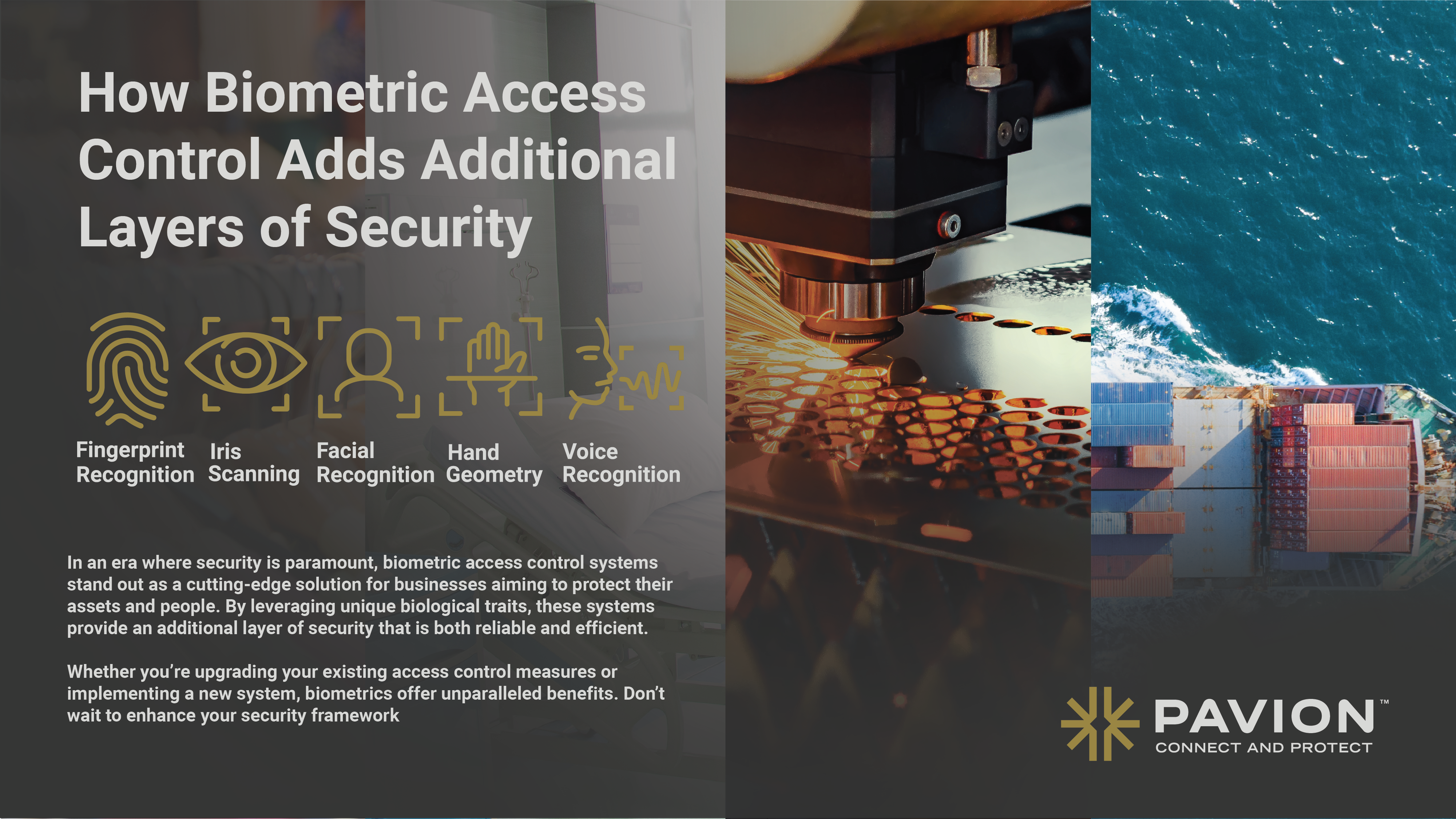
How Biometric Access Control Adds Additional Layers of Security
In today’s fast-paced world, businesses face increasing threats to their physical and digital security. Whether safeguarding sensitive data, protecting valuable assets, or ensuring workplace safety, advanced security measures have become a necessity. One of the most innovative and effective solutions available is biometric access control. By leveraging the unique biological traits of individuals, biometric systems offer personalized, high-security access that is nearly impossible to breach. This guide explains how biometric access control works, what a system includes, and how to choose one that meets your security and privacy requirements.
What Is Biometric Access Control?
Biometric access control is a security solution that uses an individual’s unique physiological or behavioral traits to verify their identity and grant access. Unlike traditional methods such as keycards or passwords, which can be lost, stolen, or shared, biometrics are inherently tied to an individual, making them a more secure and reliable option.
Common Biometric Traits Used in Access Control
- Fingerprint Recognition: Scans the unique patterns of ridges and valleys on a person’s finger.
- Facial Recognition: Analyzes distinct facial features such as the distance between the eyes, nose shape, and jawline.
- Iris Scanning: Examines the intricate patterns in the colored part of the eye.
- Voice Recognition: Identifies a person based on vocal characteristics like pitch and tone.
- Hand Geometry: Measures the shape and size of the hand, including finger lengths.
Each of these biometric access control systems provides a highly accurate method of verifying identity, making them ideal for businesses seeking advanced security solutions.
How Biometric Access Control Systems Work
A biometric access control system typically involves three main steps:
- Enrollment: The system captures the biometric data of an individual and stores it securely.
- Verification: When a person seeks access, the system scans their biometric data and compares it to the stored data.
- Authentication: If the data matches, access is granted. If not, the system denies entry.
Most systems never store a picture of your fingerprint or face. Instead they convert the scan into an encrypted mathematical template. In verification mode (1:1), the system compares a live scan to one stored template, often after a card or PIN identifies who the person claims to be. In identification mode (1:N), it searches all enrolled templates to find a match, which is faster for users but demands higher accuracy.
This streamlined process ensures that only authorized individuals can gain access, eliminating vulnerabilities associated with traditional systems.
Components of a Biometric Access Control System
A biometric access control system is more than a reader:
- Biometric readers at the door (fingerprint, face, iris, or palm)
- An access control panel that makes the grant or deny decision and drives the lock
- Management software for enrollment, permissions, schedules, and audit trails
- Electrified locks, strikes, or turnstiles
- Integration with video surveillance, alarms, and HR or identity systems
Want biometrics on your most sensitive doors?
Contact Pavion today to schedule a security consultation.
Why Biometric Access Control Is Superior
Enhanced Security
Biometrics provide an unparalleled level of security by leveraging unique biological traits that cannot be easily duplicated or stolen. Unlike passwords or physical keys, which can fall into the wrong hands, biometric data is inherently tied to the individual.
Convenience and Efficiency
With a biometric access control device, employees and authorized personnel no longer need to carry access cards or remember complicated passwords. A simple scan of a fingerprint or face allows seamless and quick access, improving operational efficiency.
Reduced Risk of Fraud
The integration of access control and biometrics significantly reduces the risk of identity fraud. Since biometric traits are unique to each individual, impersonation becomes virtually impossible.
Scalability
Modern commercial biometric access control systems are highly scalable, making them suitable for businesses of all sizes. Whether you manage a single office or a multi-site enterprise, biometric solutions can adapt to your security needs.
Applications of Biometric Access Control in Business
Biometric systems are versatile and can be applied across various sectors:
- Corporate Offices: Control access to sensitive areas such as server rooms or executive suites.
- Healthcare Facilities: Restrict access to patient records and medication storage areas.
“A recent example of a healthcare facility deploying IRIS recognition helped secure their Gamma Knife facility. Gamma knife is a very specialized form of cancer treatment and requires it be operated by specifically and highly trained technicians. Using IRIS recognition technology allowed the customer to guarantee with one hundred percent certainty that the unit would only be powered and operated by the proper technicians. The technicians undergo additional security checks and visit a special badging office to have their IRIS enrolled in the system.”
–Rich Campbell, Pavion Training & Development Specialist
- Educational Institutions: Protect campus facilities and ensure the safety of students and staff.
- Financial Institutions: Safeguard vaults, data centers, and confidential customer information.
“In support of a large, globally available data center, we deployed fingerprint technology to protect the entrance to the data center. The ability to scan a credential was disabled and re-enabled by using a fingerprint reader. Without a properly authorized biometric fingerprint, the card reader was powered off and entrance to the data center was not possible. This provided a highly secure 2 factor authenticated entrance. It also meant a transaction record was kept complying with financial regulations and could be provided when requested during any audits.” –Rich Campbell, Pavion Training & Development Specialist
- Manufacturing Plants: Monitor entry to production floors and hazardous zones.
By implementing a biometric access control system, businesses can ensure robust security across diverse environments.
Choosing the Right Biometric Access Control Device
When selecting a biometric access control device, businesses should consider the following factors:
- Accuracy and Reliability: Ask for the false accept rate (FAR) and false reject rate (FRR) measured in conditions like yours.
- Ease of Integration: The device should integrate seamlessly with existing security systems.
- User-Friendly Interface: Opt for systems that are intuitive and easy to use for both administrators and employees.
- Data Security: Verify that the system encrypts biometric data to prevent unauthorized access.
- Scalability: Choose a system that can grow with your business needs.
- Liveness Detection: Confirm the reader can detect spoofs such as photos, masks, or fake fingerprints.
- Throughput: Check how many people per minute the reader can process at busy entrances.
Explore Pavion’s access control systems.
See how Pavion designs and integrates biometric access control.
Biometric Privacy Laws and Data Protection
Biometric data is regulated in a growing number of states. Illinois’ Biometric Information Privacy Act (BIPA) requires written notice, written consent before collection, and a published retention and destruction policy, and it allows individuals to sue for violations. Texas and Washington also have biometric privacy laws, and more states are adding them. Before deployment:
- Give employees and visitors written notice and get consent where required
- Publish how long templates are kept and when they’re destroyed
- Store only encrypted templates, never raw images
- Limit who can access biometric data and log every access
Check the laws in every state where you operate and involve legal counsel.
Overcoming Concerns About Biometric Access Control
Despite its advantages, some businesses may have reservations about adopting biometric systems. Here are common concerns and how they are addressed:
- Privacy: Modern systems use encrypted templates instead of storing raw biometric data, ensuring data cannot be reverse-engineered.
- Cost: While initial setup costs may be higher, the long-term benefits of reduced fraud and enhanced security outweigh the investment.
- Maintenance: Advanced systems require minimal upkeep, making them a cost-effective choice over time.
The Future of Access Control and Biometrics
The demand for access control and biometrics continues to grow as businesses prioritize security. Innovations like multi-factor authentication—combining biometrics with additional security measures such as PINs or cards—are becoming the standard for comprehensive protection. Additionally, advancements in AI and machine learning are further enhancing the accuracy and efficiency of biometric systems.
Why Your Business Needs Biometric Access Control
Implementing a biometric access control system is no longer a luxury but a necessity for modern businesses. With cyber threats and physical security breaches on the rise, companies must adopt advanced technologies to safeguard their assets, data, and personnel.
By choosing biometrics, businesses benefit from:
- Improved security: Personalized access control reduces the risk of unauthorized entry.
- Operational efficiency: Faster access processes save time and boost productivity.
- Cost savings: Reduced reliance on physical access cards and fewer security breaches translate into financial benefits.
Final Thoughts
In an era where security is paramount, biometric access control systems stand out as a cutting-edge solution for businesses aiming to protect their assets and people. By leveraging unique biological traits, these systems provide an additional layer of security that is both reliable and efficient.
Whether you’re upgrading your existing access control measures or implementing a new system, biometrics offer unparalleled benefits. Don’t wait to enhance your security framework.
Secure Your Most Sensitive Spaces
Pavion designs, installs, and supports biometric access control integrated with your existing card access, video, and alarm systems.
Contact Us Today to plan biometric access control for your facility.
FAQs: Biometric Access Control
What is biometric access control?
Biometric access control verifies a person’s identity with a physical or behavioral trait, such as a fingerprint, face, or iris, before unlocking a door or granting access to a system.
How accurate is biometric access control?
Accuracy depends on the technology and setup. Compare false accept and false reject rates measured in real conditions; iris and multi-factor setups are typically the most accurate.
Is biometric data stored as an image?
In well-designed systems, no. Scans are converted into encrypted templates that can’t be turned back into the original image.
Is biometric access control legal for employees?
Yes, but some states, including Illinois, Texas, and Washington, require notice, consent, and data retention policies. Check the laws where you operate.
Can biometrics work with my existing card access system?
Often, yes. Many readers combine card and biometric verification and connect to existing access control panels and software.