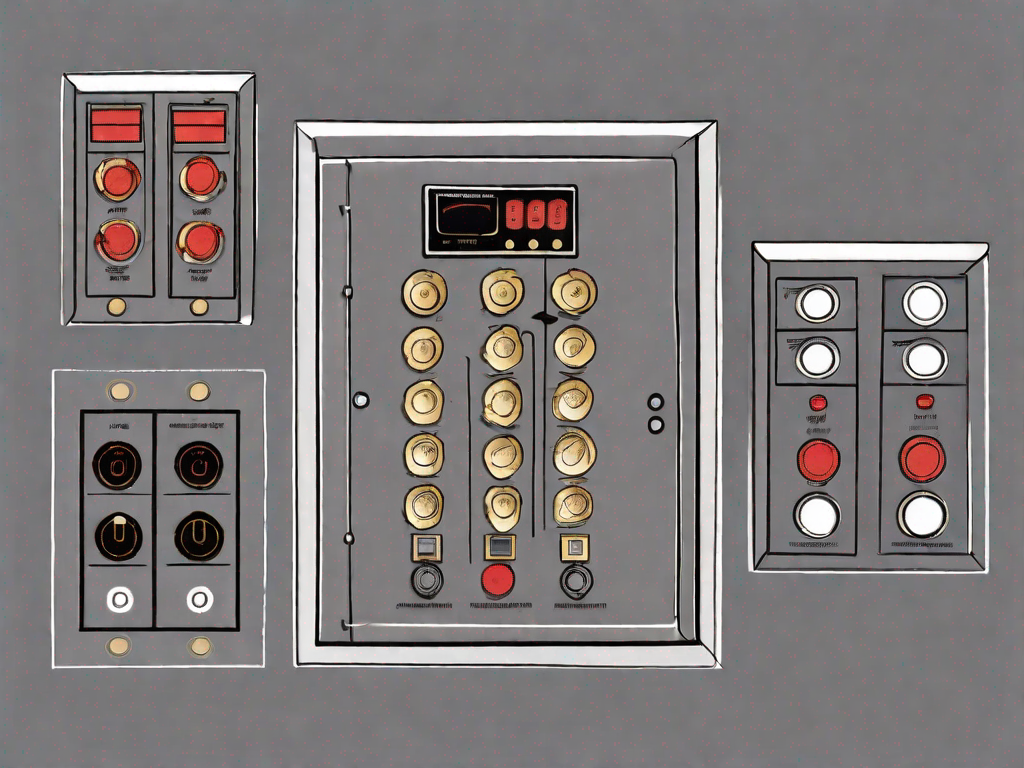
The Difference Between a Fire Alarm Annunciator and a Control Panel
A fire alarm system is vital in ensuring the safety of a building and its occupants. It serves as an early warning system that detects the presence of smoke, fire, or heat. However, for those who are new to the topic, understanding the different components of a fire alarm system can be quite confusing. In particular, many people may be unaware of the distinction between a fire alarm annunciator and a control panel.
Understanding Fire Alarm Systems
Before we delve into the differences between a fire alarm annunciator and a control panel, it is essential to have a basic understanding of fire alarm systems. Fire alarm systems are designed to detect fires in their early stages and alert occupants to evacuate or take appropriate action. These systems consist of various components that work together to provide a comprehensive fire protection solution.
Fire alarm systems are a crucial part of any building’s safety infrastructure. They are designed to detect the presence of fire and initiate appropriate actions to protect lives and property. These systems are meticulously engineered to ensure that they are reliable, efficient, and capable of providing early warning in the event of a fire.
Basic Components of Fire Alarm Systems
A fire alarm system typically consists of smoke detectors, heat detectors, manual pull stations, fire alarm control panels, fire alarm annunciators, and notification devices such as bells or strobe lights. These components work harmoniously to detect a fire, trigger an alarm, and notify the occupants of the building.
Smoke detectors are one of the most critical components of a fire alarm system. They are designed to sense the presence of smoke particles in the air, which can be an early indication of a fire. Heat detectors, on the other hand, are designed to detect rapid increases in temperature, which can also be a sign of a fire. These detectors are strategically placed throughout the building to ensure maximum coverage and early detection.
Manual pull stations are another important component of a fire alarm system. These stations are typically located near exits and allow occupants to manually activate the fire alarm in case of an emergency. This provides an additional layer of safety, as it allows individuals to initiate the alarm if they spot a fire before the detectors are activated.
The fire alarm control panel is the brain of the system. It receives signals from the detectors and pull stations and processes the information to determine if there is a fire. If a fire is detected, the control panel triggers the alarm and activates the notification devices to alert the occupants. It also sends a signal to the fire department or monitoring station, ensuring that help is on the way.
Importance of Fire Alarm Systems
The importance of fire alarm systems cannot be overstated. They save lives, minimize property damage, and help emergency responders act swiftly. By detecting a fire in its early stages, these systems give people the necessary time to evacuate safely. In addition, fire alarm systems can also notify the appropriate authorities, such as the fire department, thus minimizing response time and potentially saving even more lives.
Fire alarm systems are designed to provide reliable and timely information in the event of a fire. They are equipped with advanced technology that allows them to differentiate between false alarms and actual fires, reducing the likelihood of unnecessary evacuations and disruptions. These systems are also regularly tested and maintained to ensure their effectiveness and compliance with safety regulations.
Furthermore, fire alarm systems are not only crucial in commercial buildings but also in residential properties. Residential fire alarm systems are specifically designed to meet the unique needs of homes, providing early warning and protection for families and their belongings.
In conclusion, fire alarm systems play a vital role in safeguarding lives and property. They are a comprehensive solution that combines various components to detect fires, trigger alarms, and notify occupants and authorities. By understanding the basic components and importance of fire alarm systems, we can appreciate the significant impact they have on our safety and well-being.
Introduction to Fire Alarm Annunciator
Now that we have a general understanding of fire alarm systems, let’s focus on the fire alarm annunciator. An annunciator is a visual representation of the fire alarm system’s status. Its primary function is to provide a clear and concise indication of the location and type of alarm that has been activated.
When it comes to fire safety, every second counts. That’s why having a reliable and efficient fire alarm annunciator is crucial. In the event of a fire, the annunciator plays a vital role in alerting building occupants and emergency responders, allowing them to take immediate action to ensure everyone’s safety.
But what exactly does a fire alarm annunciator do? Let’s explore its role and function in more detail.
Role and Function of a Fire Alarm Annunciator
A fire alarm annunciator acts as a centralized display panel that presents information from the fire alarm control panel. It serves as a visual representation of the entire fire alarm system, providing real-time updates about the status of individual alarms or alarm zones within a building.
Imagine a large building with multiple floors and numerous alarm devices installed throughout. In such a complex setup, it can be challenging to quickly pinpoint the exact location of a triggered alarm. This is where the fire alarm annunciator comes in. By quickly and accurately displaying this data, the annunciator allows building personnel or emergency responders to identify the exact location of the alarm quickly.
Not only does the annunciator provide information about the location of the alarm, but it also indicates the type of alarm that has been activated. This can be crucial information for emergency responders, as different types of alarms may require different response protocols.
Moreover, a fire alarm annunciator can be customized to suit the specific needs of a building. It can be programmed to display additional information, such as the status of sprinkler systems or emergency evacuation routes. This added functionality further enhances the effectiveness of the annunciator, providing comprehensive information to aid in emergency response.
Now that we understand the role and function of a fire alarm annunciator, let’s take a closer look at some of its key features.
Key Features of Fire Alarm Annunciators
Fire alarm annunciators are equipped with features that enhance their usability and effectiveness. These features may include LED lights or alphanumeric displays, which help convey the status of each alarm zone. The use of LED lights allows for clear visibility, even in low-light conditions, ensuring that the annunciator can be easily read at all times.
Additionally, some annunciators may have built-in buttons or touchscreen interfaces that enable users to acknowledge or silence specific alarms. This functionality is particularly useful in situations where false alarms occur, as it allows authorized personnel to quickly address the issue without causing unnecessary panic or disruption.
Furthermore, modern fire alarm annunciators often come with advanced connectivity options. They can be integrated with other building systems, such as HVAC or access control, allowing for a more comprehensive and coordinated response in the event of an emergency. This integration ensures that all relevant parties are notified and can take appropriate action.
Another important feature of fire alarm annunciators is their ability to log and store alarm events. This log can be accessed later for analysis and review, providing valuable data for improving fire safety protocols and identifying any recurring issues that need to be addressed.
In conclusion, fire alarm annunciators play a crucial role in fire safety systems. They provide a centralized display of the fire alarm system’s status, allowing for quick identification of alarm locations and types. With their key features such as LED lights, touchscreen interfaces, and connectivity options, annunciators enhance the effectiveness of emergency response and contribute to the overall safety of buildings and their occupants.
What Is a Remote Fire Alarm Annunciator?
A remote fire alarm annunciator is an annunciator installed away from the main control panel, most often at the fire department’s entrance, in a main lobby, at a security desk or in a fire command center. It repeats the control panel’s display so responders can see the location and type of an alarm the moment they arrive. Remote annunciators range from simple LED panels that light up by zone to LCD displays that show device-level text from an addressable system, and some include limited controls such as acknowledge, silence or reset. Large buildings and campuses often use several remote annunciators connected to one networked fire alarm system.
Introduction to Fire Alarm Control Panel
Fire safety is of utmost importance in any building, whether it’s a residential property, commercial establishment, or industrial facility. One crucial component of a fire safety system is the fire alarm control panel. While the annunciator focuses on presenting information, the fire alarm control panel is the central processing unit of the fire alarm system. It serves as the brain that receives and processes information from the smoke detectors, heat detectors, and other components.
Imagine a bustling office building with multiple floors and numerous rooms. In such a complex environment, it is essential to have a reliable and efficient fire alarm control panel that can effectively monitor and manage the fire alarm system.
Role and Function of a Fire Alarm Control Panel
The primary role of a fire alarm control panel is to monitor the status of all connected devices within the fire alarm system. It constantly receives signals from the detectors and activates notification devices when a fire or other emergency is detected. This real-time monitoring ensures that any potential fire or emergency situation is promptly identified and appropriate actions are taken.
Moreover, the fire alarm control panel acts as a central hub for communication and coordination. It facilitates communication between the fire alarm system and other building systems, such as sprinkler systems or HVAC units. This integration allows for a synchronized response, where the fire alarm control panel can trigger the activation of sprinklers or ventilation systems to contain the fire and minimize damage.
Additionally, the control panel provides valuable information to firefighters and emergency responders. It can indicate the exact location of the alarm, enabling them to swiftly navigate through the building and locate the source of the fire or emergency.
Key Features of Fire Alarm Control Panels
Fire alarm control panels are equipped with numerous features to ensure the effective and efficient operation of the fire alarm system. These features may vary depending on the specific model and manufacturer, but they are designed to enhance the overall functionality and reliability of the control panel.
One of the key features of modern fire alarm control panels is an intuitive user interface. This user-friendly interface allows building managers or designated personnel to easily navigate and operate the control panel. It provides clear and concise information, making it easier to monitor the system’s status and respond to any alarms or emergencies.
Another important feature is event logging capabilities. Fire alarm control panels can record and store information about past events, including alarms, system tests, and maintenance activities. This log serves as a valuable reference for troubleshooting, system analysis, and compliance with regulatory requirements.
Remote monitoring capabilities are also becoming increasingly common in fire alarm control panels. This feature allows authorized personnel to monitor the system’s status and receive real-time notifications remotely, even when they are not physically present on-site. Remote monitoring enhances the overall efficiency of fire safety management, as it enables prompt response and reduces the risk of delayed actions in case of an emergency.
Some advanced control panels may even have integrated voice evacuation systems. These systems use speakers strategically placed throughout the building to deliver clear and concise instructions during emergencies. This feature ensures that occupants can quickly and safely evacuate the premises, minimizing the potential for panic or confusion.
In conclusion, the fire alarm control panel is a vital component of any fire safety system. It acts as the central processing unit, monitoring and managing the various devices within the system. With its role in real-time monitoring, communication with other building systems, and the integration of advanced features, the fire alarm control panel plays a crucial role in safeguarding lives and property from the devastating effects of fire.
Comparing Fire Alarm Annunciator and Control Panel
Now that we have a basic understanding of both the fire alarm annunciator and the control panel, let’s compare the two components to gain a clearer understanding of their similarities and differences.
Similarities Between Annunciator and Control Panel
Both the fire alarm annunciator and the control panel play crucial roles in a fire alarm system. They work together to provide comprehensive monitoring, detection, and notification capabilities. Additionally, they are typically connected and share data, enabling seamless communication between the two components.
When an alarm is triggered, whether by a smoke detector sensing smoke or a heat detector detecting high temperatures, the signal goes to the fire alarm control panel first. The control panel processes the event, activates the building’s notification appliances to alert occupants, and sends the alarm information to any connected annunciators. Both the control panel and the annunciator can then display the specific location of the alarm, allowing for quick identification and response.
Both components also give responders and building staff access to the system’s event information. The control panel keeps the system’s event history – including the date, time and location of each alarm, trouble and supervisory event – which is crucial for post-incident analysis, inspections and troubleshooting. Depending on the model, an annunciator may let users view recent events, but the record itself is held by the control panel.
Differences Between Annunciator and Control Panel
Despite their similarities, there are notable differences between a fire alarm annunciator and a control panel. The primary distinction lies in their functions and purpose. The annunciator focuses on providing visual indications of alarms, while the control panel takes on a broader role of processing signals from various components and coordinating the response to a fire or emergency.
The fire alarm annunciator typically consists of a display panel with a series of lights or indicators. Each light corresponds to a specific zone or area within a building. When an alarm is activated in a particular zone, the corresponding light on the annunciator illuminates, providing a clear visual indication of the alarm’s location. This allows for quick identification and response by building occupants or emergency personnel.
On the other hand, the control panel serves as the central hub of the fire alarm system. It receives signals from various detectors, such as smoke detectors, heat detectors, and manual pull stations. The control panel processes these signals, determining the appropriate response based on pre-programmed settings and protocols. This may include activating fire suppression systems, initiating evacuation procedures, and notifying emergency services.
Furthermore, the control panel often includes advanced features and capabilities that are not present in the annunciator. These can include remote monitoring and control, network connectivity for integration with other building systems, and the ability to generate detailed reports and analytics on the performance and status of the fire alarm system.
In conclusion, while the fire alarm annunciator and control panel share similarities in their role within a fire alarm system, they also have distinct functions and purposes. The annunciator provides visual indications of alarms, while the control panel processes signals and coordinates the response to a fire or emergency. Together, these components work in harmony to ensure the safety and protection of building occupants.
Do You Need an Annunciator in Addition to a Control Panel?
Every fire alarm system needs a fire alarm control panel – it is the component that monitors devices and controls the system’s response. An annunciator is an addition to the control panel, not an alternative to it. Whether you need one, and how many, depends on the building and its code requirements.
When an Annunciator Is Required or Recommended
An annunciator is typically required or recommended when:
- The control panel is not located at the entrance the fire department will use
- The building is large, has multiple entrances, or spans several floors or wings
- Several buildings on a campus are served by one networked fire alarm system
- Security staff or a fire command center need to see alarm status from their location
Requirements vary by jurisdiction, so the authority having jurisdiction and applicable codes, including NFPA 72, determine where annunciation is needed.
Getting the Right Configuration for Your Building
Ultimately, the right configuration – the type of control panel, and the number and location of annunciators – depends on the specific needs and requirements of the building. Consulting with a qualified fire protection professional helps ensure both components are selected, installed and maintained correctly.
Fire Alarm Annunciator Panel FAQs
What is a fire alarm annunciator panel?
A fire alarm annunciator panel is a display, usually mounted near a building entrance, that shows the status of the fire alarm system – including the location of an alarm, trouble or supervisory condition – so responders can see what is happening without going to the main control panel.
Is a fire alarm annunciator the same as a fire alarm control panel?
No. The fire alarm control panel (FACP) monitors every device, makes decisions and controls the system’s response. The annunciator displays information from the control panel and may offer limited controls such as acknowledge or silence.
Does an annunciator receive signals directly from smoke detectors?
No. Detectors and other initiating devices report to the fire alarm control panel. The panel then sends that information to any connected annunciators.
Is a fire alarm annunciator required?
Requirements depend on the building, the applicable codes and the authority having jurisdiction. Many jurisdictions require annunciation at the fire department’s primary entrance when the control panel is located elsewhere in the building.
What is a remote annunciator?
A remote annunciator is an annunciator installed away from the control panel – for example, in a lobby, security desk or fire command center – so alarm information is visible where responders and building staff need it.
Conclusion: Understanding Your Fire Alarm System
In conclusion, a fire alarm system is a crucial element in safeguarding buildings and the people within them. The fire alarm annunciator and control panel are integral parts of this system, each serving specific roles to ensure its effective operation. By understanding the differences between these components, building owners, facility managers, and fire safety professionals can make informed decisions that prioritize the safety and well-being of occupants.
Recap of Annunciator and Control Panel Differences
While the annunciator focuses on providing visual indications of alarms and centralized display, the control panel is the central processing unit responsible for monitoring and coordinating the entire fire alarm system.
The Importance of Choosing the Right Component
Selecting the appropriate fire alarm annunciator or control panel is essential to ensure the system’s reliability and compliance with fire codes and regulations. Consulting with fire protection experts can help make the right choice and maintain the highest level of fire safety. Regular inspection and testing keep both the control panel and its annunciators working when they are needed most.