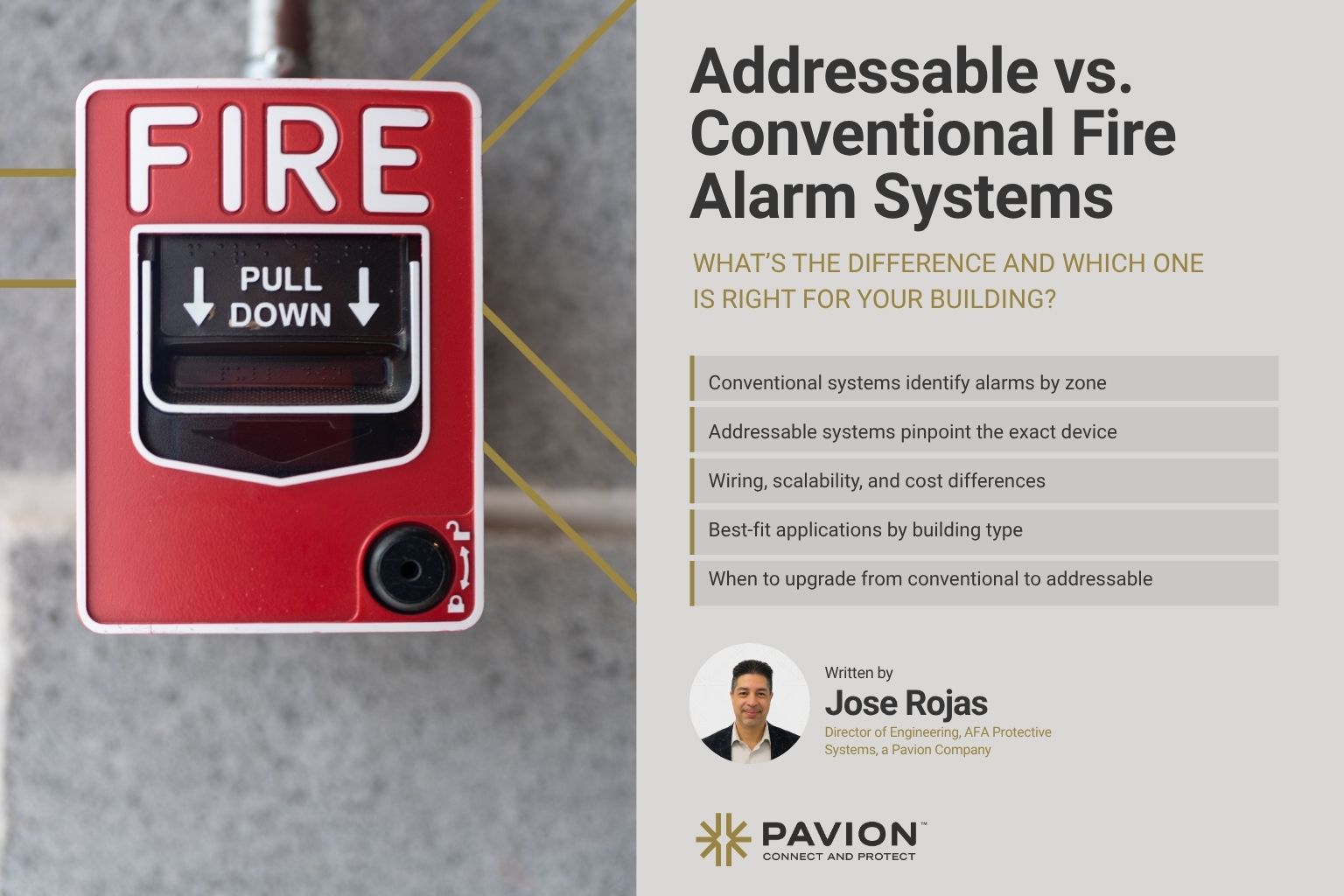
Addressable vs. Conventional Fire Alarm Systems: What’s the Difference and Which One Is Right for Your Building?

Fire alarm systems are one of the most important life safety investments in any commercial building. They help detect fire conditions, alert occupants, support emergency response, and protect people, property, and business continuity.
But not all fire alarm systems communicate information the same way.
Two common types of fire alarm systems are addressable fire alarm systems and conventional fire alarm systems. Both are designed to detect and report fire alarm conditions, but they differ in how devices are connected, how information is displayed, and how quickly teams can identify the source of an alarm.
For building owners, facility managers, property teams, engineers, and safety professionals, understanding the difference between addressable and conventional fire alarm systems can help guide better decisions around new installations, upgrades, expansions, and long-term maintenance.
What Is a Conventional Fire Alarm System?
A conventional fire alarm system divides a building into zones. Devices such as smoke detectors, heat detectors, manual pull stations, and other initiating devices are wired to the fire alarm control panel by zone or circuit.
When a device activates, the control panel identifies the zone where the alarm occurred, but it does not typically identify the exact device. For example, the panel may show “Zone 3 Alarm,” which tells responders the general area of the building where the alarm originated.
This type of system has been used for many years and may still be appropriate for smaller or simpler buildings.
How Conventional Fire Alarm Systems Work
In a conventional system, multiple initiating devices are usually connected to the same circuit. The building is divided into zones, and each zone is wired back to the control panel.
When a device detects smoke, heat, or a manual alarm activation, the panel receives a signal from that zone. The system then activates notification appliances such as horns, strobes, speakers, or other occupant notification devices based on the system design.
The key point is that conventional systems generally tell you where the alarm is coming from by zone, not by exact device.
Best Applications for Conventional Fire Alarm Systems
Conventional fire alarm systems may be a practical option for smaller buildings, simple layouts, and facilities where pinpoint device identification is less critical.
Common applications may include:
Small Commercial Buildings
Small offices, retail spaces, or single-story commercial buildings may be able to use conventional systems effectively when the building layout is simple and the number of devices is limited.
Small Warehouses
A small warehouse with clearly defined zones and limited complexity may be a suitable application for a conventional fire alarm system.
Standalone Buildings
Standalone buildings with fewer rooms, fewer initiating devices, and limited expansion needs may not require the added features of an addressable system.
Budget-Conscious Projects
For some small facilities, conventional systems may offer a lower upfront cost. However, building owners should also consider long-term maintenance, troubleshooting, future expansion, and operational needs before making a decision based on initial cost alone.
What Is an Addressable Fire Alarm System?
An addressable fire alarm system gives each connected device a unique address. This means the fire alarm control panel can identify exactly which device has activated.
Instead of simply showing that an alarm occurred in “Zone 3,” an addressable system may display a specific device location, such as “Smoke Detector — Third Floor East Corridor” or “Manual Pull Station — Main Lobby.”
This added detail can help facility teams, emergency responders, and service technicians quickly understand where the alarm originated. For a closer look at the control panel itself – loops, device capacity, programming and when to upgrade – see our guide to addressable fire alarm panels.
How Addressable Fire Alarm Systems Work
In an addressable system, devices communicate digitally with the fire alarm control panel. Each smoke detector, heat detector, pull station, module, and other addressable device has a unique identifier.
Many addressable systems use signaling line circuits, often called SLC loops, to connect multiple devices to the control panel. The panel monitors each device and can receive detailed information about alarm, trouble, supervisory, or maintenance conditions.
Signaling line circuits can be wired as Class A, where the circuit returns to the panel so devices keep communicating if the wire is broken in one place, or Class B, where the circuit ends at the last device. Which pathway class is required depends on the occupancy, the design and the requirements of NFPA 72 and the authority having jurisdiction.
Depending on the system, addressable technology may also support advanced programming, device status information, event history, sensitivity settings, and integration with other building systems.
Best Applications for Addressable Fire Alarm Systems
Addressable fire alarm systems are often preferred for larger, more complex, or mission-critical buildings where precise information and system flexibility matter.
Common applications include:
Multi-Story Buildings
In a multi-story building, knowing the exact device location can help responders and facility teams react faster and more efficiently.
Healthcare Facilities
Hospitals, medical office buildings, and healthcare campuses require reliable life safety systems and clear alarm information. Addressable systems can support detailed annunciation, faster response, and more efficient troubleshooting.
Schools and Universities
Education facilities often include classrooms, corridors, gyms, auditoriums, cafeterias, labs, and administrative spaces. Addressable systems help identify alarm events across complex building layouts.
Industrial and Manufacturing Facilities
Industrial environments often have multiple hazards, production areas, equipment spaces, and specialized detection needs. Addressable systems provide greater flexibility for design, monitoring, and maintenance.
Large Commercial Offices
In large office buildings, addressable systems can help building engineers and emergency teams quickly locate the exact initiating device.
Hotels and Mixed-Use Properties
Hotels, apartments, retail, restaurants, parking areas, and shared amenities can create complex detection and notification needs. Addressable systems are often better suited for these environments.
Data Centers and Mission-Critical Facilities
For data centers and critical operations, fast identification of alarm, trouble, and supervisory conditions is essential. Addressable systems can provide the visibility needed to reduce disruption and support rapid response.
Addressable vs. Conventional Fire Alarm Systems: Key Differences
The main difference between addressable and conventional fire alarm systems is the level of information provided by the control panel.
A conventional system identifies the general zone. An addressable system identifies the specific device.
| Feature | Conventional | Addressable |
|---|---|---|
| Alarm location | By zone | By individual device |
| Wiring | Separate circuit per zone | Multiple devices on a signaling line circuit |
| Troubleshooting | Inspect devices in the zone | Panel identifies the device |
| Scalability | Best for small, simple buildings | Suited to large or complex facilities |
| System intelligence | Basic status | Device-level reporting and programming |
| Upfront cost | Typically lower | Typically higher |
| Maintenance | More manual investigation | Device-level maintenance data |
1. Device Identification
Conventional systems identify alarms by zone. Addressable systems identify alarms by individual device. This can make a major difference during an emergency or service event. Many buildings also repeat this information on a fire alarm annunciator at the responder entrance, so firefighters can see the alarm location without going to the main panel.
2. Wiring Design
Conventional systems typically require separate circuits for different zones. Addressable systems can connect multiple devices on a signaling line circuit, depending on the design and manufacturer requirements.
3. Troubleshooting
With a conventional system, technicians may need to inspect multiple devices in a zone to find the source of an issue. With an addressable system, the panel can often identify the specific device in alarm, trouble, or supervisory condition.
4. Scalability
Conventional systems may be suitable for smaller buildings but can become less efficient as the building grows. Addressable systems are generally more scalable for larger or more complex facilities.
5. System Intelligence
Addressable systems can provide more detailed information, device-level reporting, programming flexibility, and maintenance data. Conventional systems are simpler and provide less detailed visibility.
6. Cost
Conventional systems may have a lower upfront equipment cost for smaller applications. Addressable systems may cost more initially, but they can provide long-term value through easier troubleshooting, better visibility, scalability, and operational efficiency.
7. Maintenance
Addressable systems can make maintenance more efficient because the panel can identify device-level issues. Conventional systems may require more manual investigation when a zone reports a problem.
When to Use a Conventional Fire Alarm System
A conventional fire alarm system may be appropriate when:
- The building is small or simple.
- The number of devices is limited.
- Exact device identification is not critical.
- The facility has minimal future expansion needs.
- Budget constraints are a major factor.
- The building layout can be divided into clear zones.
- Code requirements and the authority having jurisdiction allow it.
Conventional systems can still provide effective fire alarm protection when applied in the right environment.
When to Use an Addressable Fire Alarm System
An addressable fire alarm system is often the better choice when:
- The building is large or complex.
- Exact device location is important.
- Faster troubleshooting is needed.
- The facility may expand in the future.
- The building has multiple floors, wings, tenants, or departments.
- The facility includes mission-critical operations.
- Detailed reporting and system visibility are valuable.
- Maintenance efficiency is a priority.
For many modern commercial, healthcare, education, industrial, and mixed-use facilities, addressable fire alarm systems provide the level of intelligence and flexibility needed to support long-term safety and operations.
Is an Addressable Fire Alarm System Better Than a Conventional System?
Addressable systems offer more information, flexibility, and diagnostic capability, but that does not mean they are required for every building.
For a small standalone facility with a simple layout, a conventional system may be practical and cost-effective. For a large building, multi-site campus, or facility where fast response and detailed information matter, an addressable system is usually the stronger choice.
The right system depends on the building size, occupancy, code requirements, budget, operational needs, and future growth plans.
Why Many Facilities Upgrade from Conventional to Addressable Systems
Many older buildings still operate conventional fire alarm systems. While these systems may continue to function, facility teams may consider upgrading when the system becomes difficult to maintain, lacks replacement parts, causes recurring trouble conditions, or no longer supports the building’s operational needs.
Reasons to upgrade may include:
- Improved device-level visibility
- Faster emergency response support
- Easier troubleshooting
- Better maintenance reporting
- Improved scalability
- Better support for renovations or expansions
- Compatibility with modern fire alarm technology
- Reduced operational disruption during service events
Upgrading to an addressable system can be especially valuable when a building has grown beyond the capabilities of its original fire alarm design. Pavion’s commercial fire alarm installation team can assess what existing wiring and devices can be reused and plan a phased cutover.
Fire Alarm System Design Should Match the Building
Selecting between an addressable and conventional fire alarm system should not be based on equipment alone. A qualified fire alarm professional should evaluate the entire building and consider:
- Building size
- Occupancy type
- Number of floors
- Layout complexity
- Hazard areas
- Code requirements
- Notification needs
- Monitoring requirements
- Future expansion plans
- Maintenance access
- Existing system condition
- Budget and lifecycle costs
A well-designed fire alarm system should support life safety, code compliance, emergency response, maintenance efficiency, and long-term reliability.
Work With a Fire Alarm Expert
Choosing the right fire alarm system is an important decision for any facility. Whether you are designing a new system, upgrading an older panel, expanding an existing building, or replacing outdated equipment, working with an experienced fire alarm partner can help ensure the system is designed correctly from the start.
A fire alarm expert can evaluate your facility, compare addressable and conventional options, identify code and performance requirements, and recommend a solution that fits your building today while supporting future needs. Once the system is in place, regular inspection and testing keep it compliant and reliable.
Conclusion
Addressable and conventional fire alarm systems both help protect buildings and occupants, but they provide different levels of information and flexibility.
Conventional fire alarm systems identify alarms by zone and may be suitable for smaller, simpler buildings. Addressable fire alarm systems identify the exact device in alarm and are often better suited for larger, more complex, or mission-critical facilities.
The best choice depends on your building, your risks, your operations, and your long-term goals.
By working with a qualified fire alarm expert, you can select a system that supports code compliance, improves response, simplifies maintenance, and helps protect what matters most.
FAQs
What is the difference between an addressable and conventional fire alarm system?
A conventional fire alarm system identifies alarms by zone, while an addressable fire alarm system identifies the specific device that triggered the alarm.
What is a conventional fire alarm system?
A conventional fire alarm system divides a building into zones. When an alarm occurs, the panel shows the zone where the event happened, but not usually the exact device.
What is an addressable fire alarm system?
An addressable fire alarm system assigns a unique address to each device, allowing the control panel to identify the exact detector, pull station, or module involved in an alarm, trouble, or supervisory condition.
Which system is better for a small building?
A conventional fire alarm system may be suitable for a small building with a simple layout and limited devices, depending on code requirements and the authority having jurisdiction.
Which system is better for a large building?
An addressable fire alarm system is usually better for larger or more complex buildings because it provides device-level identification, better troubleshooting, and greater flexibility.
Are addressable fire alarm systems more expensive?
Addressable systems may have a higher upfront cost, but they can provide long-term value through easier maintenance, faster troubleshooting, and better scalability.
Can a conventional fire alarm system be upgraded to an addressable system?
Yes, many facilities upgrade from conventional to addressable systems. The scope of the upgrade depends on the existing wiring, devices, panel, code requirements, and building conditions.
Do addressable systems reduce troubleshooting time?
Yes. Because addressable systems can identify the specific device in alarm or trouble, technicians can often locate and resolve issues faster than with a conventional zone-based system.
Are conventional fire alarm systems outdated?
Not necessarily. Conventional systems may still be appropriate for smaller or simpler facilities. However, larger and more complex buildings often benefit from addressable technology.
Who should choose the right fire alarm system for my building?
A qualified fire alarm professional should evaluate your facility, applicable codes, system requirements, and long-term needs before recommending an addressable or conventional system.