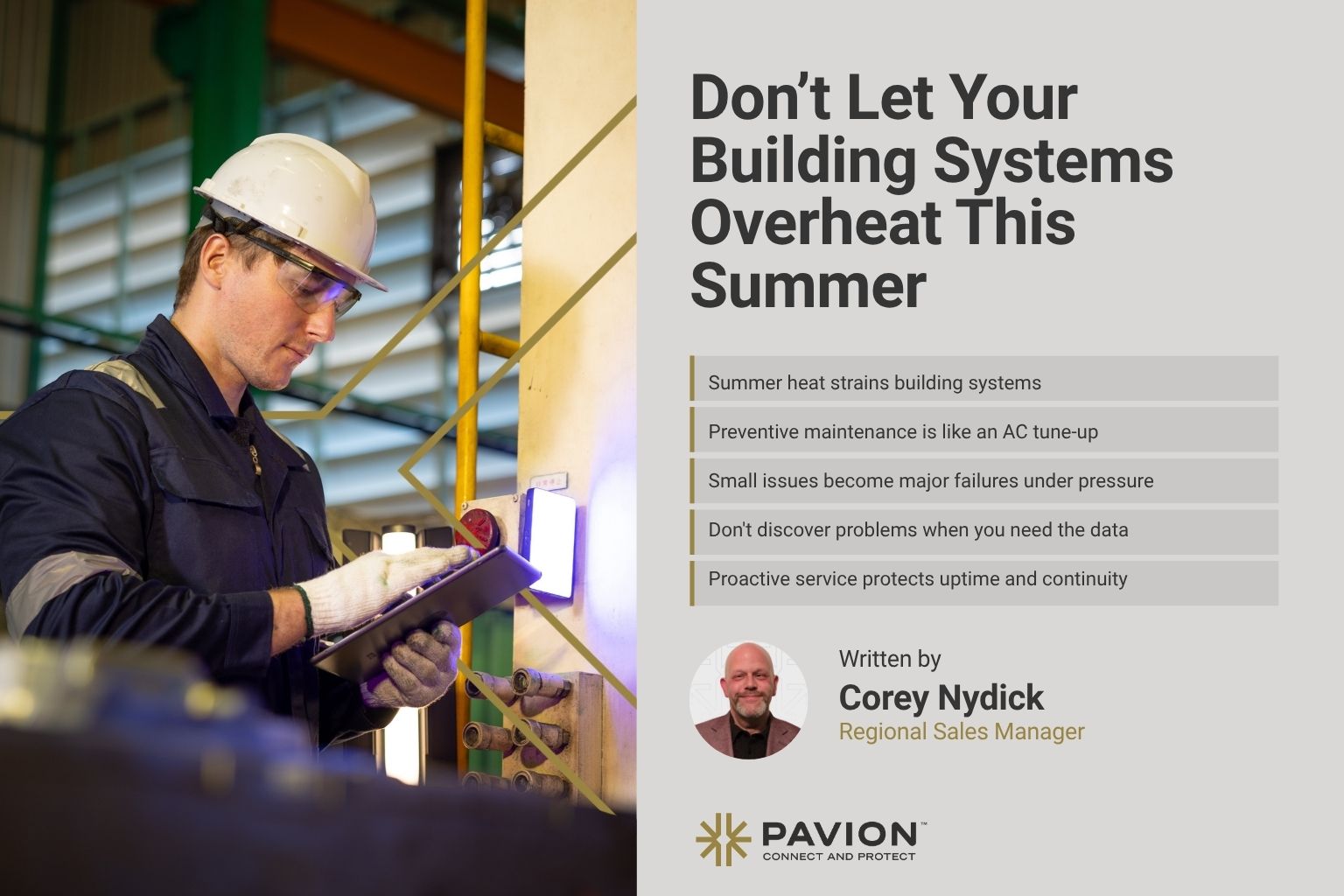
Don’t Let Your Building Systems Overheat This Summer

Why Preventive Maintenance Matters Before Your Systems Are Pushed to the Limit
Summer heat can be relentless. Across the East Coast, recent extreme temperatures have pushed daily highs into the triple digits, with heat index values making it feel even hotter. In New York, LaGuardia Airport recently recorded 104°F as part of a prolonged Northeast heat wave, while communities across the region dealt with heavy demand on infrastructure, power systems, and emergency response resources.
When heat like this arrives, homeowners and businesses start calling HVAC companies before their air conditioning systems fail. They schedule inspections, clean filters, check refrigerant levels, and make sure everything is ready to perform before the next stretch of extreme weather.
The same mindset should apply to your building technology systems.
Your video surveillance, access control, fire alarm, intrusion, critical communications, and integrated security systems may not cool the air, but they are just as essential when your facility is under pressure. When operations are busy, temperatures are high, people are moving in and out, and business continuity matters most, you do not want to discover that a camera is offline, a door is not reporting properly, a panel needs service, or a report cannot be generated when you need it.
Preventative maintenance helps ensure your systems are ready before the moment they are needed most.
Extreme Weather Puts More Pressure on Facilities
During a major heat wave, facilities often experience increased strain. HVAC systems run longer. Electrical loads increase. Employees, tenants, visitors, patients, customers, and students may rely more heavily on buildings as safe, climate-controlled environments. Severe heat can also be followed by storms, outages, flooding, or other disruptions, creating additional operational challenges.
That is why system reliability matters.
For many organizations, building systems are not just background technology. They support safety, visibility, compliance, response, and decision-making. Security teams rely on video. Facility teams rely on alerts and reporting. Operations teams rely on access control, fire life safety systems, and communication tools to help maintain order and continuity.
If these systems are not maintained, small issues can become larger problems at exactly the wrong time.
Think of Preventive Maintenance Like an AC Tune-Up
Most people do not wait until their air conditioning stops working in the middle of a heat wave to think about maintenance. They know the cost of waiting can be uncomfortable, disruptive, and expensive.
The same is true for your building systems.
A preventive maintenance visit can help identify issues such as:
- Cameras that are offline, obstructed, misaligned, or producing poor image quality
- Access control points that are not communicating properly
- Devices with low batteries, trouble signals, or service needs
- Fire alarm system issues that require inspection or correction
- Software, firmware, or reporting tools that need updates
- Network or connectivity concerns affecting system performance
- Gaps in documentation, user access, or system records
- Equipment nearing end of life that should be planned for before failure
These may seem like small items when operations are running smoothly. But when a business needs footage, event history, access logs, alarm reports, or real-time visibility, those small issues can become major obstacles.
Don’t Wait Until You Need the Information
One of the biggest risks of deferred maintenance is discovering a problem only after something happens.
A camera may appear to be installed, but is it recording properly?
An access control system may seem functional, but are events being logged correctly?
A reporting tool may exist, but is the data accurate and available when needed?
A fire or life safety system may be in place, but has it been inspected, tested, and maintained according to requirements?
Businesses often realize the value of their systems in urgent moments: after an incident, during an investigation, during an audit, during a compliance review, or when leadership needs answers quickly.
Preventive maintenance helps reduce the chance of finding out too late that a system was not performing as expected.
Proactive Service Supports Business Continuity
Building technology systems are most valuable when they work consistently, quietly, and reliably. Preventive maintenance helps support that reliability by giving organizations greater confidence in the systems they depend on every day.
A proactive service approach can help:
Improve system uptime by identifying issues before they cause disruption.
Strengthen safety and security by helping ensure cameras, alarms, access points, and communication tools are functioning as intended.
Support compliance by keeping inspection, testing, maintenance, and reporting processes more organized.
Reduce emergency service needs by addressing smaller concerns before they become urgent.
Extend system life by keeping equipment properly maintained and identifying replacement needs in advance.
Create better visibility by ensuring teams have access to accurate information, reports, and system data when they need it.
Summer Is a Smart Time to Review Your Systems
Summer is a natural checkpoint for preventive maintenance. Heat, storms, travel schedules, seasonal staffing changes, higher visitor traffic, and increased facility demands can all create new pressure on building operations.
Before systems are pushed to the limit, organizations should ask:
Are all cameras online and recording properly?
Are access control points working as expected?
Are fire and life safety systems up to date on inspections and service?
Are communication systems ready for emergency or high-demand situations?
Can reports, logs, and video be accessed quickly if needed?
Are there recurring trouble signals or service issues that have not been addressed?
Are older systems creating risk, inefficiency, or limited visibility?
Answering these questions before a disruption occurs is far better than trying to solve them during one.
Pavion Helps Keep Critical Systems Ready
At Pavion, we help organizations maintain, service, and support the integrated systems that protect people, property, and operations. From fire alarm and life safety systems to video surveillance, access control, intrusion detection, critical communications, and advanced technology solutions, Pavion works with customers to help keep their systems reliable, connected, and ready.
Preventive maintenance is not just about checking a box. It is about protecting uptime, strengthening preparedness, and giving teams the information they need when it matters most.
Just like an HVAC tune-up before a heat wave, proactive system maintenance helps ensure your building is ready before conditions become more demanding.
Don’t Let Your Systems Fail Under Pressure
Extreme summer heat is a reminder that preparation matters. When systems are pushed to the limit, the organizations that planned ahead are often the ones best positioned to respond.
Do not wait until you need video footage, access reports, alarm history, or emergency communications to find out something is not working.
Schedule preventive maintenance now and help ensure your building systems are ready for the season ahead.
Pavion Connects and Protects by providing integrated fire, security, and communication solutions that help organizations operate with greater safety, visibility, and confidence.
Frequently Asked Questions About Building System Preventive Maintenance
What is preventive maintenance for building technology systems?
Preventive maintenance is the routine inspection, testing, cleaning, updating, and servicing of building technology systems before a failure occurs. It can include video surveillance, access control, fire alarm, intrusion detection, critical communications, network-connected devices, and other integrated systems.
Why is preventive maintenance important for building security systems?
Preventive maintenance helps identify problems such as offline cameras, malfunctioning access control devices, low batteries, communication failures, software issues, and recurring trouble signals. Addressing these concerns early can improve system reliability, reduce unexpected downtime, and help ensure critical information is available when needed.
Can extreme heat affect security and building technology systems?
Extreme heat can contribute to challenging operating conditions for facilities and the technology they rely on. High temperatures, increased electrical demand, power interruptions, storms, humidity, and overworked cooling systems may affect equipment performance, connectivity, power supplies, batteries, and supporting infrastructure.
How often should building security systems receive preventive maintenance?
The appropriate maintenance schedule depends on the type of system, equipment manufacturer recommendations, facility requirements, applicable codes, contractual obligations, and the organization’s operating environment. Many facilities use scheduled quarterly, semiannual, or annual service visits, while certain fire and life safety systems may require specific inspection and testing intervals.
What should be included in a security system maintenance inspection?
A security system maintenance inspection may include checking camera operation and image quality, confirming video recording, testing access control devices, reviewing alarm signals, inspecting power supplies and backup batteries, checking network connectivity, updating software or firmware, reviewing system logs, and documenting equipment that may need repair or replacement.
How do I know whether my surveillance cameras are working properly?
Confirm that every camera is online, positioned correctly, producing a clear image, and recording to the appropriate system. Teams should also verify that stored footage can be retrieved, timestamps are accurate, retention settings meet organizational requirements, and cameras are not obstructed or affected by environmental conditions.
What are common signs that an access control system needs maintenance?
Common warning signs include doors that do not lock or unlock properly, delayed credential responses, readers that work intermittently, missing access events, recurring communication errors, damaged door hardware, inaccurate reports, and frequent trouble notifications. These issues should be investigated before they affect security or daily operations.
Why should fire alarm and life safety systems be inspected regularly?
Regular inspection, testing, and maintenance help confirm that fire alarm and life safety systems are operating as intended. They can also help organizations identify trouble signals, damaged devices, communication issues, documentation gaps, and other conditions that may affect system performance or compliance obligations.
Can preventive maintenance reduce emergency service calls?
Preventive maintenance can reduce the likelihood of some emergency service needs by identifying worn equipment, low batteries, connectivity problems, software issues, and other concerns before they cause a larger disruption. It also allows organizations to plan repairs and equipment replacements more effectively.
How does preventive maintenance support business continuity?
Preventive maintenance supports business continuity by helping keep critical security, fire, communication, and monitoring systems operational. Reliable systems give facility, security, compliance, and leadership teams better access to alerts, video footage, access logs, alarm history, and other information during an incident or disruption.
When is the best time to schedule building system maintenance?
Maintenance should be scheduled before periods of high demand whenever possible. Summer can be an effective time to review building systems because extreme heat, storms, seasonal staffing changes, travel schedules, and increased facility activity may place additional pressure on operations and supporting infrastructure.
What building systems should be reviewed before severe summer weather?
Organizations should consider reviewing video surveillance, access control, fire alarm, intrusion detection, emergency communications, backup power, network connectivity, monitoring services, reporting tools, and integrated system connections. Any unresolved trouble signals, recurring service issues, or aging equipment should also be evaluated.
What happens when building system maintenance is delayed?
Deferred maintenance can lead to unexpected outages, unreliable reports, missing video footage, access control problems, recurring alarms, emergency service calls, compliance concerns, and shortened equipment life. In many cases, organizations do not discover the problem until they urgently need the system or its data.
How can Pavion help with preventive maintenance?
Pavion provides service and support for integrated fire, security, and communication solutions. Pavion can help organizations inspect, maintain, troubleshoot, and plan for the systems they rely on to protect people, property, and operations.