Integrated Security Systems: Why Connected Platforms Create Stronger Protection

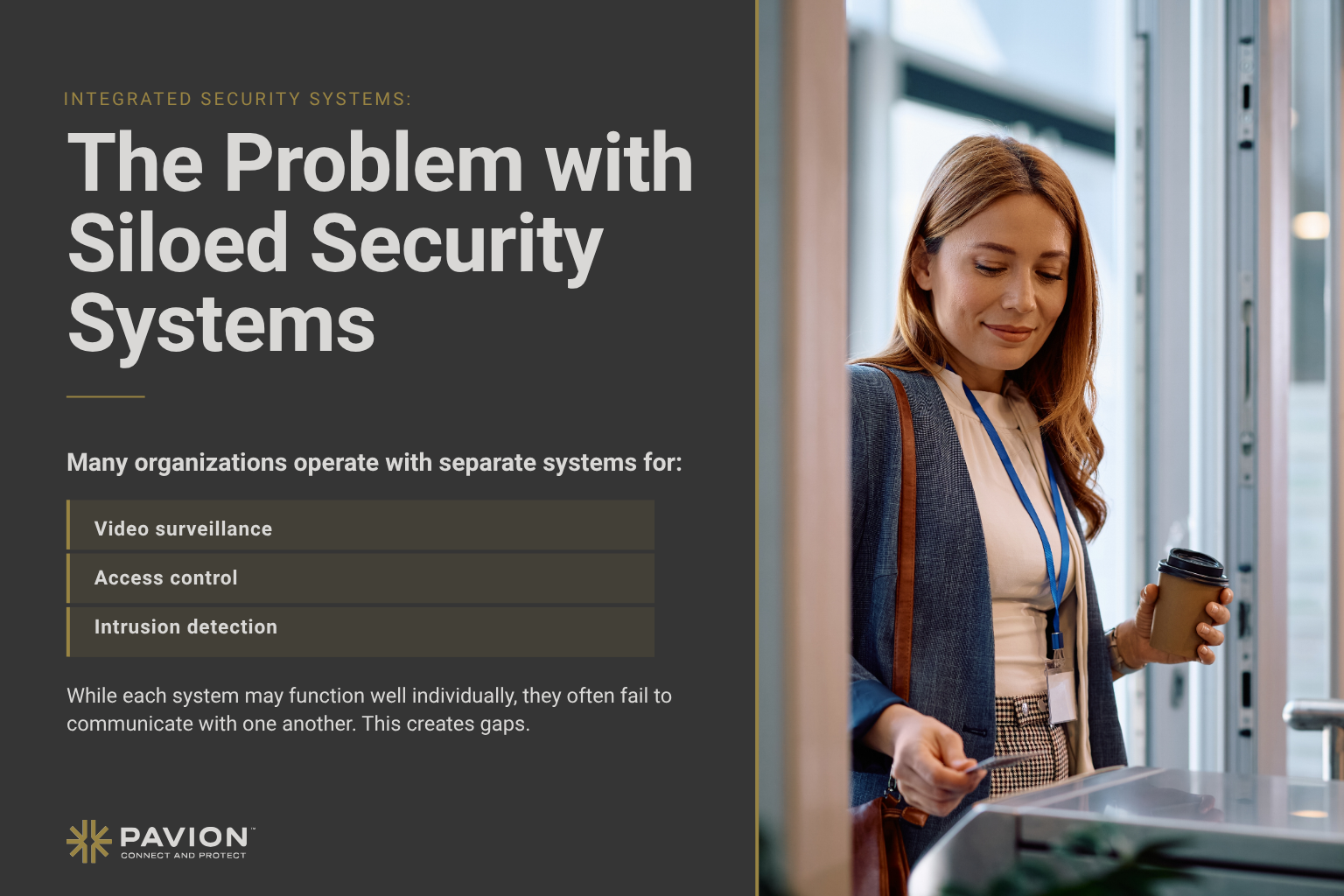
The Problem with Siloed Security Systems
Many organizations operate with separate systems for:
• Video surveillance
• Access control
• Intrusion detection
While each system may function well individually, they often fail to communicate with one another.
This creates gaps in:
• Visibility
• Response time
• Overall security effectiveness
• Instant verification of who was involved, what occurred, and why an event was triggered
Without connected systems, security teams are often forced to manually piece together information during critical moments, slowing response and increasing risk.
What Are Integrated Security Systems?
Integrated security systems bring multiple technologies together into a single, unified platform.
Instead of operating independently, systems work together to:
• Share data in real time
• Trigger automated responses
• Provide a comprehensive view of security events
• Improve situational awareness across an entire facility or campus
Why Integration Makes Security Stronger
When systems are connected, they become more than the sum of their parts. They enhance and become an extension of your security team, allowing security professionals to work more effectively and efficiently through real-time visibility, automation, and coordinated response.
Real-Time Data Sharing
An access control event can instantly trigger:
• Video footage retrieval
• Alerts to security personnel
• Automated system responses
This allows teams to quickly verify who was involved, what happened, and why an event occurred without switching between multiple platforms.
Faster Incident Response
Instead of manually checking multiple systems, security teams can:
• View all relevant data in one interface
• Respond immediately
• Reduce risk escalation
Faster access to information helps organizations minimize downtime, improve safety, and respond to incidents with greater confidence.
Improved Accuracy
Integration reduces human error by:
• Automating processes
• Eliminating manual cross-checking
• Providing consistent data across systems
This creates a more reliable and efficient security operation.
Real-World Example of Integration in Action
Imagine an unauthorized access attempt:
- A door access request is denied
- The system automatically pulls corresponding video footage
- Security receives an alert with real-time visuals
- Additional actions can be triggered, such as locking nearby doors
Without integration, these steps would require manual effort, delaying response and increasing risk.
Strengthening Your Security Team
Integrated systems act as a force multiplier for security personnel.
They allow teams to:
• Monitor more effectively with fewer resources
• Respond faster to incidents
• Focus on decision-making instead of system management
• Gain faster verification and improved situational awareness
By reducing the burden of managing disconnected platforms, integrated systems help security teams make faster, more informed decisions while improving both efficiency and effectiveness.
Beyond Security: Operational Benefits
Integration also supports broader business goals, including:
• Streamlined reporting and compliance
• Improved audit trails
• Better visibility into facility operations
• Enhanced data-driven decision-making
Organizations gain not only stronger protection, but also greater operational insight and efficiency.
What to Look for in an Integrated Security Platform
When evaluating an integrated security solution, consider:
• Compatibility with existing systems
• Centralized management interface
• Real-time data sharing capabilities
• Scalability for future growth
• Strong vendor support
Choosing the right integration partner is critical to ensuring seamless deployment, long-term performance, and future flexibility.
Frequently Asked Questions
What is an integrated security system?
An integrated security system is a unified platform that combines multiple security technologies into one connected system for improved visibility, automation, and incident response.
Why is integration important in security?
Integration allows systems to share data and automate responses, helping organizations improve efficiency, reduce risk, and strengthen overall security effectiveness.
Can existing systems be integrated?
In many cases, yes. A trusted security partner can evaluate compatibility and recommend the best integration approach based on your existing infrastructure.
Does integration replace existing systems?
Not necessarily. Integration often enhances existing systems by connecting them together rather than replacing them entirely.
What industries benefit most from integrated security?
Healthcare, education, corporate campuses, manufacturing, government, and critical infrastructure environments benefit greatly from unified security systems.
Final Thought
Security systems should not operate in isolation.
When systems are integrated, they work together as a cohesive unit, creating a stronger, smarter, and more responsive security environment that empowers security teams with greater visibility, faster verification, and more effective incident response.
As security challenges continue to evolve, connected platforms help organizations move from reactive security management to proactive protection.