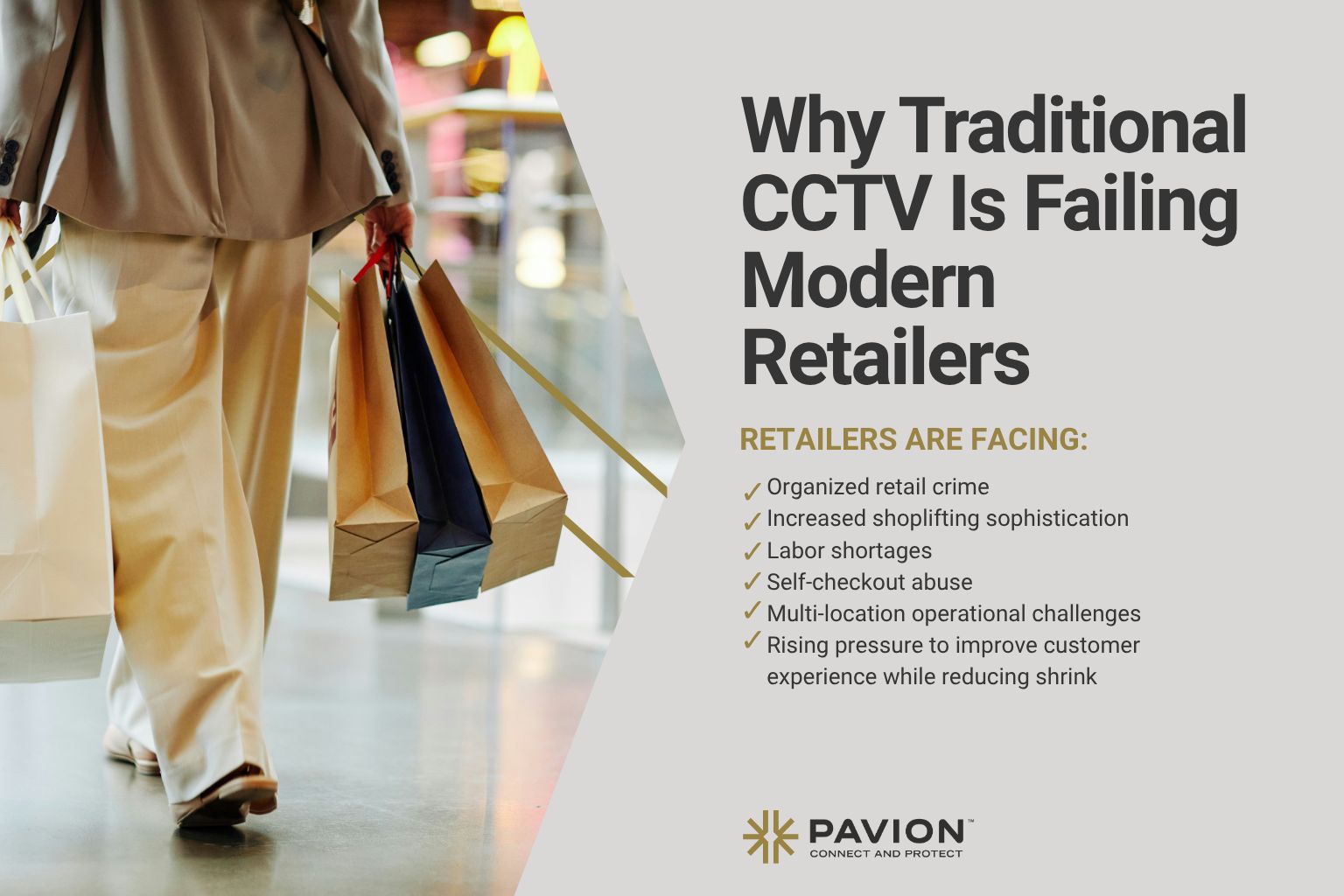
Why Traditional CCTV Is Failing Modern Retailers

For years, traditional CCTV systems served one primary purpose: recording incidents after they occurred. Cameras captured footage, loss prevention teams reviewed it, and businesses reacted accordingly.
But today’s retail environment has changed dramatically.
Retailers are facing:
- Organized retail crime
- Increased shoplifting sophistication
- Labor shortages
- Self-checkout abuse
- Multi-location operational challenges
- Rising pressure to improve customer experience while reducing shrink
Modern threats move faster than traditional surveillance systems were designed to handle.
Simply recording footage is no longer enough.
Today’s retailers need intelligent systems capable of identifying risks in real time, delivering proactive alerts, and helping teams respond before losses escalate.
The Problem With Reactive Security
Traditional CCTV is reactive by nature.
In many retail environments, footage is only reviewed:
- After merchandise is stolen
- After an employee incident occurs
- After a customer dispute
- After vandalism or liability claims arise
By the time someone reviews the footage, the financial damage has already happened.
Modern retail operations cannot afford delayed awareness.
Retailers need systems that actively monitor environments, identify anomalies, and notify teams immediately when suspicious activity occurs.
Organized Retail Crime Is Outpacing Legacy Systems
Organized retail crime (ORC) has evolved significantly in recent years.
Today’s theft groups are often coordinated, strategic, and highly mobile. Many operate across multiple stores and jurisdictions, making detection far more difficult for retailers relying solely on traditional cameras.
Legacy CCTV systems struggle because they:
- Depend heavily on manual monitoring
- Lack intelligent analytics
- Cannot identify behavioral patterns
- Provide limited real-time visibility
- Create massive amounts of footage that teams rarely review fully
As theft tactics become more sophisticated, retailers require smarter tools capable of recognizing suspicious behaviors as they happen.
Why Modern Retailers Are Turning to AI-Powered Video Analytics
AI-powered surveillance systems are transforming retail security by introducing intelligence into video monitoring.
Instead of simply recording footage, modern systems can:
- Detect suspicious movement patterns
- Identify loitering
- Recognize unauthorized access attempts
- Alert staff to after-hours activity
- Monitor high-risk areas in real time
- Detect potential theft behaviors before incidents escalate
This shift allows retailers to move from reactive investigations to proactive prevention.
AI-powered analytics also help reduce the operational burden on security teams by prioritizing critical events instead of forcing staff to manually review hours of footage.
Retail Security Is Becoming Operational Intelligence
One of the biggest shifts in retail security is that surveillance systems are no longer serving only loss prevention teams.
Today’s intelligent security platforms can also provide operational insights such as:
- Customer traffic patterns
- Store occupancy trends
- Queue management
- Heat mapping
- Staffing optimization
- Safety monitoring
Retailers are increasingly using video analytics to improve both security and business performance.
This convergence of security and operations is changing how organizations evaluate technology investments.
Security systems are no longer viewed solely as cost centers. They are becoming business intelligence tools that support profitability, efficiency, and customer experience.
The Customer Experience Challenge
Retailers face another major challenge: balancing security with customer experience.
Aggressive or highly visible security measures can negatively impact the shopping environment, especially in luxury retail or customer-focused brands.
Modern AI-powered surveillance helps retailers maintain stronger protection while creating a less disruptive customer experience.
Instead of relying entirely on:
- Physical interventions
- Constant guard presence
- Locked merchandise
- Intrusive security measures
Retailers can use intelligent monitoring to identify genuine risks while allowing legitimate customers to shop comfortably.
Cloud-Based and Centralized Monitoring Are Changing Retail Security
Multi-location retailers are increasingly moving toward centralized security operations.
Cloud-based security platforms allow organizations to:
- Monitor multiple stores remotely
- Standardize security protocols
- Receive centralized alerts
- Reduce infrastructure complexity
- Improve scalability
- Access footage securely from anywhere
Traditional CCTV systems often lack the flexibility and integration capabilities modern retailers require.
As retail environments become more connected, scalable and integrated platforms are becoming essential.
Why Retailers Need More Than Cameras
The future of retail security is not simply about installing more cameras.
It is about creating intelligent, integrated ecosystems that combine:
- AI video analytics
- Remote monitoring
- Access control
- Intrusion detection
- Real-time alerts
- Centralized management
- Operational analytics
Retailers need solutions that help reduce shrink, improve visibility, support operations, and enhance the customer experience simultaneously.
Traditional CCTV systems were designed for yesterday’s retail environment.
Modern retail requires intelligent security built for today’s challenges and tomorrow’s risks.
FAQs
What is the biggest limitation of traditional CCTV systems in retail?
Traditional CCTV systems are primarily reactive. They record incidents for later review but typically do not provide real-time alerts or intelligent threat detection capabilities that modern retailers need.
How does AI-powered retail security improve loss prevention?
AI-powered retail security systems can identify suspicious behaviors, detect anomalies, monitor high-risk areas, and send real-time alerts before incidents escalate, helping retailers proactively reduce shrink and theft.
What types of threats can AI video analytics detect?
Modern AI video analytics can detect behaviors such as loitering, unauthorized access attempts, after-hours activity, suspicious movement patterns, and potential theft activity in real time.
How does video analytics support retail operations beyond security?
Modern surveillance platforms can also provide operational intelligence, including customer traffic analysis, occupancy trends, queue management, heat mapping, staffing optimization, and safety monitoring.
Why are retailers adopting cloud-based security platforms?
Cloud-based security platforms allow retailers to centrally monitor multiple locations, standardize security protocols, reduce infrastructure complexity, improve scalability, and securely access footage remotely.
Can modern surveillance systems improve customer experience?
Yes. AI-powered surveillance allows retailers to strengthen security while reducing reliance on intrusive measures like locked merchandise or excessive guard presence, creating a smoother shopping experience for legitimate customers.
What is organized retail crime (ORC)?
Organized retail crime refers to coordinated theft operations carried out by professional groups that often target multiple retail locations using sophisticated tactics designed to evade traditional security systems.
What technologies are included in modern retail security ecosystems?
Modern retail security ecosystems often combine AI video analytics, remote monitoring, access control, intrusion detection, real-time alerts, centralized management, and operational analytics into one integrated platform.