Video Walls for Network Operation Centers: From Visibility to Operational Intelligence

Why Modern Network Operation Centers Need More Than Screens
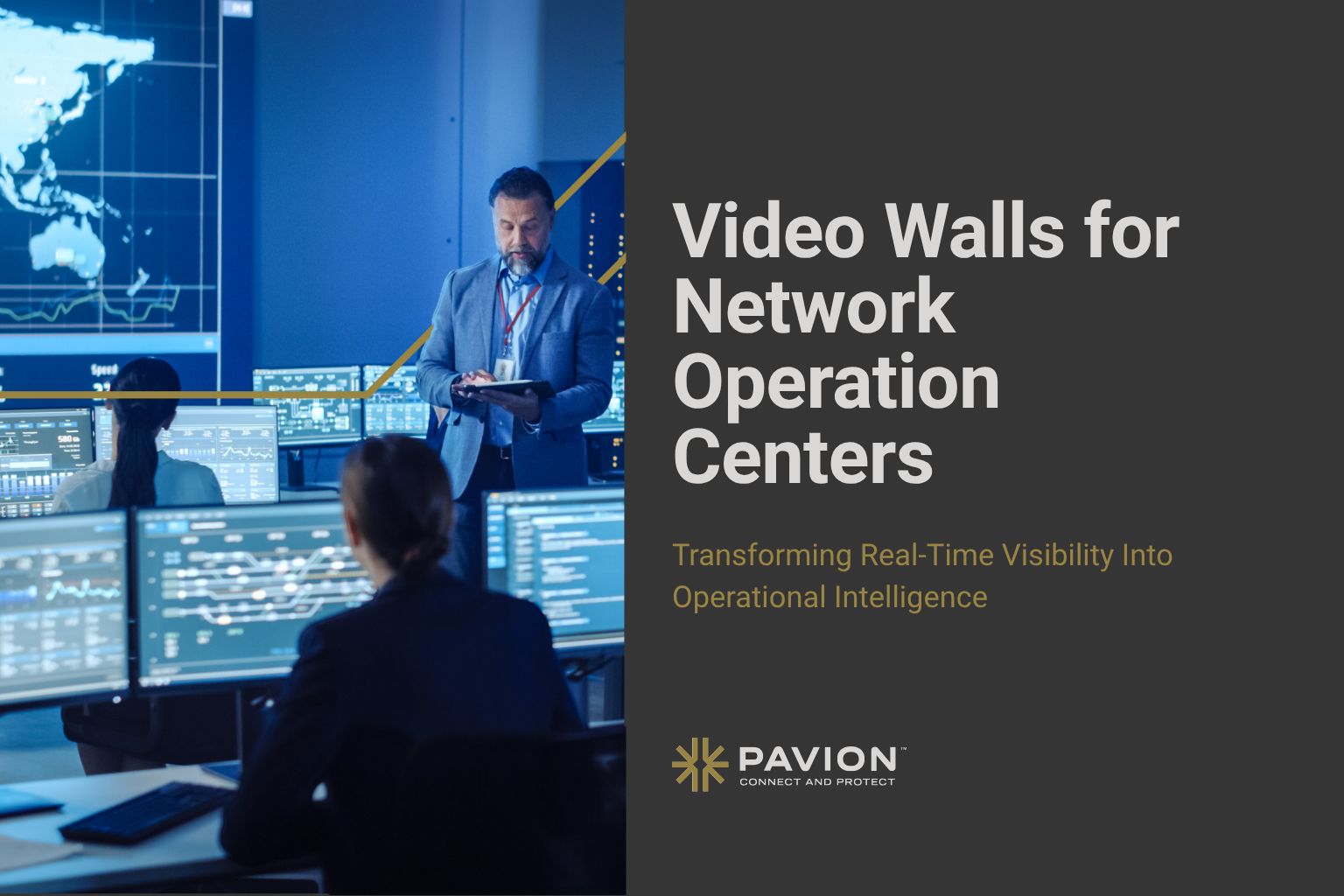
Today’s Network Operation Centers (NOCs) are responsible for far more than simply monitoring uptime. They have evolved into the operational nerve center for critical infrastructure, cybersecurity, communications, facilities, and business continuity.
As organizations become increasingly connected, the amount of real time data flowing through operations teams has grown exponentially. Operators are expected to monitor multiple systems simultaneously, identify issues instantly, and coordinate rapid responses across departments, often under significant pressure.
The challenge for most organizations is not a lack of data. It is managing too much of it.
Traditional NOC environments built around multiple disconnected monitors and siloed systems often create:
- Fragmented visibility
- Alert fatigue
- Slower response times
- Inefficient collaboration
- Delayed decision making
Simply adding more screens does not solve the problem. In many cases, it only increases complexity.
Modern video walls for Network Operation Centers provide a centralized operational view, but their true value comes from supporting operational intelligence, not just displaying information.
What Is a Video Wall in a Network Operation Center?
A video wall is a large scale display system composed of multiple high resolution screens working together as a single visual platform.
In a NOC environment, video walls are commonly used to display:
- Real time network performance
- Cybersecurity alerts
- Security camera feeds
- System health dashboards
- Building automation data
- Incident response workflows
- Operational analytics and KPIs
However, the presence of a video wall alone does not automatically improve operations.
The real value comes from how information is:
- Integrated
- Prioritized
- Visualized
- Delivered to operators in real time
Without a thoughtful operational strategy, a video wall can quickly become a large display filled with disconnected dashboards and unnecessary noise.
The goal is not to display more information. The goal is to display the right information at the right time.
The Shift From Monitoring to Operational Intelligence
Modern Network Operation Centers are evolving from passive monitoring environments into proactive operational command centers.
This transformation is being driven by operational intelligence, where systems, data, and workflows are unified into a centralized environment that improves visibility and accelerates decision making.
Traditional NOC Challenges
In many legacy environments:
- Operators constantly switch between multiple applications
- Critical data exists in isolated systems
- Alerts arrive without meaningful context
- Teams struggle to coordinate during incidents
The Modern Operational Intelligence Approach
Integrated video wall environments help organizations:
- Consolidate critical information into a single operational view
- Prioritize alerts in real time
- Improve collaboration across teams
- Reduce response times
- Make faster, more informed decisions
When designed correctly, a video wall becomes the visual interface for operational intelligence across the entire organization.
How Video Walls Improve Network Operation Center Performance
Faster Incident Response
Centralized visibility enables operators to identify and validate issues more quickly. Instead of searching through multiple applications and dashboards, teams can respond to incidents with greater speed and confidence.
Improved Cross Team Collaboration
A shared operational view helps align IT, cybersecurity, facilities, leadership, and communications teams during both routine operations and emergency events.
When everyone is working from the same information, decision making becomes more coordinated and efficient.
Reduced Operator Fatigue
Operators in high pressure environments often experience alert fatigue caused by excessive notifications and cluttered displays.
Well designed video wall systems reduce unnecessary noise by prioritizing critical data and simplifying workflows, helping teams remain focused during long operational periods.
Stronger Business Continuity
Improved situational awareness allows organizations to identify emerging risks earlier and respond proactively before issues escalate into larger disruptions.
This helps minimize downtime, reduce operational impact, and improve overall resilience.
Common Video Wall Mistakes Organizations Make
One of the biggest mistakes organizations make is treating a video wall as a display upgrade instead of an operational system.
A poorly designed environment can actually create more operational challenges, including:
- Too many dashboards competing for attention
- Static content operators eventually ignore
- Limited integration between systems
- Poor content prioritization
- Lack of role based views for different teams
The effectiveness of a video wall is not determined by the number of screens.
It is determined by how effectively the system delivers actionable intelligence to operators.
Without a clear operational strategy, even the most advanced display technology can become a distraction rather than a solution.
Key Features to Look for in a NOC Video Wall Solution
Organizations evaluating video wall solutions should focus on operational outcomes rather than display specifications alone.
High Resolution Visualization
Clear, high quality displays allow operators to quickly interpret complex information and identify critical issues.
Dynamic Content Management
Modern environments should allow teams to:
- Adjust layouts in real time
- Prioritize alerts dynamically
- Customize views based on operational needs
Scalable Architecture
As organizations grow and adopt new technologies, video wall systems should scale easily to support additional data sources and integrations.
Reliability and Redundancy
NOC environments operate around the clock. Systems must be designed for 24/7 performance with failover protection and high availability.
Integrated Data Ecosystem
Effective video wall environments integrate seamlessly with:
- Security systems
- Network monitoring tools
- Building management systems
- Communications platforms
- Cloud infrastructure
- IT operations platforms
Designing a Video Wall That Actually Works
Successful command center environments are not defined by screen size. They are defined by operational design.
Key considerations include:
- Operator workflows
- Content prioritization
- Escalation procedures
- Viewing angles and ergonomics
- System integration requirements
- Cybersecurity protections
- Future scalability
The objective is not to overwhelm operators with data.
The objective is to improve operational clarity and enable faster, smarter decisions.
Why Integration Expertise Matters
Modern Network Operation Centers require more than display installation. They require system orchestration and operational integration.
Pavion brings extensive experience designing and deploying both simple and highly complex video wall environments, including:
- Fully integrated control systems
- Multi system data integration
- Scalable operational architectures
- Reliable 24/7 monitoring environments
In addition to video wall deployment, Pavion also designs complete command center environments with:
- Ergonomic operator consoles
- Optimized room layouts
- Integrated communications systems
- Infrastructure designed to reduce fatigue and improve performance
This holistic approach ensures the video wall functions as part of a cohesive operational ecosystem rather than an isolated display solution.
The Future of Video Walls in Network Operation Centers
As organizations continue adopting AI, automation, and predictive analytics, video walls are evolving into intelligent operational platforms.
Emerging capabilities include:
- AI driven alert prioritization
- Predictive monitoring
- Real time anomaly detection
- Collaboration across distributed teams
- Advanced visualization for complex environments
The modern video wall is no longer just a display system.
It is becoming the operational interface through which organizations deliver real time intelligence across critical operations.
Final Thoughts
Video walls for Network Operation Centers have become an essential component of modern operational strategy.
However, the true value of a video wall is not determined by the hardware itself. It is determined by how effectively the system transforms fragmented information into actionable intelligence.
Organizations that invest in integrated, thoughtfully designed NOC environments will be better positioned to:
- Respond faster
- Improve operational efficiency
- Strengthen collaboration
- Reduce downtime
- Maintain resilience in increasingly complex operational environments
The future of Network Operation Centers is not about displaying more data.
It is about delivering smarter operational intelligence.
FAQs
What is a video wall in a Network Operation Center?
A video wall in a Network Operation Center is a centralized display platform that combines multiple screens to monitor network performance, cybersecurity alerts, operational dashboards, and critical infrastructure in real time.
How do video walls improve NOC operations?
Video walls improve visibility, accelerate incident response, reduce operator fatigue, and help teams collaborate more effectively by consolidating operational data into a single environment.
What systems can integrate with a NOC video wall?
Modern NOC video walls can integrate with network monitoring tools, cybersecurity platforms, building management systems, communications systems, security technologies, and cloud infrastructure.
Why is operational intelligence important in a NOC?
Operational intelligence helps organizations transform fragmented data into actionable insights, enabling faster decision making, improved situational awareness, and stronger business continuity.
What should organizations look for in a video wall solution?
Organizations should prioritize scalability, dynamic content management, high resolution visualization, system reliability, cybersecurity protections, and seamless integration capabilities.