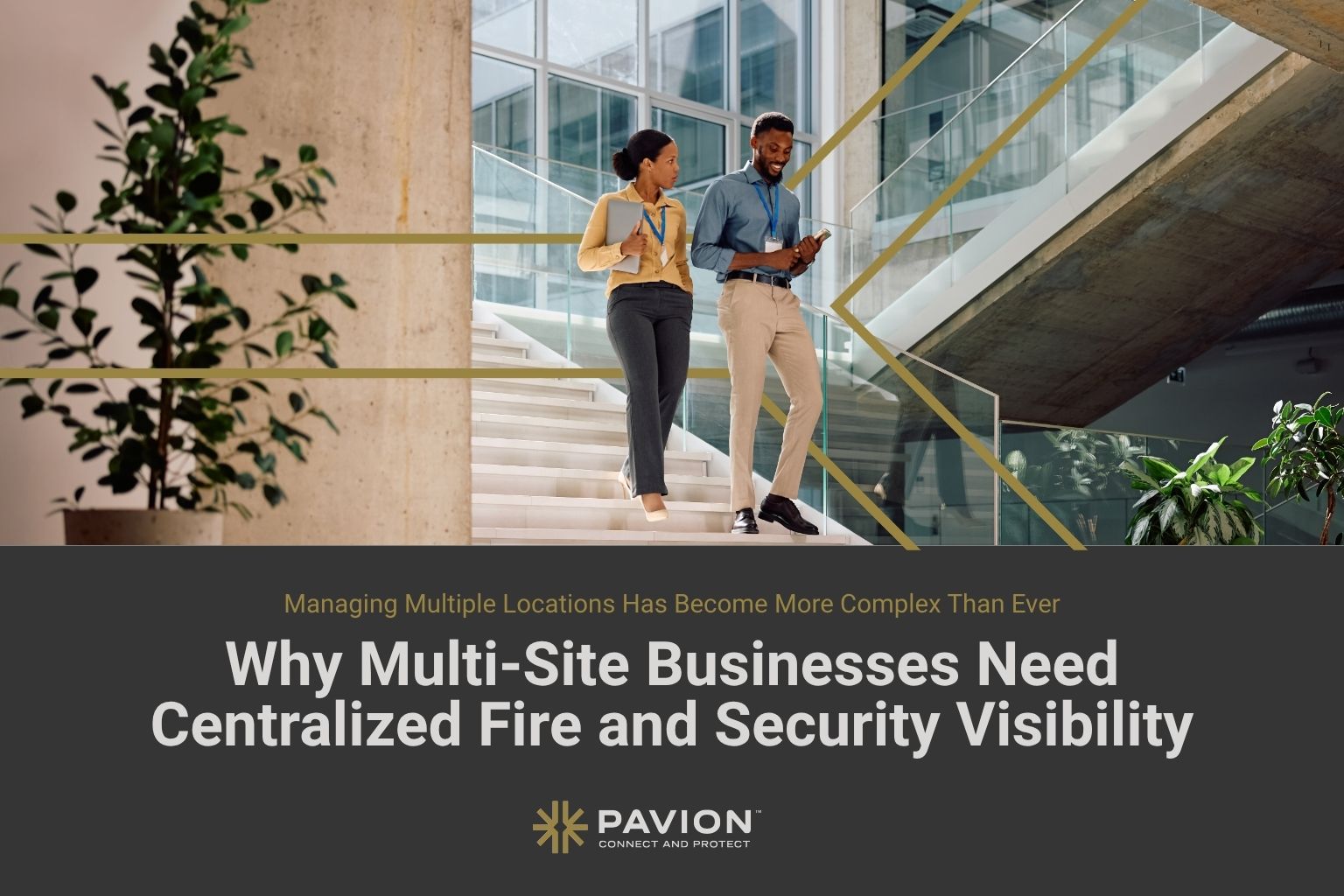
Why Multi-Site Businesses Need Centralized Fire and Security Visibility

Managing Multiple Locations Has Become More Complex Than Ever
For businesses operating across multiple locations, managing fire and security systems is no longer as simple as checking alarms and reviewing camera footage. Today’s organizations face increasing operational risks, staffing shortages, compliance demands, and rising expectations around safety and response times.
Whether it’s a retail chain, healthcare network, school district, distribution operation, or enterprise campus environment, disconnected systems across locations can create major visibility gaps that impact security, safety, and business continuity.
That’s why more organizations are moving toward centralized fire and security visibility.
Instead of managing each building independently, centralized platforms allow businesses to monitor, manage, and respond to events across all locations from a single interface.
The result is improved awareness, faster response times, reduced operational strain, and stronger protection across the enterprise.
The Problem With Disconnected Systems
Many organizations still operate with separate systems at each facility:
• Different video surveillance platforms
• Separate fire alarm systems
• Independent access control systems
• Multiple monitoring vendors
• Inconsistent reporting processes
• Limited remote visibility
Over time, these disconnected environments become difficult to manage.
Security teams may not know:
• Which locations have active issues
• Whether systems are online or offline
• If inspections are overdue
• How incidents are trending across facilities
• Whether security policies are being followed consistently
This lack of visibility creates operational inefficiencies and increases risk exposure.
In emergencies, delayed awareness can also slow response times and create confusion between teams and locations.
What Is Centralized Fire and Security Visibility?
Centralized visibility allows organizations to manage fire, life safety, security, and monitoring systems across multiple facilities from one unified platform.
This can include:
• Video surveillance systems
• Access control
• Fire alarm monitoring
• Intrusion detection
• Intercom and communication systems
• Environmental monitoring
• AI analytics and alerts
• System health monitoring
Rather than operating independently, systems work together to provide a complete operational picture across the organization.
Security teams can quickly identify issues, review events, verify alarms, and coordinate response efforts in real time.
Faster Response Times Across Locations
One of the biggest advantages of centralized visibility is faster incident response.
When teams can immediately view:
• Alarm activity
• Live video feeds
• Access events
• System status alerts
• Location-specific notifications
They can make informed decisions much faster.
Instead of relying solely on phone calls or waiting for onsite confirmation, centralized systems provide immediate situational awareness.
This is especially important for:
• Healthcare facilities
• Schools and universities
• Retail operations
• Warehouses and logistics centers
• Critical infrastructure environments
When seconds matter, visibility matters.
Improved Operational Efficiency
Managing multiple vendors, systems, and reporting processes across locations can consume significant time and resources.
Centralized platforms simplify operations by:
• Standardizing processes
• Consolidating reporting
• Reducing duplicate systems
• Simplifying user management
• Improving maintenance visibility
• Allowing remote troubleshooting
A centralized platform also allows organizations to create customized views based on user responsibilities. Corporate security teams can have dashboards that provide visibility across every location, while regional or district managers can access only the facilities they oversee. This eliminates the need to manage multiple logins and separate systems for each site, making day-to-day operations more efficient and easier to navigate.
Centralized user management also improves security. When an employee leaves the organization or changes roles, access permissions can be updated or removed immediately across the entire system rather than requiring changes at each individual location.
For growing businesses, centralized visibility makes scaling easier because new locations can be integrated into an existing ecosystem rather than managed separately.
Better Compliance and Reporting
Many industries face strict compliance requirements related to life safety and security systems.
Without centralized oversight, it can be difficult to track:
• Inspection schedules
• Testing documentation
• Alarm history
• Maintenance records
• System impairments
• Regulatory reporting requirements
Centralized platforms help organizations maintain better documentation and system accountability across all locations.
This can improve readiness for:
• AHJ inspections
• Insurance reviews
• Internal audits
• Risk assessments
• Corporate reporting requirements
AI and Analytics Are Expanding Visibility
Modern centralized systems are doing more than simply displaying alarms and video feeds.
Today’s platforms can use AI analytics to:
• Detect unusual behavior
• Identify occupancy trends
• Monitor restricted areas
• Detect smoke or fire conditions through video analytics
• Alert teams to potential threats before escalation
• Identify operational inefficiencies
AI-powered monitoring helps organizations move from reactive response to proactive risk management.
This is especially valuable for businesses with limited staffing resources or large geographic footprints.
Supporting Business Continuity
Fire and security incidents do not just create safety concerns. They can also disrupt operations, damage reputations, and impact revenue.
Centralized visibility helps organizations respond more effectively while minimizing operational disruption.
With better visibility across facilities, businesses can:
• Identify issues earlier
• Coordinate response efforts faster
• Reduce downtime
• Improve communication during emergencies
• Maintain operational continuity
A centralized approach also allows organizations to compare performance and system health across locations. Teams can quickly identify sites experiencing recurring issues, determine which technologies or processes are working effectively, and uncover gaps that may exist at other facilities. This broader visibility enables faster response to outages, improved maintenance planning, and reduced downtime, ultimately creating safer and more secure environments across the organization.
For many organizations, fire and security systems are no longer viewed as standalone building systems. They are becoming critical components of operational resilience strategies.
The Future Is Unified Safety and Security
As buildings become smarter and operational risks become more complex, organizations are moving away from fragmented systems and toward unified safety ecosystems.
Centralized fire and security visibility provides:
• Better situational awareness
• Faster response capabilities
• Improved compliance management
• Greater operational efficiency
• Stronger business continuity support
Organizations that invest in integrated visibility today are better positioned to manage tomorrow’s risks.
How Pavion Helps Organizations Centralize Visibility
Pavion helps organizations design and implement integrated fire, security, and monitoring solutions that improve visibility across multiple facilities.
From centralized monitoring and AI-powered analytics to proactive system management and enterprise-wide integration, Pavion helps businesses connect and protect their operations with scalable, future-ready solutions.