A Season of Gathering: Keeping Houses of Worship Safe This Holiday Season

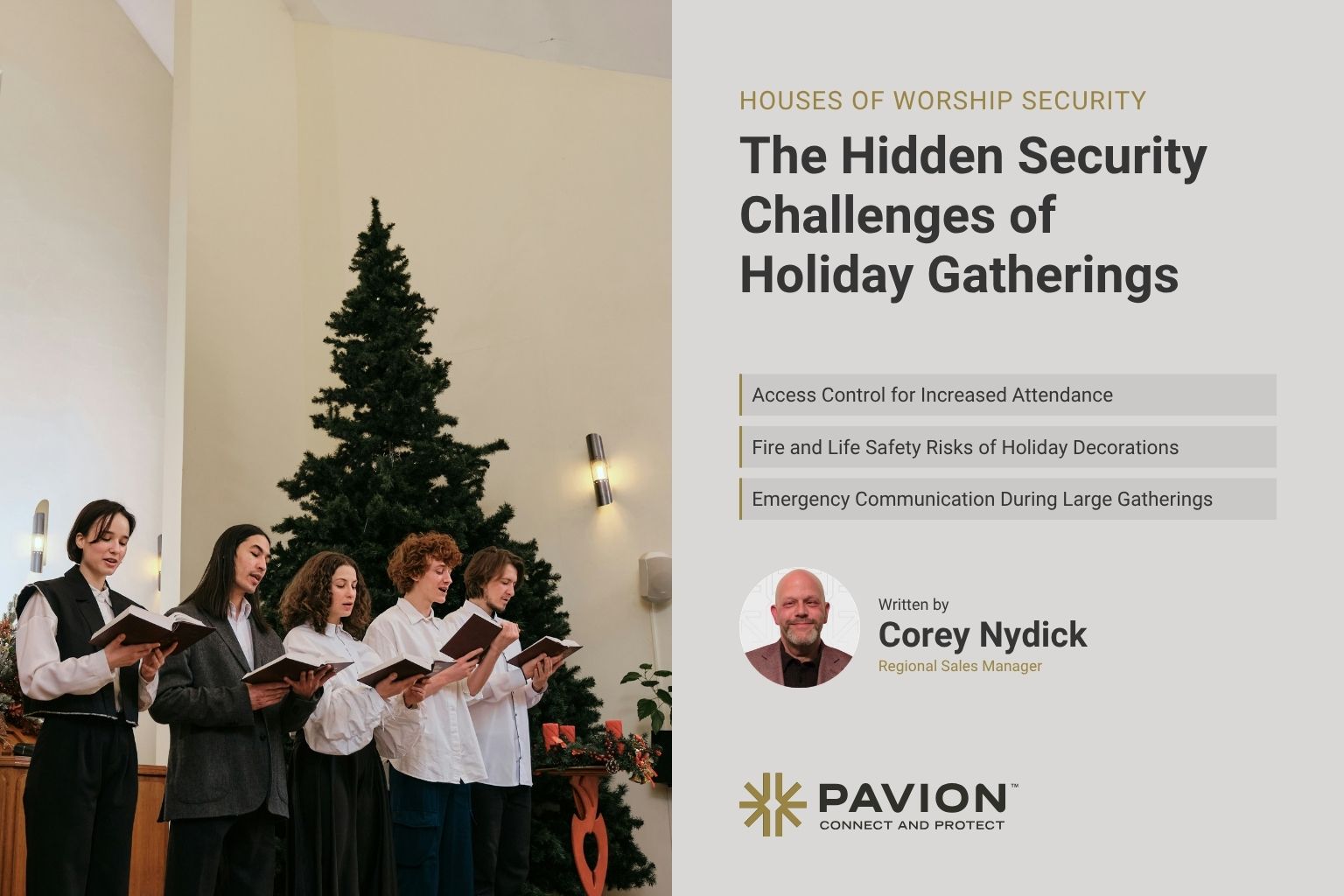
The holiday season brings some of the most meaningful gatherings of the year for houses of worship. From holiday services and holiday concerts to charitable events and seasonal celebrations, these occasions bring families, friends, and visitors together.
With increased attendance comes added responsibility for maintaining a safe and welcoming environment. Larger crowds, extended building hours, and unfamiliar visitors can introduce security considerations that may be overlooked during regular operations.
By taking a proactive approach to facility security, fire and life safety, and emergency preparedness, houses of worship can help protect their congregations and guests while keeping the focus on what matters most: gathering, celebrating, and reflecting together.
Here are seven important considerations for preparing houses of worship for the holiday season.
1. Increased Attendance Creates New Access Control Challenges
Holiday services often attract visitors who may not regularly attend, making it more difficult for staff and volunteers to monitor who is entering the building and which areas are being accessed.
Many houses of worship also have multiple entrances, classrooms, administrative offices, and gathering spaces that may be used simultaneously.
During busy events, maintaining appropriate access to these areas becomes especially important.
Facility leaders should consider:
- Designating primary entrances: Establish clearly marked entrances for visitors while maintaining appropriate security at other access points.
- Securing restricted areas: Keep administrative offices, storage areas, and other nonpublic spaces accessible only to authorized personnel.
- Reviewing door security: Confirm that exterior doors, locks, and electronic access systems function properly without compromising emergency egress.
- Coordinating volunteers: Ensure greeters and ushers understand visitor procedures and know how to report concerns.
Access control systems integrated with video surveillance can help religious facilities manage entry points while maintaining visibility throughout the property.
The goal is not to restrict the welcoming nature of a house of worship, but to create a thoughtful balance between accessibility and protection.
2. Larger Crowds Require More Thoughtful Security Planning
Full parking lots, crowded entryways, and busy gathering areas are common during holiday services. While these are signs of a well-attended event, they also create additional considerations for crowd management and emergency response.
An effective security plan should account for how visitors arrive, move throughout the facility, and exit after services conclude.
Before hosting major gatherings, facility leaders should review:
- Parking areas and walkways: Confirm that outdoor lighting is functioning and pedestrian routes are clearly identified.
- Building entrances: Identify areas where congestion may develop and establish procedures for managing visitor flow.
- Emergency exits: Ensure all exits are visible, accessible, and free from obstructions.
- Occupancy limits: Verify that gathering spaces remain within applicable fire and building code requirements.
- High-traffic areas: Assign volunteers to assist guests and communicate concerns when necessary.
Video surveillance can provide additional visibility into entrances, parking areas, and gathering spaces, allowing designated personnel to better understand activity across the property.
As highlighted in Pavion’s article, When Seconds Matter: Security Challenges Facing Churches, maintaining a welcoming environment while addressing physical security concerns requires preparation and coordination.
3. Holiday Decorations Can Introduce Fire and Life Safety Risks
Holiday decorations help create a festive atmosphere, but seasonal lighting, candles, electrical equipment, and temporary displays can also introduce fire hazards.
These risks deserve particular attention in buildings accommodating large gatherings, especially historic religious facilities or properties with older electrical infrastructure.
Before holiday activities begin, houses of worship should take time to review their fire and life safety preparations.
Important steps include:
- Inspecting fire alarm systems: Confirm that required inspections and testing are current and any identified issues have been addressed.
- Reviewing decorations: Keep combustible materials away from heat sources and follow applicable fire safety requirements.
- Checking electrical equipment: Inspect decorative lighting and temporary electrical installations for damage or improper use.
- Keeping exits clear: Ensure decorations, chairs, and temporary displays do not obstruct evacuation routes.
- Testing emergency lighting: Verify that emergency lights and illuminated exit signs are functioning correctly.
- Reviewing evacuation procedures: Make sure staff and volunteers understand how to assist attendees during an emergency.
For larger facilities, including those with schools, childcare programs, or multiple buildings, fire protection planning may require additional coordination.
Reliable fire alarm and life safety systems are essential to protecting occupants and supporting an effective emergency response.
Taking these precautions before seasonal events can help reduce potential hazards and provide greater confidence when buildings are at their busiest.
4. Emergency Communication Becomes More Important During Large Gatherings
During a holiday service, an unexpected emergency can affect hundreds of attendees at once.
Whether the situation involves a medical incident, severe weather, a fire alarm, or a security concern, communicating clear instructions quickly is essential.
However, not every house of worship has a formal process for reaching staff, volunteers, and attendees throughout the facility.
This can become particularly challenging when services extend across multiple rooms, buildings, or outdoor gathering areas.
Religious organizations should evaluate how they would communicate during an emergency and determine whether existing procedures are sufficient.
Considerations include:
- Establishing clear responsibilities for emergency notifications.
- Identifying how instructions will be communicated throughout the building.
- Reviewing evacuation and shelter-in-place procedures.
- Ensuring staff and volunteers know how to contact emergency services.
- Accounting for attendees who may require additional assistance.
- Testing communication equipment before major events.
Critical communication systems can help organizations deliver timely emergency notifications and important information when immediate action is needed.
When communication technology works alongside fire and security systems, facility leaders can gain better awareness and support a more coordinated response.
5. Volunteers Play an Important Role in Holiday Security
During the holiday season, houses of worship often depend on additional volunteers to welcome visitors, direct parking, assist with services, and coordinate special events.
These individuals play an important role in creating a positive experience for attendees, but they can also support everyday safety and security efforts.
Volunteers do not need to be security professionals to contribute to a safer environment. Basic awareness and clear communication procedures can make a meaningful difference.
Before major holiday gatherings, organizations should consider providing a brief orientation covering:
- How to recognize and report concerning behavior or unusual activity.
- Who to contact if a visitor needs assistance.
- Procedures for responding to disruptive situations.
- The location of emergency exits, first aid supplies, and AEDs.
- How to assist guests during an evacuation.
- When to contact emergency responders rather than attempting to manage a situation independently.
Training should emphasize observation, communication, and appropriate response rather than confrontation.
A well-prepared volunteer team helps create a positive experience for visitors while serving as an additional layer of awareness throughout the property.
6. Proactive Preventive Maintenance Can Help Prepare Systems for the Holidays
One security consideration that can easily be overlooked is the condition of existing technology.
A house of worship may already have cameras, intrusion alarms, access control systems, and fire protection equipment in place. However, those systems are only valuable when they are properly maintained and functioning as intended.
Increased holiday activity can make existing gaps more noticeable.
A camera that no longer provides adequate coverage, an unreliable door access system, or outdated emergency communication equipment can complicate an incident response.
Before seasonal events begin, facility leaders should consider scheduling a proactive preventive maintenance visit with their fire and security service provider. Much like a vehicle’s multipoint inspection before a long trip, this visit can help identify potential deficiencies before they become problems during a busy gathering.
These visits are included in select Pavion full-service plan options and can help facility leaders evaluate system readiness by addressing questions such as:
- Are security cameras operational and covering the necessary areas?
- Can authorized personnel easily access video footage when needed?
- Are intrusion detection and access control systems functioning correctly?
- Have fire alarm systems received their required inspections and testing?
- Can emergency notifications be heard or received throughout the facility?
- Are security systems providing the visibility needed during evenings and special events?
Identifying and addressing equipment issues and operational gaps ahead of the holidays can help improve system reliability and reduce the risk of unexpected disruptions. Preventive maintenance complements, but does not replace, required inspections and testing.
Rather than relying on multiple disconnected technologies, integrated security solutions can help organizations bring important capabilities together.
For additional insight, Pavion explores the importance of combining security and life safety technology in Securing Places of Worship.
7. Holiday Security Planning Should Support Year-Round Preparedness
Although the holiday season brings increased attention to facility safety, the need for protection does not end when seasonal events conclude.
Houses of worship serve many purposes throughout the year, hosting weekly services, educational programs, weddings, funerals, volunteer activities, and other gatherings.
A security plan developed for the holidays can provide a foundation for stronger year-round preparedness. However, the goal is to prepare people, not just prepare a plan.
Religious leaders, facility managers, security personnel, staff, and volunteers should all participate in developing emergency plans and procedures so everyone understands their responsibilities and how to work together.
Regular scenario-based exercises and drills, such as practicing an evacuation or responding to a medical emergency, help put those procedures into practice. Repeated practice, followed by discussion and refinements, builds confidence and familiarity so that when an actual emergency occurs, people can respond calmly and effectively, with their roles becoming second nature.
Following major seasonal events, leadership teams should take time to evaluate what worked well and where improvements may be needed.
This may include reviewing visitor management procedures, gathering feedback from volunteers, assessing emergency communication capabilities, and identifying opportunities for additional training.
Regular security assessments, preventive maintenance, emergency planning, and ongoing practice can help religious organizations prepare for future events while maintaining a safe and welcoming environment.
The most effective approach considers how people use the facility every day, not only during its busiest periods.
Keeping Houses of Worship Safe and Welcoming This Holiday Season
The holiday season is an opportunity for houses of worship to bring people together in celebration, reflection, and fellowship.
Behind every successful gathering is thoughtful preparation, including the steps taken to protect attendees, volunteers, staff, and facilities.
From managing increased attendance and reviewing access points to maintaining fire protection systems and strengthening emergency communication, even small improvements can contribute to a safer environment.
The goal is not to change the experience of attending a religious service. It is to help ensure that everyone can gather with greater confidence and peace of mind.
Pavion helps houses of worship protect what matters most through integrated fire, security, and critical communication solutions. By taking a comprehensive approach to facility protection, religious organizations can strengthen their preparedness without compromising the welcoming environment that defines their spaces.
Learn more about Pavion’s Houses of Worship Solutions or contact our team to discuss your facility’s fire, security, and communication needs.