The Cost of Deferred Fire System Maintenance: Hidden Risks, Compliance Issues, and Long-Term Costs

Why Waiting to Address Fire Protection Issues Creates Bigger Risks and Higher Costs
Fire protection systems are designed to do one thing above all else: work immediately when an emergency happens. Yet across commercial buildings, healthcare facilities, schools, warehouses, manufacturing plants, and other critical environments, fire system maintenance is often delayed, minimized, or pushed aside in favor of more visible operational priorities.
At first glance, deferring maintenance may appear to be a practical way to manage budgets. In reality, it often creates significantly greater financial, operational, and life safety risks over time.
From failed inspections and emergency service calls to business disruptions and increased liability exposure, postponing fire system maintenance can quickly become one of the most expensive decisions an organization makes.
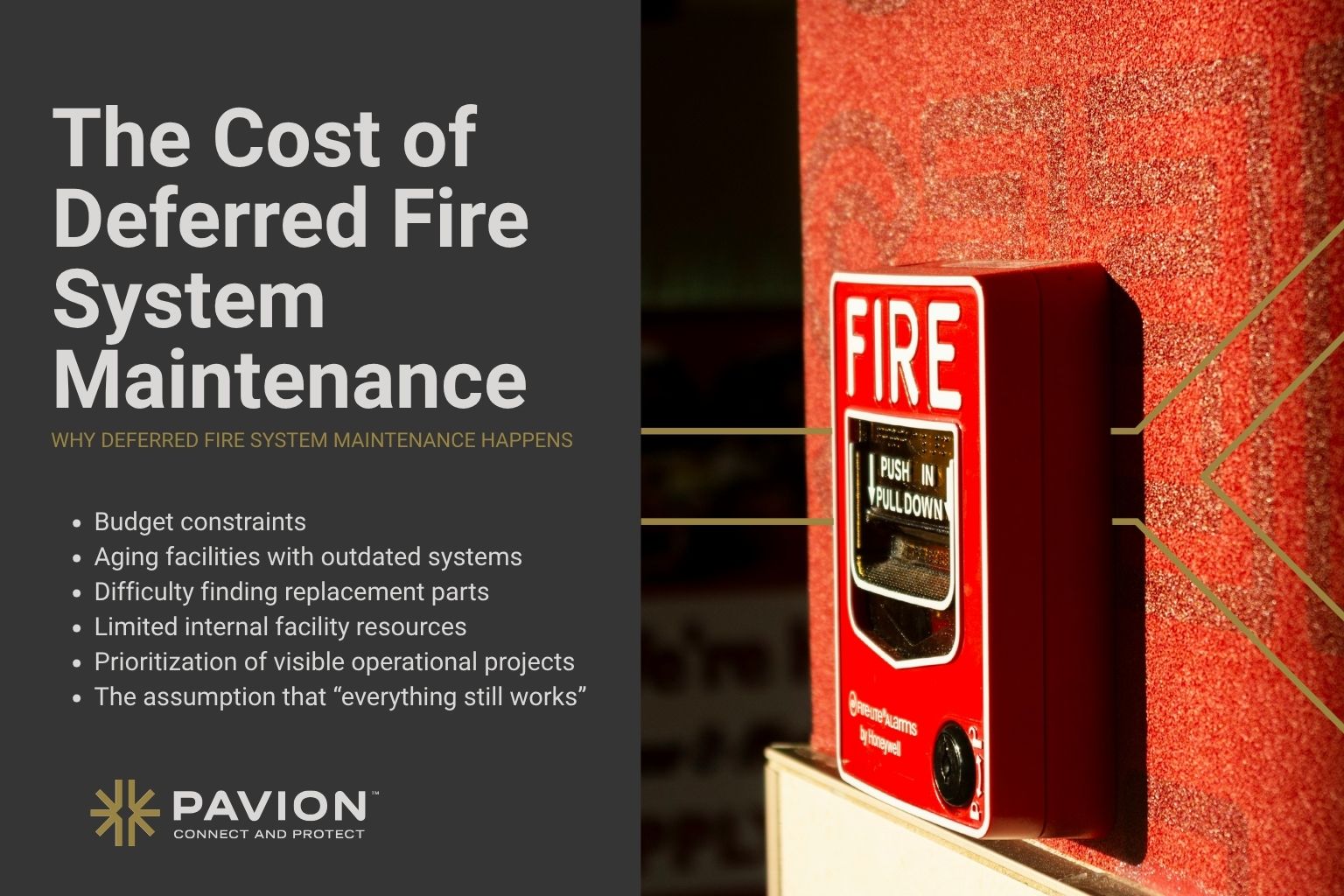
Why Deferred Fire System Maintenance Happens
Many organizations are managing aging infrastructure, limited resources, staffing shortages, and competing capital priorities. As a result, fire system maintenance is sometimes viewed as something that can wait until next quarter or next year.
Common reasons maintenance gets deferred include:
- Budget constraints
- Aging facilities with outdated infrastructure
- Difficulty sourcing replacement parts
- Limited internal maintenance resources
- Prioritization of visible operational projects
- The assumption that “everything still works”
- Uncertainty around modernization planning
The challenge is that fire protection systems often fail silently. Problems can exist long before facility teams become aware of them.
Unlike HVAC, lighting, or plumbing issues that create immediate operational impacts, deficiencies within fire alarms, monitoring systems, communication pathways, or notification devices may only become apparent during an inspection or emergency event.
The Hidden Financial Costs of Delayed Maintenance
Organizations frequently underestimate the true cost of deferred fire system maintenance.
What starts as a relatively minor issue can evolve into a major system failure, costly emergency repair, or significant compliance challenge.
Emergency Repairs Cost More
Reactive service calls almost always cost more than planned preventative maintenance.
Emergency repairs often involve:
- After-hours labor rates
- Expedited parts procurement
- Temporary fire watch requirements
- Emergency troubleshooting
- Facility disruptions
- Occupancy interruptions
In many cases, unresolved issues create additional strain on other system components, leading to broader failures that impact larger portions of the fire protection infrastructure.
Failed Inspections and Compliance Violations
Fire codes and life safety regulations continue to evolve. Systems that appear operational may still fail inspections if they are not properly maintained.
Common deficiencies discovered during inspections include:
- Failed batteries
- Inoperable notification devices
- Ground faults
- Communication failures
- Outdated control panels
- Damaged wiring
- Incomplete documentation
- Unsupported legacy equipment
These deficiencies can result in:
- Authority Having Jurisdiction (AHJ) citations
- Financial penalties
- Delays in occupancy approvals
- Increased insurance scrutiny
- Mandatory corrective actions within tight timelines
For organizations operating in healthcare, education, manufacturing, data centers, and government facilities, compliance failures can have significant operational consequences.
Aging Fire Systems Create Compounding Risks
Many facilities today continue operating fire protection systems well beyond their intended lifecycle.
As systems age:
- Replacement parts become harder to source
- Legacy communication technologies become obsolete
- Software support reaches end of life
- Integration challenges increase
- False alarms become more frequent
- Reliability declines
One of the most common challenges facing organizations today is the retirement of traditional POTS lines. Fire alarm communicators that rely on outdated telecommunications infrastructure may no longer transmit signals reliably during an emergency.
What could have been a planned upgrade often becomes an urgent replacement project.
The Operational Impact of Fire System Failures
Fire system failures affect more than safety and compliance.
They can directly impact business operations, employee productivity, customer confidence, and organizational continuity.
Unexpected system issues can lead to:
- Facility shutdowns
- Production interruptions
- Delayed openings
- Tenant complaints
- Employee safety concerns
- Customer dissatisfaction
- Reduced operational efficiency
For organizations operating around the clock, including hospitals, logistics facilities, data centers, and critical infrastructure environments, even a short disruption can create substantial financial consequences.
Insurance and Liability Concerns Continue to Grow
Insurance providers are increasingly evaluating the condition and maintenance history of fire protection systems when assessing risk.
Organizations with unresolved deficiencies or aging infrastructure may face:
- Higher insurance premiums
- Coverage limitations
- Increased liability exposure
- Additional compliance requirements
- Greater scrutiny following an incident
Following a fire event, maintenance records often become a critical component of investigations and legal reviews.
If systems were not properly maintained, organizations may face difficult questions regarding compliance obligations, operational oversight, and risk management practices.
Preventative Maintenance Supports Business Continuity
Preventative fire system maintenance is not simply a compliance requirement.
It is a critical component of business continuity planning.
A proactive maintenance strategy helps organizations:
- Identify issues before failures occur
- Reduce emergency repair costs
- Extend system lifespan
- Improve system reliability
- Support compliance readiness
- Minimize operational disruptions
- Plan upgrades strategically
- Improve long-term budgeting
Modern fire protection strategies increasingly leverage proactive monitoring, predictive diagnostics, and continuous system visibility to identify issues before they become business disruptions.
Fire Protection Is Becoming a Business Decision
Fire protection is no longer solely a facilities management responsibility.
It is increasingly a business decision tied directly to:
- Risk management
- Operational resilience
- Insurance exposure
- Employee safety
- Regulatory compliance
- Business continuity
Organizations that continue deferring maintenance may reduce short-term spending, but they often increase long-term financial exposure significantly.
The cost of maintaining fire protection systems is predictable.
The cost of system failure is not.
How Pavion Helps Organizations Reduce Risk
At Pavion, we help organizations move beyond reactive fire system management and toward proactive life safety strategies.
Our teams support:
- Fire alarm inspection and testing
- Preventative maintenance programs
- System modernization planning
- Monitoring and diagnostics
- Code compliance support
- Legacy system upgrades
- Emergency communication solutions
Through proactive service, ongoing system visibility, and integrated technology solutions, Pavion helps organizations improve reliability, reduce operational risk, and better protect people, property, and business continuity.
Final Thoughts
Deferred fire system maintenance may appear to save money in the short term, but the long-term costs can be far greater.
As systems age and compliance expectations continue to increase, organizations that delay maintenance often face:
- Higher repair costs
- Greater operational disruption
- Increased liability exposure
- More complex system replacements
- Elevated life safety risks
The organizations best prepared for the future are those that treat fire protection as an ongoing operational investment rather than a reactive expense.
A proactive maintenance strategy not only supports compliance and safety, but also protects business continuity, operational resilience, and long-term financial performance.
Frequently Asked Questions
What is deferred fire system maintenance?
Deferred fire system maintenance occurs when inspections, testing, repairs, upgrades, or preventative maintenance activities are delayed or postponed. While this may seem like a short-term cost-saving measure, it can increase safety risks and lead to larger expenses over time.
Why is fire alarm maintenance important?
Regular fire alarm maintenance helps ensure systems function properly during an emergency. Inspections and testing can identify issues before they become failures, helping organizations maintain compliance, reliability, and occupant safety.
What are the risks of delaying fire system maintenance?
Delaying maintenance can result in failed inspections, emergency repairs, increased liability, higher insurance costs, operational disruptions, and reduced system reliability.
Can deferred maintenance cause a fire system to fail an inspection?
Yes. Common inspection failures include dead batteries, ground faults, communication failures, damaged wiring, outdated equipment, unsupported systems, and incomplete documentation.
How does preventative maintenance reduce costs?
Preventative maintenance identifies issues before they become emergencies, helping organizations avoid costly service calls, facility disruptions, expedited parts shipping, and emergency system replacements.
How often should fire protection systems be inspected?
Inspection frequency depends on the type of system, applicable fire codes, and local requirements. Most organizations require routine inspections, testing, and maintenance throughout the year to remain compliant.
What challenges do aging fire alarm systems create?
Older systems often face parts shortages, obsolete communication technologies, limited manufacturer support, integration challenges, and increased reliability concerns.
How does fire system maintenance support business continuity?
Reliable fire protection systems help prevent operational disruptions, facility shutdowns, delayed openings, safety concerns, and compliance issues that can impact day-to-day business operations.
Can deferred maintenance affect insurance coverage?
Yes. Insurance providers increasingly evaluate fire protection system condition, inspection history, and maintenance records. Poorly maintained systems may contribute to higher premiums or coverage limitations.
How can Pavion help with fire system maintenance?
Pavion provides inspections, testing, preventative maintenance programs, modernization planning, monitoring services, code compliance support, legacy system upgrades, and emergency communication solutions designed to improve system reliability and reduce organizational risk.