Employee Theft Is Evolving: Why Businesses Need Smarter Detection

Employee theft has changed dramatically over the years. What was once associated with obvious incidents like stolen merchandise or missing cash has evolved into a far more sophisticated and difficult-to-detect problem.
Today’s businesses are facing internal threats that can impact far more than inventory. Economic pressure, staffing shortages, rising operational costs, and increasingly digital workplaces are changing how internal theft occurs and how organizations must respond.
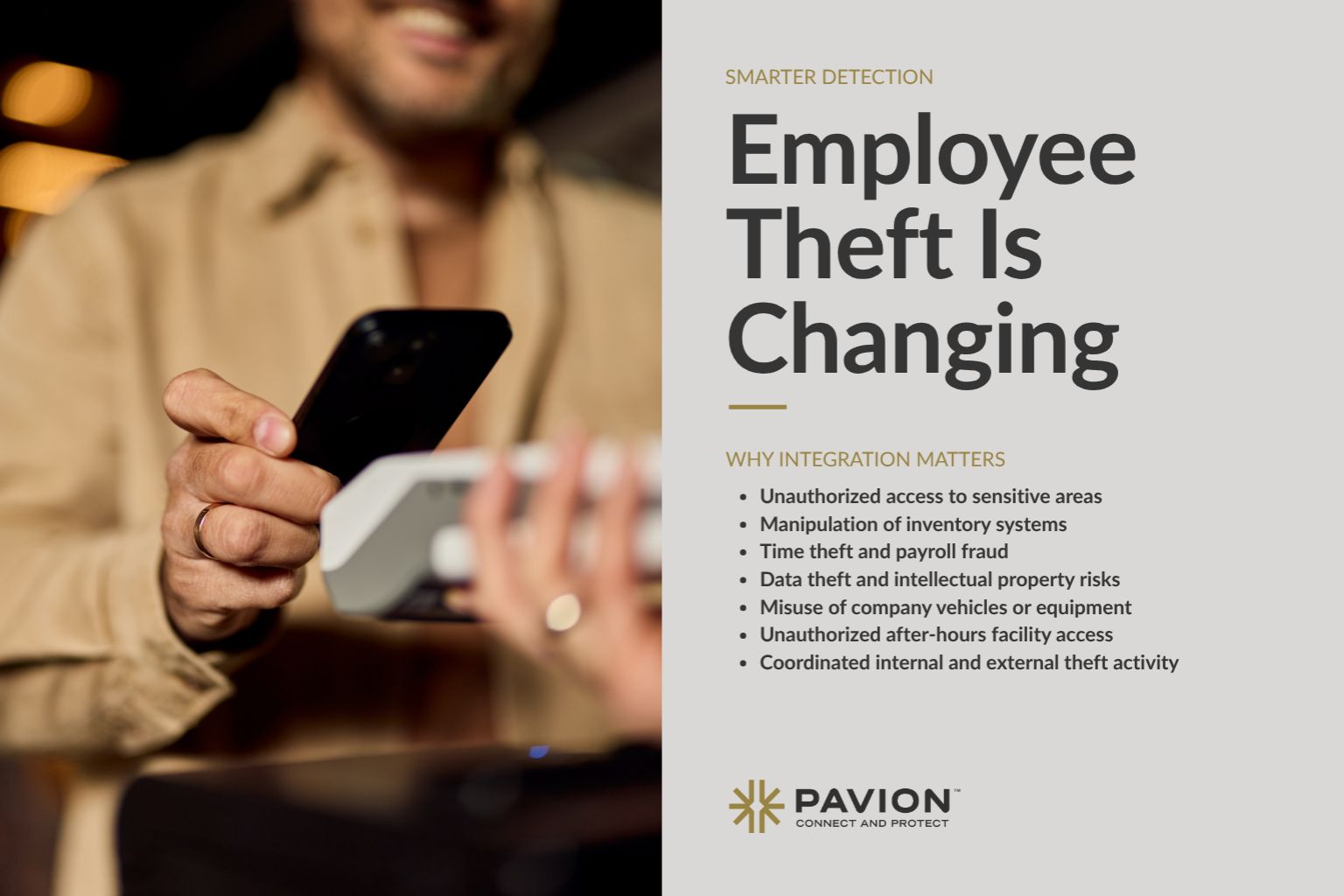
Modern employee theft can involve:
- Unauthorized access to restricted areas
- Manipulation of inventory systems
- Time theft and payroll fraud
- Data theft and intellectual property risks
- Misuse of company vehicles or equipment
- Unauthorized after-hours access
- Coordinated internal and external theft activity
As organizations become more complex, internal theft is becoming harder to identify using traditional security strategies alone.
Employee Theft Is Becoming More Sophisticated
One of the biggest challenges businesses face is that internal theft often comes from trusted individuals who understand operational workflows, camera blind spots, and security procedures.
In many cases, theft develops gradually over time:
- Small inventory discrepancies grow into significant losses
- Access privileges are abused without immediate detection
- Employees learn monitoring gaps and security weaknesses
- Unusual activity blends into daily operations
Another increasingly common tactic involves employees removing valuable items through secondary exits or dumpster areas. According to insights shared by Corey Nydick, some theft activity involves employees placing merchandise behind dumpsters for later retrieval or coordinating with outside individuals via text message for immediate pickup.
This type of activity can be extremely difficult to detect without proper visibility into exterior areas, loading zones, and after-hours movement patterns.
Corey also notes that today’s thieves, both internal and external, are becoming smarter and more strategic. They often study how well teams pay attention, learn which products trigger asset tracking systems, and identify weaknesses in operational oversight. Rising fluctuations in product costs and margins can also make it more difficult for organizations to determine whether profit changes are tied to theft, pricing shifts, or changes in purchasing behavior.
This growing complexity is making proactive detection more important than ever.
Why Traditional Security Is No Longer Enough
Traditional surveillance systems were designed primarily to record incidents after they occurred. While video footage remains important, businesses today need systems capable of actively identifying suspicious behavior in real time.
Organizations managing multiple facilities, warehouses, campuses, retail locations, or distributed operations often struggle to maintain consistent visibility across all locations.
This is especially true in industries with:
- Large employee populations
- Multiple shifts
- High inventory movement
- Public-facing operations
- Temporary or contract labor
- Remote or distributed facilities
Without proactive monitoring and intelligent analytics, suspicious activity can go unnoticed until losses become substantial.
The Shift Toward Intelligent Detection
Modern integrated security solutions are helping organizations transition from reactive investigations to proactive risk management.
Today’s smarter security systems can:
- Detect unusual access activity
- Monitor after-hours movement patterns
- Identify unauthorized entry into restricted areas
- Correlate video, access control, and alarm data
- Generate automated alerts for security teams
- Flag suspicious behaviors using AI-powered analytics
Instead of relying solely on manual review, businesses can now leverage systems that continuously monitor for anomalies and operational risks.
For example, organizations may use analytics to:
- Detect recurring activity near loading docks or dumpsters after hours
- Monitor movement around inventory cages or sensitive areas
- Identify unusual employee access patterns
- Investigate recurring shrinkage trends faster
The goal is no longer just surveillance. It is operational intelligence.
AI Is Transforming Internal Security
Artificial intelligence is playing a growing role in helping businesses strengthen internal security operations.
AI-powered analytics can help organizations:
- Detect unusual behavior patterns
- Monitor loitering in sensitive areas
- Search video footage faster using metadata
- Improve investigations with intelligent filtering
- Reduce time spent manually reviewing footage
- Increase visibility across facilities
These technologies allow security teams to focus on higher-priority incidents while improving overall operational awareness.
In retail environments, integrated systems can help identify suspicious transaction behavior, unauthorized stockroom access, or coordinated theft activity. In warehouse and logistics operations, analytics can help monitor loading areas, inventory movement, and after-hours access.
Employee Theft Is Also a Business Continuity Issue
Internal theft is not just a security concern. It is a broader business issue that can impact:
- Revenue and profitability
- Insurance costs
- Compliance requirements
- Customer trust
- Operational efficiency
- Employee morale
- Brand reputation
Repeated internal losses can create larger operational vulnerabilities and long-term financial consequences for organizations.
This is why many businesses are now viewing internal security as part of a larger operational risk management strategy rather than simply a loss prevention initiative.
Building a Smarter Security Strategy
Addressing modern employee theft requires more than adding additional cameras. Organizations need integrated solutions that improve visibility, accelerate investigations, and support proactive response.
An effective strategy often includes:
- AI-powered video surveillance
- Integrated access control
- Centralized monitoring
- Real-time alerts and analytics
- Visitor and credential management
- Audit trails and reporting
- Remote monitoring capabilities
- Proactive system health monitoring
The most effective solutions combine technology, operational insight, and intelligent analytics into a unified security approach.
The Future of Internal Security Is Proactive
As workplace environments continue evolving, businesses must adapt their security strategies to address changing internal risks.
Organizations relying solely on traditional monitoring methods may struggle to identify sophisticated threats before significant loss occurs.
Smarter detection technologies give businesses the ability to:
- Improve operational visibility
- Reduce internal risk
- Accelerate investigations
- Strengthen accountability
- Protect employees and assets
- Support long-term operational resilience
The future of security is no longer just about recording incidents after they happen. It is about identifying risks before they escalate.
At Pavion, we help organizations implement integrated fire, security, and monitoring solutions designed to improve visibility, strengthen operations, and support safer, smarter environments.
FAQs
What is employee theft detection?
Employee theft detection refers to the tools, technologies, and processes businesses use to identify suspicious internal activity, unauthorized access, inventory shrinkage, fraud, or operational misconduct.
Why is employee theft harder to detect today?
Modern employee theft is often more strategic and coordinated. Employees may understand security gaps, monitoring limitations, and operational workflows, making suspicious activity blend into normal business operations.
How does AI help detect internal theft?
AI-powered analytics can identify unusual behavior patterns, unauthorized access, loitering, suspicious movement, and operational anomalies in real time, helping organizations investigate incidents faster and reduce risk.
What industries are most affected by employee theft?
Industries with large employee populations, high inventory movement, multiple shifts, warehouses, retail operations, logistics centers, and distributed facilities are often more vulnerable to internal theft.
Can integrated security systems reduce operational losses?
Yes. Integrated security systems combining video surveillance, access control, analytics, and centralized monitoring can improve visibility, accelerate investigations, and help organizations identify risks before losses escalate.