How to Choose an Access Control System That Integrates with Video Surveillance Systems

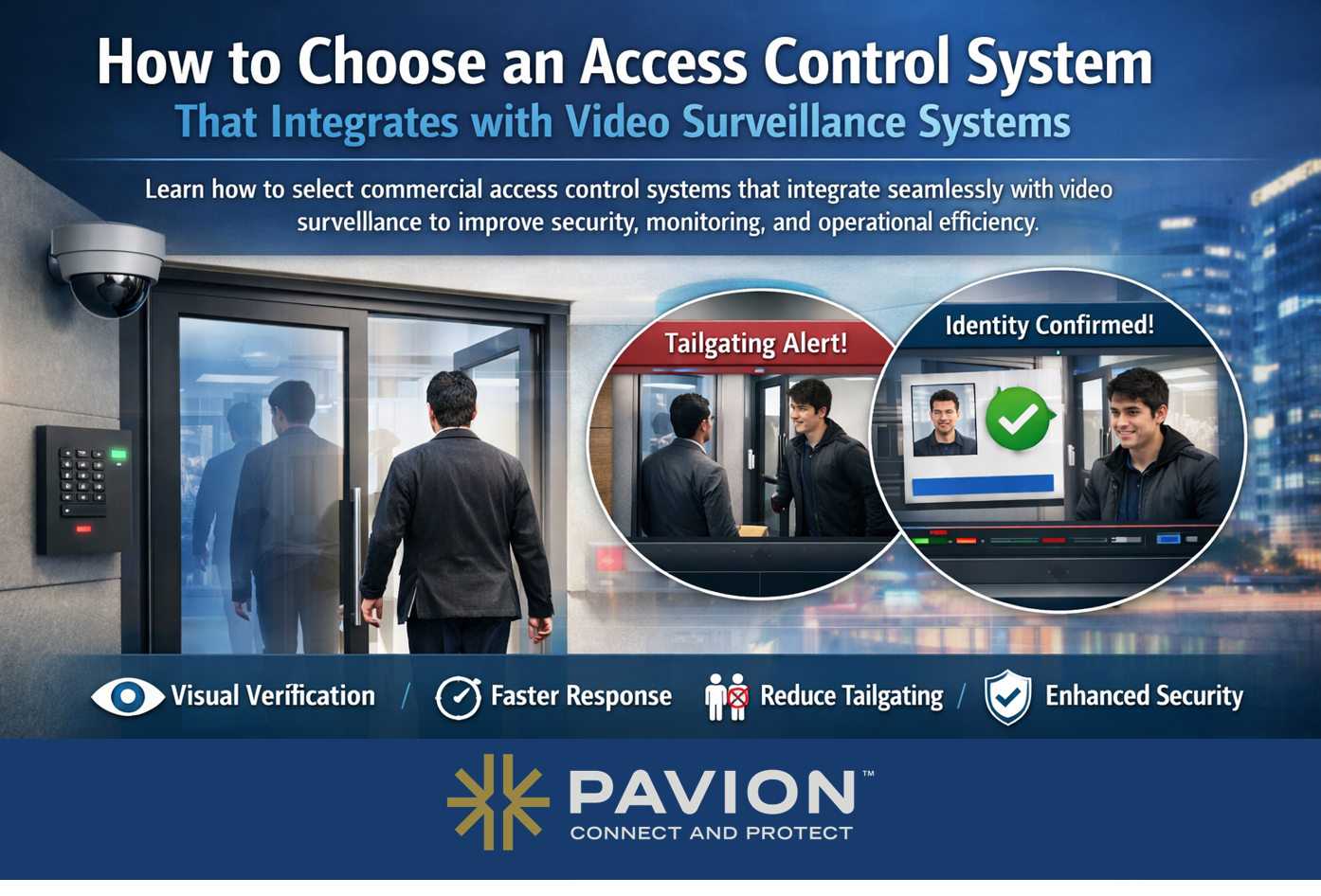
Learn how to select commercial access control systems that integrate seamlessly with video surveillance to improve security, monitoring, and operational efficiency.
As security threats become more sophisticated, organizations can no longer rely on standalone systems. Today’s most effective security strategies are built on integrated technologies—where access control, video surveillance, and fire/life safety systems work together in real time.
For organizations evaluating commercial access control systems, the ability to seamlessly integrate with video surveillance is no longer a “nice to have.” It is a critical requirement for improving situational awareness, response times, and long-term return on investment.
Why Integration Matters in Commercial Access Control Systems
An access control system determines who can enter a facility and when. Video surveillance provides visual verification of activity. When these systems operate independently, security teams must manually connect the dots during an incident.
Integrated commercial access control systems enable:
- Visual verification of access events
- Faster incident investigation and response
- Reduced false alarms and tailgating incidents
- Improved compliance and auditability
From a security integrator’s perspective, integration transforms reactive security into proactive risk management.
Step 1: Look for Open Architecture and Platform Compatibility
Not all access control systems integrate equally well with video surveillance platforms. Many legacy or proprietary solutions limit interoperability, locking organizations into specific vendors.
When evaluating commercial access control systems, prioritize:
- Open architecture platforms
- Native integrations with leading video management systems (VMS)
- API support for future system expansion
Open systems protect your investment and allow your security infrastructure to evolve over time.
Step 2: Ensure Real-Time Event-to-Video Correlation
True integration goes beyond placing a camera near a door.
The best commercial access control systems allow security teams to:
- Automatically pull video footage tied to access events
- View live or recorded video when doors are forced or held open
- Instantly verify alarms triggered by unauthorized access
This level of visibility improves response accuracy and reduces unnecessary dispatches.
Step 3: Support Centralized Monitoring and Incident Management
Modern security environments often include multiple locations, varied user groups, and 24/7 monitoring requirements.
Integrated access control and video surveillance systems should support:
- Centralized dashboards for monitoring access and video events
- Consistent workflows for investigations and reporting
- Integration with security monitoring and fire alarm systems
Centralization is especially important for organizations managing distributed or high-traffic facilities.
Step 4: Consider Cybersecurity and Compliance Requirements
Commercial access control systems are part of your broader IT ecosystem—and must be secured accordingly.
When selecting a solution, evaluate:
- Encryption and secure credential management
- Role-based access and audit trails
- Compliance with industry and regulatory standards
Cloud-enabled and hybrid systems often provide enhanced security features and automatic updates, reducing long-term risk.
Step 5: Plan for Scalability and Long-Term ROI
Security systems should grow with your organization. Integrated commercial access control systems should:
- Scale easily as facilities expand
- Support new credential types and mobile access
- Integrate with future video, analytics, and monitoring technologies
A scalable, integrated approach delivers stronger ROI by reducing future upgrade and replacement costs.
The Role of a Trusted Security Integrator
Selecting the right access control system isn’t just a technology decision — it’s a strategic one. A trusted security partner can offer multiple options tailored to your needs, factoring in the level of analytics required, integration with other systems (such as HR platforms), and the broader data insights that can deliver value across the organization.
An experienced security and fire systems integrator can:
- Assess your operational and life safety requirements
- Design integrated access control and video surveillance solutions
- Ensure compliance with fire and egress regulations
- Support ongoing monitoring, maintenance, and optimization
Examples of how integrated access control and video surveillance add value:
- Cameras can help detect tailgating or situations where someone may be using another person’s access card, providing visual verification alongside access data.
- While access control logs show who entered restricted or high-value areas, integrated video allows you to confirm that the individual entering is actually the authorized cardholder, strengthening security and accountability.
Integration done right enhances both security and safety while simplifying operations.
Building a Smarter, Integrated Security Environment
When commercial access control systems are integrated with video surveillance, organizations gain more than access management—they gain insight, efficiency, and confidence in their security operations.
By focusing on interoperability, real-time visibility, cybersecurity, and scalability, organizations can select an access control solution that delivers lasting value and supports a comprehensive security and fire safety strategy.