How to Find Fire Alarm Solutions to Support Mass Notification & Voice Evacuation

In today’s complex facility environments, safety depends on more than just detecting smoke or heat — it depends on clear communication, coordinated response, and the ability to guide people to safety fast. That’s why many organizations are upgrading to commercial fire alarm systems that support mass notification and voice evacuation capabilities.
Whether you operate a hospital, corporate campus, school, data center, or industrial facility, choosing the right system ensures you can deliver precise, real-time instructions during fires, security threats, weather emergencies, and unexpected incidents — all through a single, integrated platform.
Why Voice Evacuation and Mass Notification Matter
Traditional fire alarms rely on horns and strobes — but in a real emergency, tones alone don’t always tell people what to do.
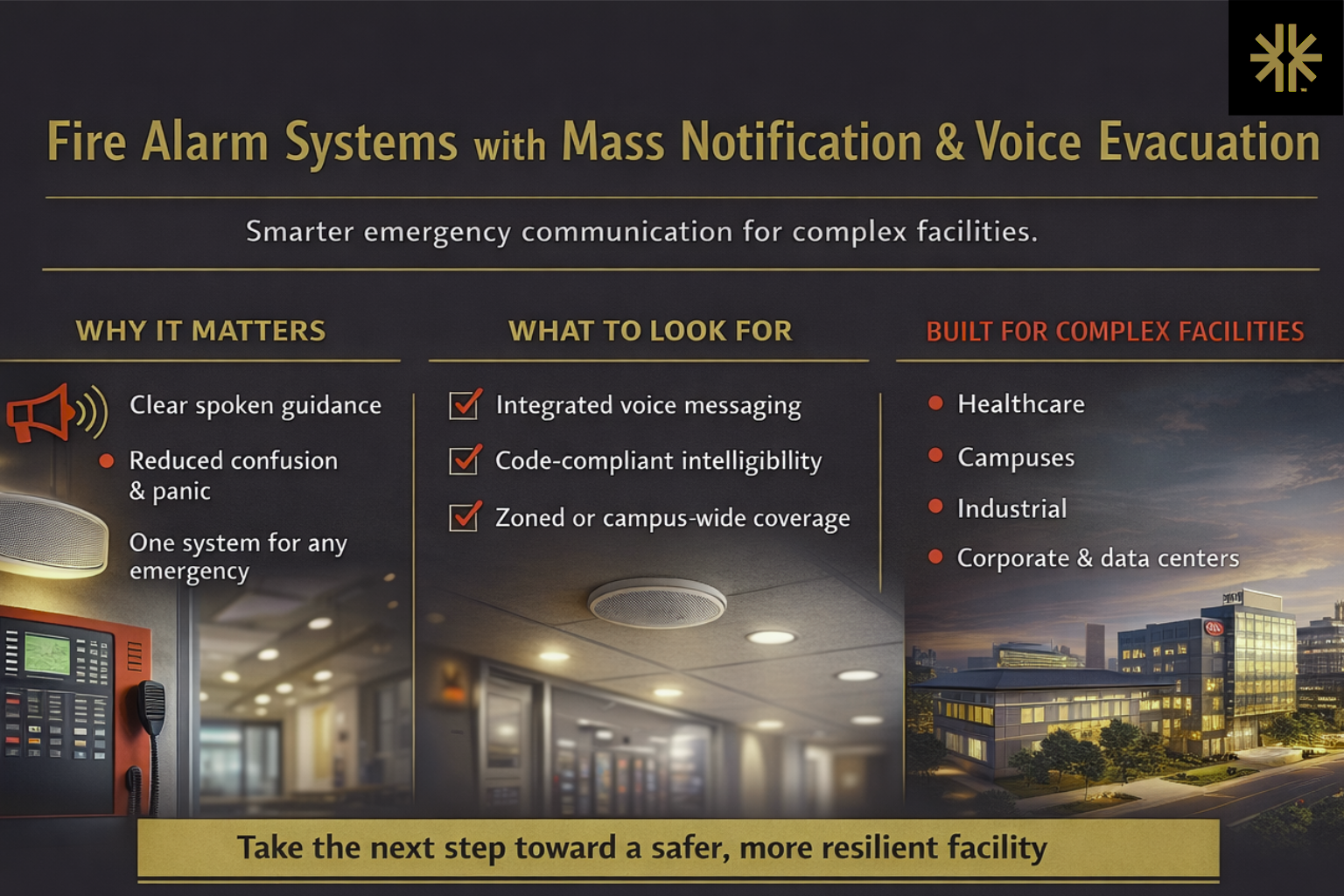
A fire alarm voice evacuation system delivers intelligible spoken instructions, helping building occupants:
- Understand the type of emergency
- Avoid confusion or panic
- Receive step-by-step evacuation guidance
- Respond faster and more safely
When paired with a fire alarm mass notification system, organizations can also communicate non-fire emergencies, including:
- Severe weather and natural disasters
- Active threat or security events
- Hazardous material situations
- Facility-wide operational alerts
Instead of separate systems for different scenarios, one centralized platform reaches everyone — instantly.
What to Look for in a Commercial Fire Alarm System with Voice Evacuation
Choosing the right solution requires more than just buying new equipment. The system must be designed, engineered, and installed specifically for your environment.
Here are the key features and capabilities to look for:
✔ Integrated Fire Alarm and Mass Notification Functionality
A modern fire alarm mass notification system should support:
- Fire evacuation announcements
- Multi-language or pre-recorded messages
- Live paging and emergency broadcasts
- Zoned messaging by floor, area, or building
- Automated event-triggered announcements
This approach ensures the system can adapt to any emergency type, not just fires.
✔ Code-Compliant Voice Intelligibility
Clear audio is essential in high-noise environments or large open spaces. Your fire alarm with voice evacuation must meet NFPA intelligibility standards and account for:
- Ceiling height
- Speaker placement
- Acoustics and ambient noise
- Occupant density
A qualified integrator will perform acoustic modeling and testing to ensure messages are clearly understood everywhere they are needed.
✔ Scalable, Network-Ready System Architecture
Many organizations operate multi-building campuses or large facilities. The right system should support:
- Networked control panels
- Campus-wide communication
- Integration with security and intercom systems
- Centralized monitoring and control
This ensures messages can be delivered to one area — or every building — instantly.
✔ Redundancy and Reliability
During an emergency, the system must remain operational, even if infrastructure is compromised. Look for features such as:
- Backup power and battery support
- Redundant controllers
- Survivable circuits
- Fail-safe system design
These safeguards reduce the risk of communication gaps when seconds matter most.
Industries that Benefit from Voice Evacuation and Mass Notification
While all facilities gain value from upgraded commercial fire alarm systems, some environments depend on these capabilities more than others:
- Healthcare facilities & hospitals – phased evacuation and departmental paging
- Education & campuses – unified safety communication for multiple buildings
- Industrial & manufacturing – hazard alerts and operational safety messaging
- Corporate offices & headquarters – coordinated emergency response
- Data centers & technology hubs – risk-mitigation and incident management
The right system ensures safer, smarter evacuations — not just alarms.
Partnering with the Right Fire Alarm Provider
Selecting equipment is only part of the process. The most effective outcomes come from working with a qualified life-safety integrator that provides:
- Code-compliant design and engineering
- NFPA 72-aligned installation practices
- Ongoing inspection, testing, and maintenance
- System expansion planning and lifecycle support
Your partner should assess your facility layout, risk profile, occupancy type, and emergency communication needs to deliver a solution that’s built for performance — today and into the future.
Take the Next Step Toward a Safer, More Resilient Facility
Upgrading to a modern commercial fire alarm system with voice evacuation and mass notification strengthens safety, improves response coordination, and ensures your organization is prepared for any emergency.
👉 Learn more about our commercial fire alarm systems!
People Also Ask — FAQs
What is a mass notification system fire alarm?
A mass notification system fire alarm combines traditional fire detection with the ability to deliver voice announcements and emergency messages for fires and non-fire events. It helps communicate clear, actionable instructions to building occupants during emergencies.
What is the NFPA for voice evacuation system?
Voice evacuation systems are governed primarily by NFPA 72: National Fire Alarm and Signaling Code, which outlines requirements for system design, intelligibility, wiring, survivability, and performance.
What are the requirements for mass notification systems according to NFPA 72?
NFPA 72 requires that mass notification systems provide:
- Reliable system survivability
- Intelligible voice communications
- Prioritized event messaging
- Supervised circuits and components
- Properly tested and maintained equipment
The system must support clear communication across all intended areas of coverage.
What is a mass communication system?
A mass communication system delivers real-time messages to large groups of people through integrated platforms such as speakers, paging systems, text alerts, digital signage, and fire alarm audio systems.
What is the difference between a fire alarm and an evacuation alarm?
A fire alarm alerts occupants that a fire has been detected.
An evacuation alarm with voice messaging goes further by providing spoken instructions, directing occupants on where to go and how to respond safely.