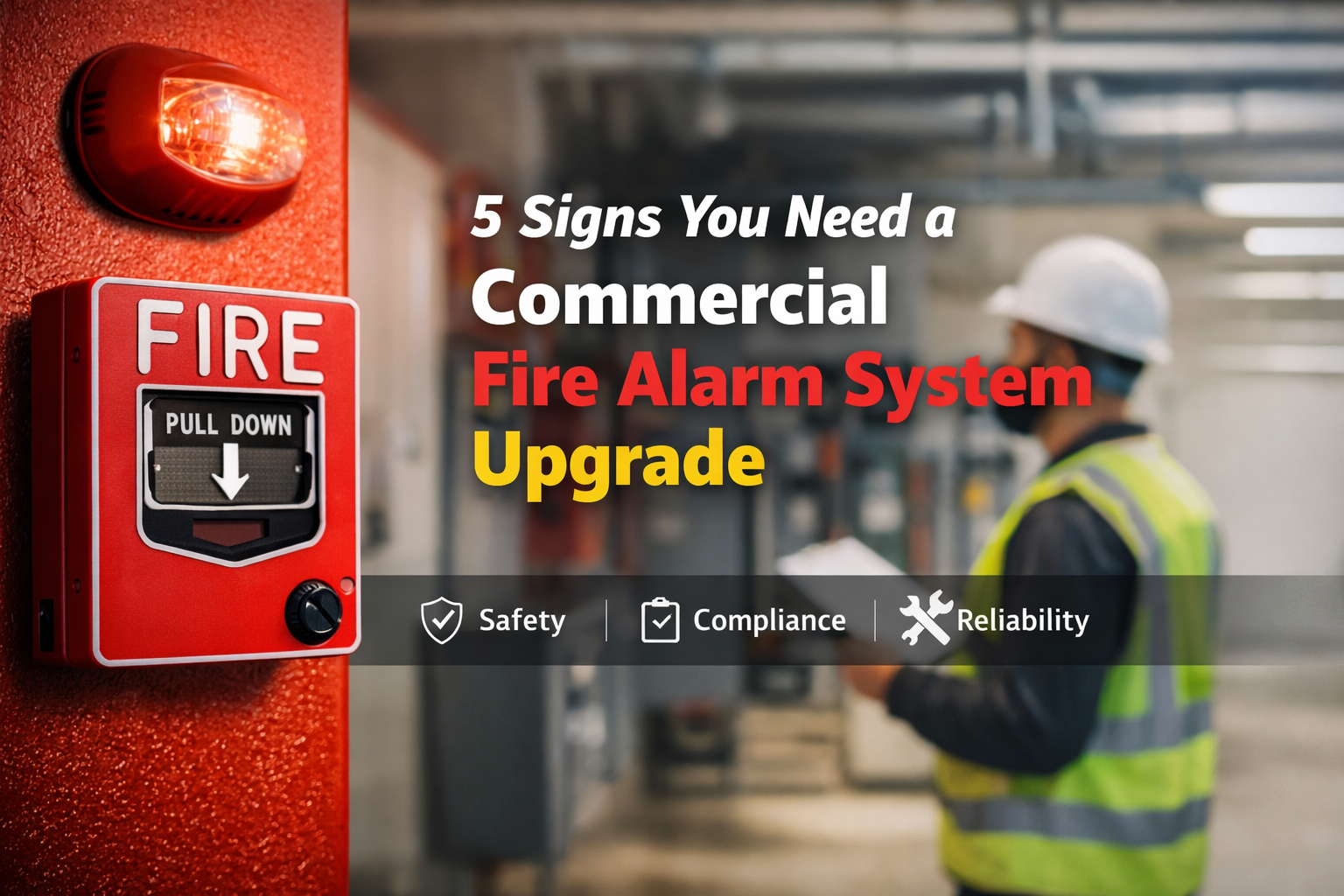
5 Signs Your Commercial Fire Alarm System Needs an Upgrade

Fire alarm systems are one of the most critical life safety systems in any building. They are designed to detect threats quickly, alert occupants, and support a safe evacuation during emergencies. However, like any technology, fire alarm systems do not last forever.
Many organizations continue operating systems that are decades old. While these systems may still function, aging equipment can create compliance risks, reliability concerns, and operational challenges. Understanding the signs that a system may need modernization helps organizations maintain safety while avoiding costly emergency repairs or inspection failures.
Below are five common indicators that it may be time to upgrade your commercial fire alarm system.
How Long Do Commercial Fire Alarm Systems Last?
Most commercial fire alarm systems have an average lifespan of 15 to 20 years. After this point, manufacturers often discontinue parts, software support becomes limited, and the system may no longer meet current code requirements.
Even if a system still functions, aging infrastructure can lead to higher maintenance costs and increased risk during inspections.
Sign 1. Your System Uses Obsolete Parts
One of the clearest signs a fire alarm system needs an upgrade is when replacement parts become difficult to find.
Manufacturers eventually discontinue panels, modules, and detection devices. When this happens, repairs become more complicated and expensive. In some cases, technicians may need to search secondary markets for parts, which can delay critical repairs.
An upgrade ensures your system is supported by current technology and readily available components.
Sign 2. Your System Struggles During Inspections
Fire alarm inspections are designed to confirm that systems meet code requirements and operate properly in an emergency.
If your system frequently fails inspections or requires repeated repairs to pass, it may indicate deeper infrastructure issues. Aging systems often experience device failures, communication problems, or compatibility issues with newer equipment.
Upgrading the system can improve reliability and help organizations maintain compliance with fire safety regulations.
Sign 3. Limited Integration With Modern Building Systems
Modern facilities increasingly rely on integrated safety systems. Fire alarms can now connect with mass notification systems, access control, security platforms, and building management systems.
Older fire alarm systems often lack the capability to support these integrations. This can limit situational awareness during emergencies and reduce the efficiency of coordinated responses.
Upgrading to a modern platform allows organizations to benefit from enhanced communication, centralized monitoring, and smarter building operations.
Sign 4. Frequent Repairs and Service Calls
As systems age, they often require more frequent maintenance and repairs. Devices may begin to fail, communication loops can experience interruptions, and troubleshooting may take longer due to outdated technology.
Frequent service calls can become costly and disruptive to facility operations. In many cases, investing in a modern system reduces long term service expenses and improves overall reliability.
Sign 5. Your Facility Has Expanded or Changed
Buildings evolve over time. Offices expand, equipment is added, and occupancy levels change. When a facility grows, the original fire alarm system may no longer provide adequate coverage.
Upgrading the system ensures that detection devices, notification appliances, and control panels align with the current layout and operational needs of the building.
When Should Organizations Consider a Fire Alarm Upgrade?
Organizations should evaluate their fire alarm systems regularly as part of their overall life safety strategy. Facilities managers should consider system age, inspection history, maintenance costs, and operational needs when determining whether modernization is necessary.
Proactive upgrades help organizations avoid emergency replacements while improving safety and compliance.
Supporting Modern Fire Protection
Fire alarm systems play a vital role in protecting people, property, and operations. As buildings become more complex and safety requirements evolve, modern fire protection technology helps organizations maintain reliability and compliance.
Partnering with experienced fire and life safety professionals ensures systems are properly designed, maintained, and upgraded when necessary.
Pavion supports organizations with fire alarm system assessments, modernization planning, and lifecycle service strategies that help ensure facilities remain protected and compliant.
FAQs
How often should a commercial fire alarm system be replaced?
Most commercial fire alarm systems last between 15 and 20 years. After that timeframe, parts may become obsolete and the system may not meet current safety standards.
Can outdated fire alarm systems still pass inspections?
Some older systems can still pass inspections if properly maintained. However, aging equipment often increases the risk of inspection failures and costly repairs.
What are the benefits of upgrading a fire alarm system?
Upgrading a system improves reliability, supports modern integrations, ensures compliance with updated codes, and reduces long term maintenance costs.
What happens if replacement parts are no longer available?
When parts are discontinued, repairs may become difficult or delayed. In many cases, upgrading the system becomes the most reliable solution.