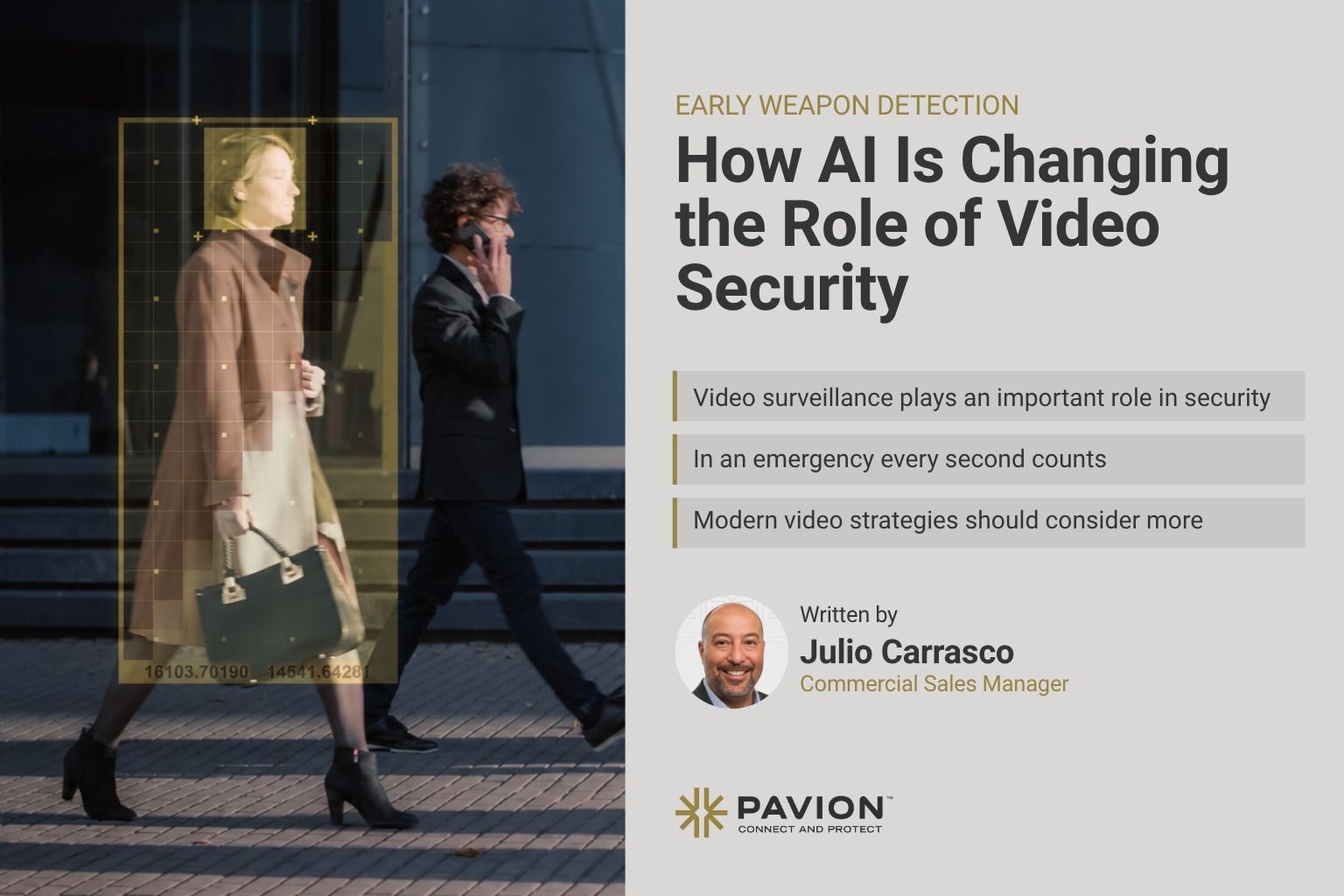
Early Weapon Detection: How AI Is Changing the Role of Video Security

For decades, video surveillance has played an important role in physical security. Cameras help security teams monitor facilities, investigate incidents, and provide critical evidence after an event occurs.
But when a weapon enters the picture, reviewing what happened afterward is not enough.
Organizations increasingly need security systems that can help identify potential threats as they develop and give security teams the information they need to respond faster. Advances in artificial intelligence are helping make that possible by transforming cameras from passive recording devices into more proactive security tools.
Early AI Weapon Detection is one example of how AI is reshaping the role of video surveillance and strengthening a layered approach to physical security.
Moving From Reactive to Proactive Security
Traditional surveillance systems largely depend on someone actively watching a video feed or becoming aware of an incident through another source. In a fast-moving emergency, valuable time may pass before the right people know what is happening.
AI-enabled video analytics introduce another layer of awareness.
Computer vision can analyze video feeds continuously and identify specific visual events or objects that may require attention. In the case of weapon detection, technology can be trained to recognize a visible firearm and initiate an alert workflow.
Solutions such as ZeroEyes, for example, can integrate with existing security cameras and analyze video feeds for visible firearms. Potential detections are then reviewed by trained human analysts before verified alerts are sent to appropriate personnel.
The goal is not simply to generate more alarms. It is to help deliver relevant, actionable information earlier in an unfolding event.
Why Early Weapon Detection Matters
In an emergency involving a weapon, every second can influence how effectively an organization responds.
Earlier awareness can give security personnel, administrators, emergency teams, and first responders additional time to make decisions based on what is actually occurring.
Depending on an organization’s security and emergency response strategy, a verified detection could help teams:
- Identify where a potential threat has been observed
- Notify security personnel and designated stakeholders
- Provide additional situational awareness to first responders
- Initiate established emergency procedures
- Make faster decisions about lockdowns, evacuations, access control, or other protective measures
This represents an important shift in the value of video security.
Instead of relying on cameras primarily to answer “What happened?”, organizations can increasingly use intelligent video systems to help answer “What is happening right now, and what do we need to do next?”
AI Should Support People, Not Replace Them
AI can analyze enormous amounts of video far more consistently than a person could reasonably monitor manually. But when the consequences of an alert are significant, technology alone should not necessarily be the final decision-maker.
Human verification can be an important part of an early weapon detection strategy.
ZeroEyes, for example, combines AI-based firearm detection with human review through its operations center before confirmed alerts are distributed. The company states that this process is designed to help reduce false positives while providing actionable information quickly.
This combination highlights a broader principle that applies across physical security: the strongest applications of AI often enhance human decision-making rather than attempt to replace it.
Technology can identify potential concerns at machine speed. Trained people can then add context, judgment, and appropriate response.
Your Existing Cameras May Be Capable of More
One of the most significant developments in intelligent video is that organizations may not need to replace their entire surveillance infrastructure to take advantage of new capabilities.
Some AI-based weapon detection platforms can operate with existing compatible security camera networks. ZeroEyes, for instance, is designed to layer its visual firearm detection technology onto existing camera infrastructure rather than requiring organizations to deploy an entirely separate camera system.
That creates an important strategic question for security leaders:
Are you getting the full value from the cameras you already have?
A modern video strategy should consider more than camera count and image quality. Organizations should also evaluate how analytics, integrations, monitoring, communications, and response workflows can work together to turn video into useful intelligence.
Weapon Detection Is One Layer, Not the Entire Strategy
No single technology can eliminate security risk.
Early weapon detection should be viewed as one component of a broader, layered security program that may also include:
- Access control
- Intrusion detection
- Video surveillance
- Emergency communications
- Visitor management
- Professional monitoring
- Security policies and procedures
- Employee training
- Coordinated emergency response
The effectiveness of any technology also depends heavily on how it fits within the organization’s environment.
Camera placement matters. Network infrastructure matters. Alert routing matters. Emergency procedures matter. Most importantly, teams need to understand exactly what should happen when an alert is received.
Technology that detects a potential threat but operates independently from the rest of the security ecosystem can leave organizations with another isolated source of information.
Technology that is thoughtfully integrated into a comprehensive security and response strategy can be far more valuable.
Building an Intelligent Security Ecosystem
The future of physical security is not simply about adding more devices. It is about making existing and new technologies work together more intelligently.
AI-enabled cameras and early weapon detection illustrate that evolution.
As video analytics become more sophisticated, organizations have an opportunity to move beyond passive surveillance toward systems that can identify relevant activity, communicate critical information, and support a faster, coordinated response.
But implementing AI should begin with the organization’s risks and operational needs, not with the technology itself.
Security leaders should ask:
- What threats are we trying to address?
- Where are our current visibility gaps?
- Who needs to receive an alert?
- How will that information connect to our emergency response procedures?
- How can our existing security infrastructure support those goals?
The answers will be different for a school, hospital, corporate campus, data center, manufacturing facility, or public venue.
That is why early weapon detection is ultimately not just a camera conversation.
It is a security strategy conversation.
At Pavion, we help organizations evaluate their physical security environments and develop integrated solutions designed around their facilities, risks, people, and operational requirements. As AI continues to expand what security technology can do, having the right strategy behind that technology will be just as important as the technology itself.
Connect with Pavion to explore how intelligent video, AI-enabled analytics, and integrated security technologies can support a more proactive approach to protecting your people and facilities.
Frequently Asked Questions About AI Weapon Detection
What is early weapon detection?
Early weapon detection uses technologies such as artificial intelligence, computer vision, and video analytics to identify visible weapons within security camera footage. When a potential weapon is detected, the system can initiate an alert workflow so designated security personnel can evaluate and respond to the situation.
How does AI weapon detection work with security cameras?
AI weapon detection software analyzes video streams from compatible security cameras using computer vision. The technology is trained to recognize objects or activity associated with potential threats, such as a visible firearm. Depending on the solution, potential detections may also be reviewed by trained human analysts before an alert is distributed.
Can AI weapon detection work with existing security cameras?
In many cases, yes. Some AI-based weapon detection platforms are designed to integrate with compatible existing video surveillance systems. This may allow organizations to add advanced analytics without replacing their entire camera infrastructure. Compatibility should be evaluated as part of the system design process.
What are the benefits of early weapon detection?
Early weapon detection can provide security teams with greater situational awareness and potentially reduce the amount of time between the appearance of a visible threat and notification of appropriate personnel. It can also help support established emergency response procedures, security operations, access control decisions, and communication with first responders.
Can AI weapon detection eliminate false alarms?
No technology can completely eliminate false alarms. AI-enabled platforms may use additional verification processes, including human review, to help reduce false positives. Organizations should evaluate how alerts are verified, communicated, and incorporated into their security procedures.
Does AI weapon detection replace security personnel?
AI weapon detection is generally most effective when used to support security personnel rather than replace them. AI can continuously analyze large amounts of video, while trained security professionals provide context, judgment, verification, and response.
Is weapon detection enough to protect a facility?
No. Weapon detection should be considered one component of a layered physical security strategy. A comprehensive approach may also include access control, video surveillance, intrusion detection, emergency communications, visitor management, professional monitoring, employee training, and established emergency response procedures.
What types of organizations can use AI weapon detection?
AI-enabled weapon detection may be considered by schools, healthcare facilities, corporate campuses, manufacturing facilities, data centers, government buildings, commercial properties, public venues, and other organizations looking to strengthen situational awareness and emergency response capabilities.
How can organizations determine whether AI weapon detection is right for them?
Organizations should begin by evaluating their risks, facility layout, existing camera infrastructure, network capabilities, emergency procedures, alert workflows, and overall security objectives. A physical security assessment can help identify whether early weapon detection fits into the organization’s broader security strategy.