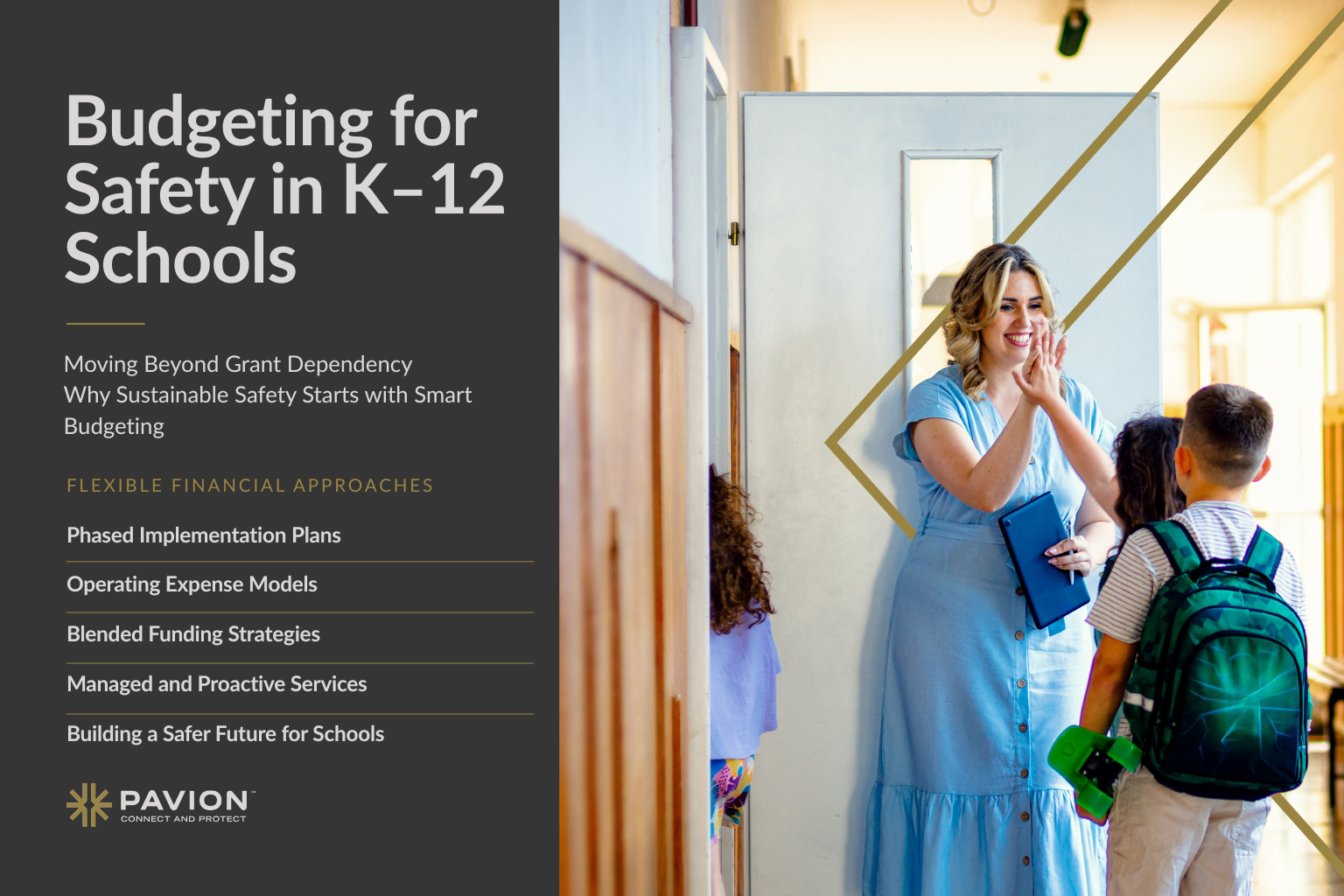
Budgeting for Safety in K–12 Schools: Moving Beyond Grant Dependency

Why Sustainable Safety Starts with Smart Budgeting
Across the K–12 landscape, school safety continues to be a top priority. From access control and video surveillance to emergency communication and visitor management, districts are investing in technologies designed to protect students, staff, and communities.
However, in conversations with school districts across the country, a consistent trend is emerging. Many are relying heavily on grant funding to support these critical safety initiatives rather than incorporating them into long term operational budgets.
While grants can play an important role, they are not a strategy. Sustainable safety requires a more proactive and structured financial approach.
The Limitations of Grant Funded Safety Programs
Grant funding has helped many districts take meaningful first steps toward improving safety. It has enabled the adoption of new technologies and supported urgent upgrades when budgets were tight.
But relying too heavily on grants introduces challenges:
Unpredictability
Grant availability changes year to year, making it difficult to plan long term initiatives.
Gaps in Coverage
Funding may only support specific projects, leaving other critical areas underprotected.
Lack of Continuity
Ongoing maintenance, monitoring, and system upgrades are often not covered, creating risk over time.
Reactive Implementation
Projects are often driven by funding availability rather than a strategic safety roadmap.
When safety is treated as a one time investment instead of an ongoing priority, systems can quickly become outdated or disconnected.
Why Safety Should Be Part of the Operational Budget
To build a truly effective safety program, districts must shift from reactive spending to proactive planning.
Incorporating safety into the operational budget allows schools to:
Plan for the Full Lifecycle
From implementation to maintenance and eventual upgrades, every phase is accounted for.
Ensure System Reliability
Consistent funding supports monitoring, testing, and service, reducing the risk of failure when it matters most.
Create a Unified Safety Ecosystem
Integrated systems work together to improve response times and situational awareness.
Adapt to Evolving Threats
With a dedicated budget, districts can continuously improve and expand their safety infrastructure.
Just like staffing, transportation, and curriculum, safety should be treated as a core operational function.
The Role of the Right Partner
Another factor contributing to fragmented or inconsistent safety investments is the absence of a true strategic partner.
When districts work with vendors, they often receive solutions based only on immediate needs or available funding. In contrast, a trusted partner helps build a long term roadmap that aligns with both current priorities and future goals.
A strong partner will:
- Assess the current state of systems and identify gaps
- Recommend scalable and integrated solutions
- Align technology investments with budget realities
- Offer flexible financial models to support implementation
- Provide ongoing service and support
This approach ensures that safety is not built in pieces, but as a cohesive and reliable system.
Flexible Financial Approaches That Support Long Term Success
Budget constraints are a reality for every school district. The goal is not to increase spending, but to allocate it more effectively.
There are several ways districts can move toward a more sustainable model:
Phased Implementation Plans
Break larger projects into manageable stages that align with annual budgets.
Operating Expense Models
Shift capital expenses into predictable monthly costs, making it easier to plan and maintain systems.
Blended Funding Strategies
Use grants as a supplement rather than the foundation, combining them with operational funds for long term stability.
Managed and Proactive Services
Leverage ongoing monitoring and service programs to extend the life and effectiveness of systems.
These strategies help districts avoid patchwork solutions and instead build a foundation for long term safety.
Building a Safer Future for Schools
Protecting students and staff is not a one time project. It is an ongoing responsibility that requires planning, investment, and the right partnerships.
Grant funding can open the door, but it should not be the only path forward.
By incorporating safety into operational budgets and taking a strategic, long term approach, K–12 districts can create environments that are not only secure today, but prepared for whatever comes next.
At Pavion, we believe that when systems are connected and properly supported, schools are better equipped to respond when seconds matter.
Call to Action
Looking to build a more sustainable school safety program?
Connect with Pavion to develop a strategic roadmap that aligns technology, funding, and long term protection goals.
FAQs
Why is relying on grants for school safety a risk?
Relying on grants for school safety can create gaps in protection because funding is not guaranteed year to year. Grants often cover initial implementation but rarely include long term maintenance, monitoring, or system upgrades, which are critical for ongoing safety.
What is the best way to fund K–12 school safety programs?
The most effective approach is to include safety initiatives in a school’s operational budget. This ensures consistent funding for system maintenance, upgrades, and monitoring, allowing districts to build a reliable and sustainable safety program.
What types of safety systems should schools budget for?
Schools should plan for a full safety ecosystem, including access control, video surveillance, emergency communication systems, visitor management, and ongoing monitoring services. Budgeting should also account for maintenance and future upgrades.
How can schools create a long term safety strategy?
Schools can build a long term strategy by assessing current systems, identifying gaps, and developing a phased implementation plan. Partnering with an experienced provider helps align technology decisions with budget realities and future needs.
What is a phased approach to school safety implementation?
A phased approach breaks large safety projects into smaller, manageable stages that align with annual budgets. This allows schools to gradually build a comprehensive system without overwhelming financial resources.
Can school safety systems be funded as an operating expense instead of capital expense?
Yes, many providers offer operating expense models that convert large upfront costs into predictable monthly payments. This makes it easier for schools to budget for safety while ensuring systems are properly maintained and updated.
How do integrated safety systems improve school security?
Integrated systems connect technologies like cameras, access control, and alarms so they work together. This improves response times, enhances situational awareness, and reduces the risk of system failures during emergencies.
What role does a security partner play in school safety planning?
A trusted partner helps schools design a long term roadmap, recommend scalable solutions, and provide ongoing service and support. This ensures safety systems remain effective, up to date, and aligned with evolving threats.
How can schools balance limited budgets with safety needs?
Schools can use a combination of phased implementation, operational budgeting, and supplemental grant funding. This blended approach helps maximize resources while maintaining a consistent and reliable safety strategy.