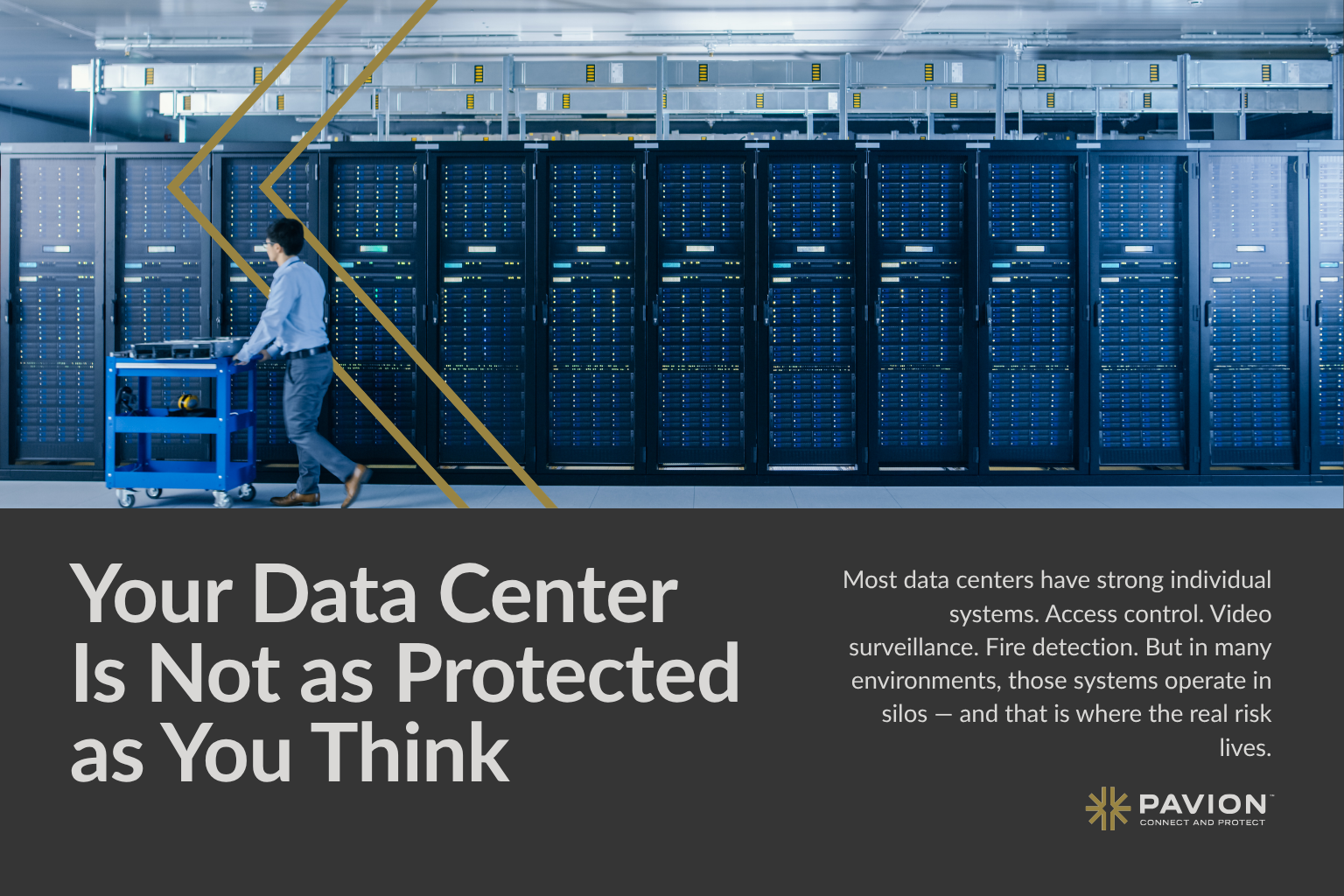
Your Data Center Is Not as Protected as You Think

In a data center, everything is built around one goal.
Uptime.
Every layer of infrastructure is designed to prevent disruption. Every system is put in place to reduce risk.
And yet, failures still happen.
Not because organizations lack security.
Not because they lack fire protection.
But because those systems are not working together.
The Hidden Risk No One Talks About
Most data centers are protected by multiple systems:
- Access control
- Video surveillance
- Fire detection and suppression
- Monitoring platforms
Individually, these systems are strong.
But in many environments, they operate in silos.
And that is where the real risk lives.
An alert is triggered, but it does not reach the right team fast enough.
A fire system activates, but communication is delayed or unclear.
A security event unfolds, but there is no centralized visibility.
In a data center, seconds matter.
When systems are disconnected, those seconds are lost.
Security Alone Does Not Protect Uptime
Security is often treated as the primary defense.
But data center downtime is rarely caused by a single issue.
It is the result of how systems respond together under pressure.
- Fire events
- Environmental changes
- System failures
- Human error
- Communication breakdowns
The question is not whether your systems can detect these risks.
The question is whether they can respond as one.
When Systems Do Not Communicate, Teams Cannot Respond
In high-pressure environments, clarity is everything.
If teams cannot see what is happening in real time, they are forced to react instead of act.
Without integration:
- Alerts are fragmented
- Communication is delayed
- Decisions take longer
With integration:
- Information flows instantly
- Teams have full visibility
- Response is coordinated and immediate
That difference is what protects uptime.
Fire Protection Is More Than Compliance
Fire systems are often implemented to meet requirements.
But in a data center, they play a much larger role.
- Early detection is critical
- Clear communication is essential
- Coordinated response is everything
If a fire system activates but the right people are not alerted immediately, the risk does not go away.
It increases.
Communication Is the Missing Link
Most organizations invest heavily in security and fire protection.
Far fewer invest in how those systems communicate.
AV and communication systems provide:
- Real-time alerts across facilities
- Visibility through control rooms
- Coordination between teams and locations
Without that layer, even advanced systems operate with limitations.
The Difference Between Protected and Resilient
There is a difference between having systems in place and having systems that work together.
Protected environments rely on individual technologies.
Resilient environments rely on integration.
Resilience means:
- Faster response times
- Fewer points of failure
- Systems that adapt as needs evolve
For data centers, that difference is critical.
Final Thought
Most data centers believe they are protected.
But protection is not defined by how many systems you have.
It is defined by how well they work together when it matters most.
Because in the end, uptime is not just about preventing failure.
It is about how quickly and effectively you respond when something goes wrong.
FAQs
What causes data center downtime?
Data center downtime is often caused by a combination of factors including system failures, environmental issues, human error, and communication breakdowns between systems.
Why is system integration important in data centers?
System integration ensures that security, fire protection, and communication systems work together in real time, improving response speed and reducing operational risk.
How does communication impact data center uptime?
Clear, real-time communication allows teams to respond immediately to incidents, minimizing downtime and preventing small issues from escalating.
Is security enough to protect a data center?
No. While security is essential, uptime depends on how all systems—security, fire, and communication—work together during critical events.