The Technology Problem Most Security Systems Face: Why Ongoing System Updates and Support Matter

Modern security systems are no longer simple camera networks or standalone access control panels. Today’s systems are intelligent platforms that rely on software, firmware, and integrations with other building technologies.
Because of this shift, security systems face a technology challenge many organizations underestimate. They require continuous updates and oversight to remain effective.
Without ongoing support, even advanced systems can quickly become outdated, vulnerable, or unreliable.
Security Systems Are Now Software Driven
In the past, security systems were largely hardware based. Cameras recorded footage, alarms triggered notifications, and access control systems managed doors. Once installed, they could operate with minimal updates.
Today’s systems are very different.
Modern solutions often include:
• Cloud based video management platforms
• AI powered video analytics
• Mobile credential access control
• Integrated alarm monitoring
• Connections with building automation systems
These platforms rely on regular software and firmware updates to function properly and securely.
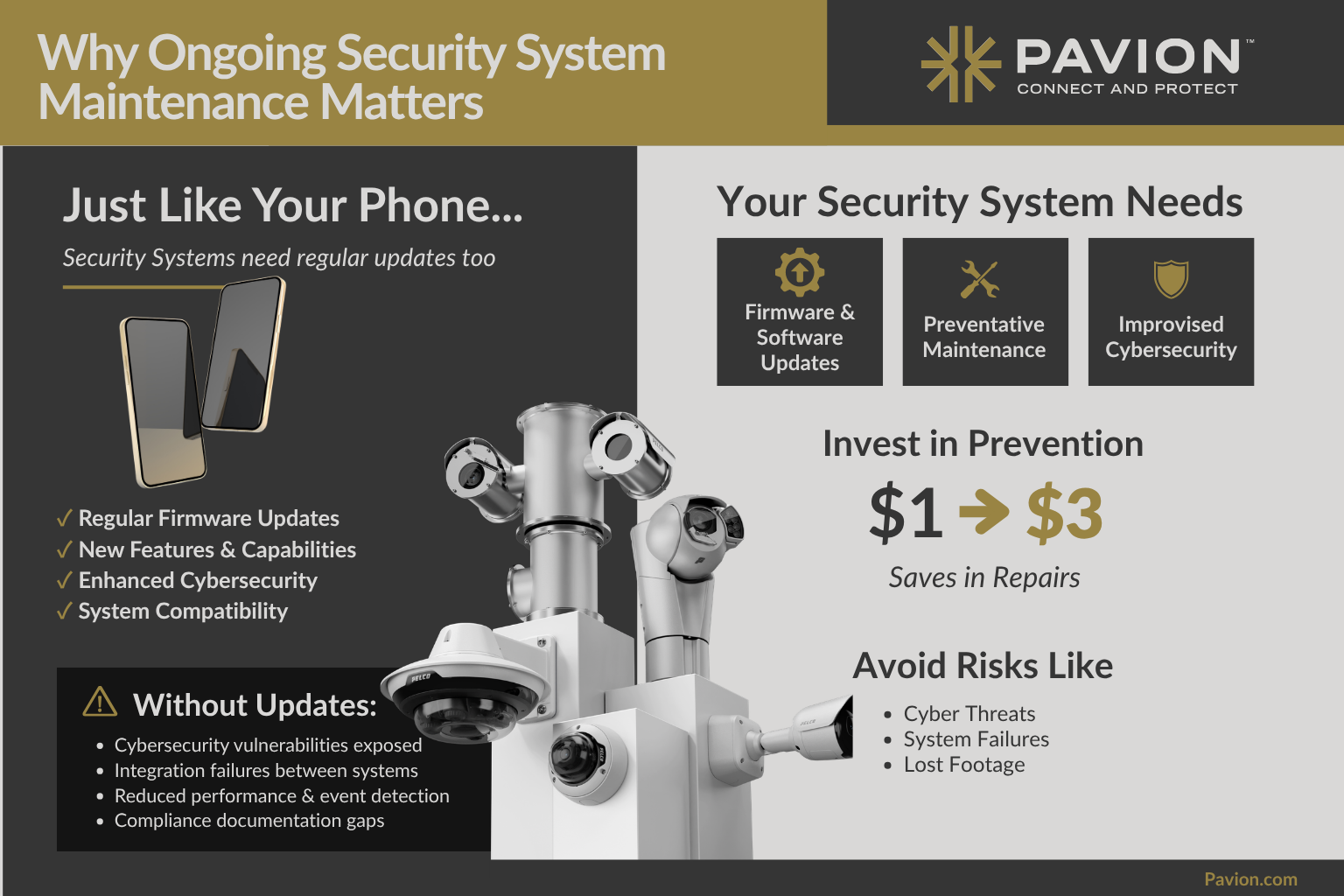
Without these updates, systems may experience performance issues, compatibility problems, or cybersecurity vulnerabilities.
The Risk of Outdated Security Systems
Many organizations assume their systems will continue functioning indefinitely once installed. In reality, outdated systems can introduce serious operational and security risks.
In many ways, security systems function similarly to smartphones. Cell phones regularly receive software updates that improve performance, introduce new features, and strengthen security protections. Without those updates, the phone becomes slower, less secure, and eventually incompatible with newer applications.
Security technology works the same way. To operate efficiently and securely, systems require ongoing updates and maintenance.
Cybersecurity Vulnerabilities
Security devices connected to a network can become entry points for cyber threats if firmware updates are not applied. Manufacturers frequently release patches to address vulnerabilities.
Without ongoing updates, organizations may unknowingly operate systems with known security weaknesses.
Integration Failures
Modern buildings rely on integration between technologies such as access control, video surveillance, alarms, and building management systems.
When systems are not maintained or updated, integrations can fail, leading to operational gaps or monitoring issues.
Reduced System Performance
Over time, outdated firmware and software can affect:
• video quality
• system responsiveness
• event detection accuracy
• reporting and monitoring capabilities
This can make security teams less effective and reduce the value of the technology investment.
The Challenge of Managing Security Technology
Facilities teams and IT departments already manage complex responsibilities across building operations. Security system maintenance can easily fall behind when updates, testing, and monitoring are handled on an ad hoc basis.
Key challenges organizations often face include:
• tracking required system updates
• coordinating firmware upgrades across devices
• monitoring system health and alerts
• maintaining integration between systems
• documenting maintenance for compliance
Without a structured approach, security systems gradually drift away from optimal performance.
Why Ongoing Service Agreements Matter
A service agreement provides a structured approach to maintaining and managing security technologies over time.
Instead of responding only when problems occur, service agreements focus on proactive system management.
This typically includes:
• scheduled system inspections
• firmware and software update management
• performance checks
• system health monitoring
• documentation of maintenance activities
• priority service support when issues arise
By maintaining systems regularly, organizations can reduce risk, extend system lifespan, and ensure security technologies continue operating as intended.
A Lifecycle Approach to Security Systems
Security systems should be viewed as long term technology investments rather than one time installations.
A lifecycle approach includes:
- system design and installation
- commissioning and testing
- ongoing maintenance and updates
- performance optimization
- future upgrades and expansion
Service agreements support this lifecycle by ensuring systems remain aligned with operational needs, technology standards, and security best practices.
Supporting Safer, Smarter Buildings
As security technologies become more advanced and connected, ongoing system support becomes increasingly important.
Organizations that invest in proactive system maintenance can:
• improve reliability
• strengthen cybersecurity posture
• maintain compliance with safety requirements
• protect their long term technology investment
There is also a strong financial case for preventative maintenance. Industry research consistently shows that for every dollar a business spends on preventative maintenance, they save an average of three dollars in reactive repairs and emergency fixes.
By investing in the right service plan that includes preventative maintenance and regular software and firmware updates, organizations can ensure their systems work when they need them most. This also reduces the likelihood of issues such as video loss or system failures when critical footage is needed after an incident.
Maintaining modern security systems is no longer optional. It is a critical part of protecting people, property, and operations.
FAQs
How often should security systems be updated?
Security systems should receive firmware and software updates as recommended by the manufacturer. Many organizations review system updates during routine maintenance inspections conducted several times per year.
Why are security system firmware updates important?
Firmware updates often address cybersecurity vulnerabilities, improve performance, and ensure compatibility with other building systems.
What happens if a security system is not maintained?
Unmaintained systems may experience performance issues, integration failures, cybersecurity risks, and increased downtime due to unexpected failures.
What is included in a security system service agreement?
Service agreements typically include preventative maintenance, system inspections, update management, performance testing, and priority response for repairs.
Do modern security systems require IT involvement?
Yes. Because many systems connect to networks and cloud platforms, collaboration between security, facilities, and IT teams is often necessary to maintain system performance and security.