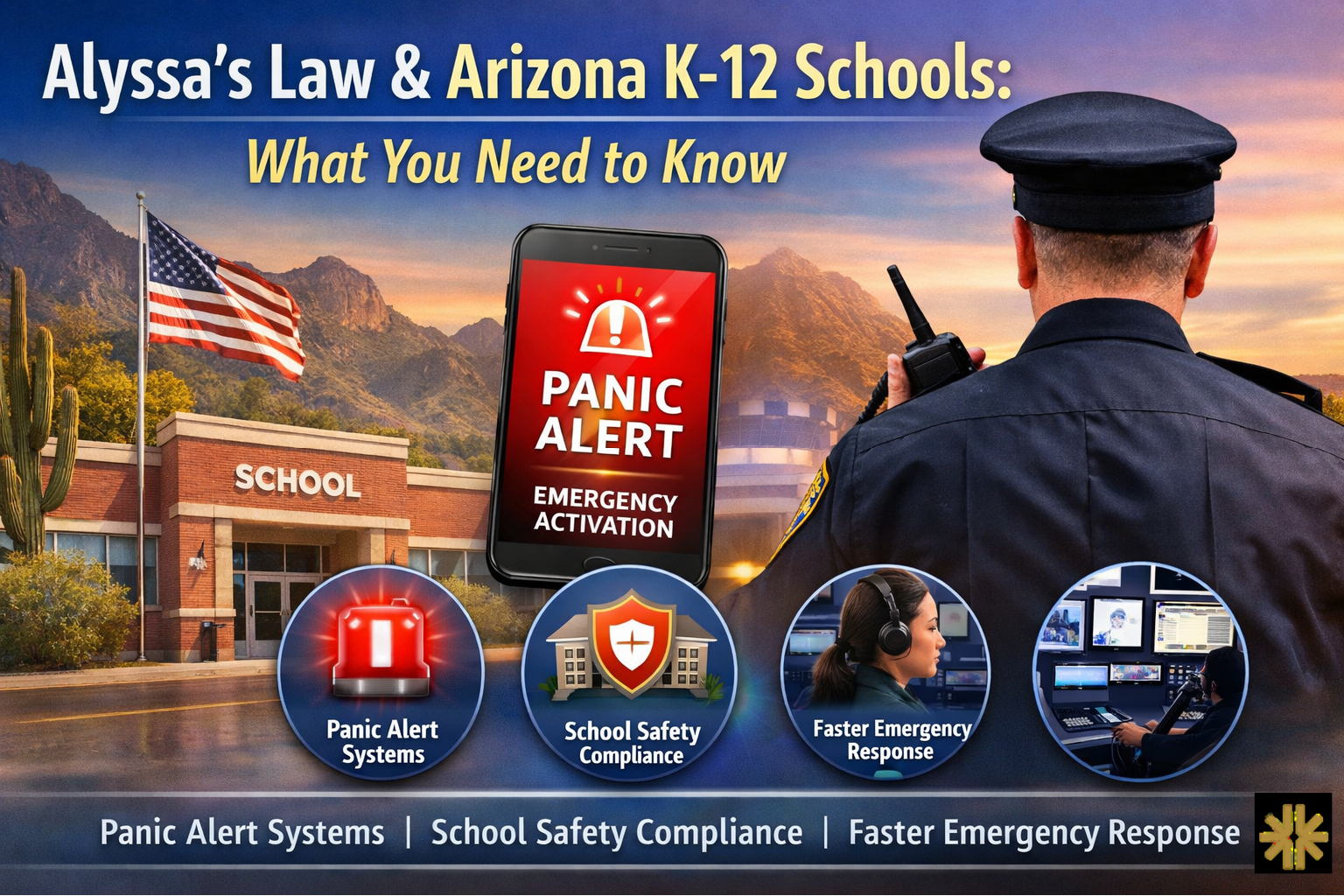
Alyssa’s Law and Arizona K-12 Schools: What You Need to Know

School safety continues to be a top priority across the country, and legislation is evolving to ensure faster emergency response and stronger protections for students and staff. One of the most impactful pieces of legislation in recent years is Alyssa’s Law, which is now influencing safety requirements in K-12 schools nationwide—including in Arizona.
If you are a school administrator, facilities director, or district leader, understanding how Alyssa’s Law affects your campus is critical. This guide breaks down what Alyssa’s Law is, where Alyssa’s Law Arizona legislation currently stands, and what steps K-12 schools can take now to strengthen emergency response.
What Is Alyssa’s Law?
Alyssa’s Law was created in memory of Alyssa Alhadeff, a student who lost her life in the 2018 Marjory Stoneman Douglas High School tragedy. The law focuses on one primary goal:
Ensure that schools have direct, immediate access to emergency responders during life-threatening incidents.
At its core, Alyssa’s Law requires schools to install silent panic alert systems or comparable emergency notification technology that allows staff to quickly and discreetly notify law enforcement and first responders.
Why Alyssa’s Law Matters for K-12 Schools
During emergencies, seconds matter. Traditional emergency procedures—such as calling 911 from a phone—can create delays or expose staff to danger. Alyssa’s Law addresses these challenges by promoting:
- Faster communication with first responders
- Discreet activation of emergency alerts
- Real-time situational awareness for law enforcement
- More coordinated emergency response
The result is a safer environment where threats can be addressed more quickly and effectively.
Which States Have Passed Alyssa’s Law?
As of September 2026, Alyssa’s Law has been enacted in 14 states: New Jersey (2019), Florida (2020), New York (2022), Texas and Tennessee (2023), Utah, Oklahoma, and Louisiana (2024), Georgia, Washington, and Oregon (2025), and Virginia, West Virginia, and Illinois (2026), according to the Make Our Schools Safe state tracker. Requirements vary: some states require a silent alarm connected to law enforcement, while others, such as Utah, add requirements like wearable alert devices.
Arizona is not yet on this list.
Where Alyssa’s Law Stands in Arizona
As of September 2026, Arizona has not enacted a statewide Alyssa’s Law. Lawmakers have introduced bills, including HB2803 (2021) and HB2683 (2022), that would require silent panic alert systems connected to law enforcement, but neither passed, and the 2026 legislative session adjourned on June 13, 2026 without enacting one. Until a bill passes, panic alert systems are a best practice rather than a state mandate, and many districts are adopting them proactively.
Districts adopting panic alert systems ahead of legislation should plan to:
- Deploy panic alert or emergency notification systems
- Ensure alerts connect directly to local law enforcement or emergency dispatch
- Provide staff access to activate alerts from multiple locations (mobile, desktop, or physical buttons)
- Train staff on proper use and emergency procedures
Schools should also monitor state guidance and district-level policies to confirm exact compliance requirements.
Not sure whether your campus panic alert capability meets Alyssa’s Law intent?
Contact Pavion today to schedule a school security consultation.
What Is a Panic Alert System?
A panic alert system is a technology platform that enables school staff to instantly notify first responders and internal teams of an emergency with the press of a button.
Most Alyssa’s Law states require three things: silent activation, a direct connection to law enforcement or 911 dispatch, and the location of the alert. The features below are how panic alert systems deliver them.
Common features include:
- Mobile app or desktop activation
- Silent alerting (no audible alarm required)
- GPS or location-based incident data
- Two-way communication with responders
- Integration with cameras, access control, and mass notification
These systems are a cornerstone of Alyssa’s Law compliance.
Learn how Pavion supports safer learning environments with integrated security solutions for schools.
Explore Pavion’s Education Solutions.
Benefits Beyond Compliance
While Alyssa’s Law focuses on emergency response, panic alert systems deliver broader safety and operational benefits:
- Improved coordination between schools and law enforcement
- Faster lockdown initiation and campus-wide notifications
- Reduced confusion during incidents
- Enhanced documentation and incident reporting
- Increased confidence among parents, staff, and students
Compliance is important, but true value comes from creating a more resilient and prepared school environment.
Steps Arizona K-12 Schools Should Take
- Assess Current Safety Infrastructure
Review existing mass notification, access control, video surveillance, and communication systems. A security risk assessment is the fastest way to find gaps. - Identify Gaps
Determine whether your school has a panic alert capability that meets Alyssa’s Law intent. - Engage a Trusted Integrator
Work with a qualified school safety technology partner who understands Arizona school safety guidance and best practices. - Select a Scalable Solution
Choose a system that integrates with existing platforms and can grow with future needs. - Train and Test
Conduct staff training and regular drills to ensure everyone knows how to activate alerts.
Funding Considerations
Arizona schools may be able to leverage:
- State school safety grants
- Federal funding programs
- Capital improvement budgets
- Public safety partnerships
A knowledgeable integrator can help identify funding opportunities and align solutions with grant requirements.
Final Thoughts
Alyssa’s Law represents a critical shift toward faster, smarter emergency response in schools. For Arizona K-12 leaders, understanding the law and preparing before it passes is not just about future requirements—it is about protecting lives today.
By investing in panic alert systems and integrated safety solutions, schools can create safer learning environments and give first responders the tools they need to act without delay.
Schedule Your School Security Risk Assessment
Pavion helps K-12 schools evaluate existing systems, identify gaps in emergency response, and implement panic alert and integrated safety solutions.
Contact Us Today to schedule your Pavion Security Risk Assessment and prepare your campus for a safer school year.
FAQs
Has Arizona passed Alyssa’s Law?
Not as of September 2026. Alyssa’s Law bills have been introduced in the Arizona Legislature but have not been signed into law. Many Arizona districts are adopting silent panic alert systems voluntarily.
What is Alyssa’s Law in Arizona?
Alyssa’s Law is legislation, first passed in New Jersey in 2019, that requires schools to have silent panic alert systems connected directly to law enforcement. In Arizona, it has been proposed but not yet enacted.
Are panic buttons required in Arizona schools?
Not under a statewide law as of September 2026. Districts should follow state school safety guidance and local policy, and many adopt panic alert systems voluntarily ahead of legislation.
Who can activate a panic alert system?
Typically, authorized school staff such as teachers, administrators, and support personnel can activate alerts through mobile apps, desktops, or physical buttons.
Do panic alert systems replace 911 calls?
No. Panic alert systems complement 911 by providing faster, more detailed, and often silent communication directly to responders.
Can panic alert systems integrate with other security technology?
Yes. Many systems integrate with video surveillance, access control, and mass notification platforms for a unified safety approach.