Why Healthcare Facilities Are Unifying Nurse Call and Security Systems

Healthcare facilities are under increasing pressure to do more with less. Short staffing, rising patient acuity, tighter budgets, and higher expectations for safety and experience have forced hospitals and health systems to rethink how technology supports care delivery.
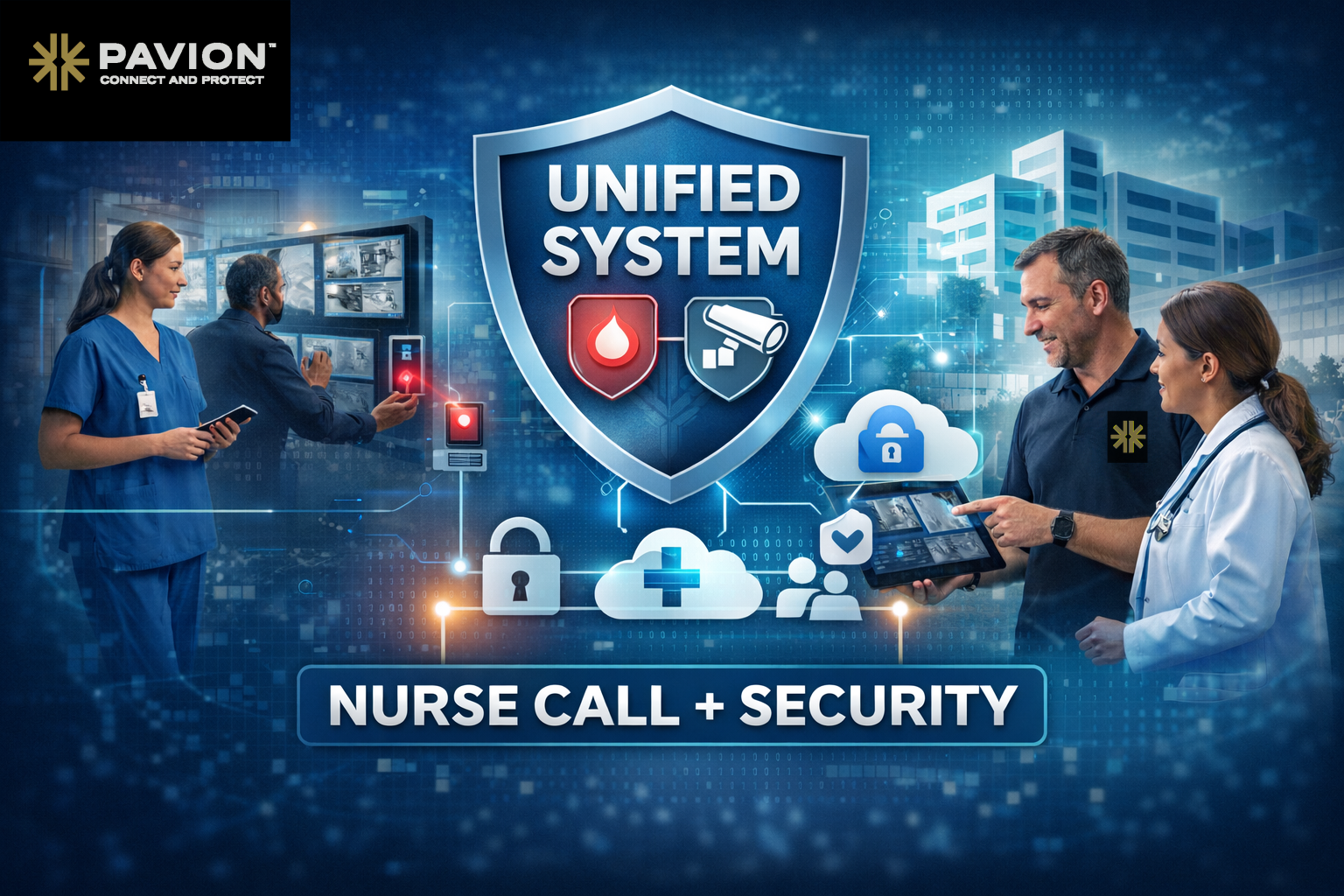
One of the most impactful shifts happening today is the unification of nurse call and security systems into a single, integrated platform.
Traditionally, nurse call, access control, video surveillance, and duress systems have operated independently. While each system may function well on its own, the lack of integration creates blind spots, slower response times, and fragmented workflows.
By unifying nurse call and security systems, healthcare organizations gain real time visibility, faster situational awareness, and coordinated response capabilities that directly improve patient care, staff safety, and operational efficiency.
The Growing Need for Integrated Healthcare Technology
Hospitals are complex environments with thousands of daily interactions between patients, clinicians, visitors, and staff. Every second matters. When a patient presses a nurse call button, when a staff member activates a duress alarm, or when a security incident occurs, response speed and accuracy can be the difference between escalation and resolution.
Standalone systems often create challenges such as:
- Multiple interfaces for clinicians to monitor
- Delays caused by manual handoffs
- Inconsistent alerting methods
- Limited context around events
- Siloed data that is difficult to analyze
Integration removes these barriers by connecting clinical communication and security technologies into one unified ecosystem.
What Does It Mean to Unify Nurse Call and Security Systems?
Unification goes beyond basic integration. It means nurse call, staff duress, access control, video surveillance, and incident management share data and communicate with one another in real time.
For example:
- A nurse call request can automatically trigger a video view of the room
- A staff duress activation can display location, nearby cameras, and door status
- Security can see patient context before arriving on scene
- Clinical teams receive actionable alerts instead of generic alarms
This convergence creates a single source of truth for situational awareness.
Key Benefits of Unified Nurse Call and Security Platforms
1. Faster Response Times
When alerts contain context such as location, live video, and patient details, staff can assess the situation instantly. This reduces the time spent asking questions or searching for information and allows teams to act immediately.
2. Improved Staff Safety
Workplace violence in healthcare continues to rise. Integrating staff duress with nurse call and security ensures that when a clinician needs help, the alert reaches the right people with precise location data and visual confirmation.
Security teams can respond faster and with better preparation.
3. Better Patient Experience
Patients want to feel heard and cared for. Unified systems reduce missed calls, speed up response, and allow care teams to prioritize based on urgency.
This leads to higher satisfaction scores and better overall perceptions of care.
4. Enhanced Operational Efficiency
Integrated systems reduce the need for staff to manage multiple devices and platforms. Fewer screens, fewer logins, and streamlined workflows translate into more time at the bedside and less time troubleshooting technology.
5. Actionable Analytics and Insights
When systems share data, healthcare leaders gain access to powerful analytics such as:
- Average response times
- Call volume by unit
- Incident trends
- Staff workload patterns
These insights help organizations make informed staffing, training, and process improvement decisions.
Use Cases in Real Healthcare Environments
Behavioral Health Units
Unified nurse call and security systems allow rapid escalation when patients become agitated, combining duress activation, video verification, and access control in one workflow.
Emergency Departments
High traffic and unpredictable situations demand immediate situational awareness. Integration provides clinicians and security with shared visibility into developing incidents.
Acute Care Floors
Nurse call integration with video and mobile devices ensures that routine requests are handled efficiently while urgent needs are prioritized.
Long Term Care and Senior Living
Unified platforms improve resident safety, reduce fall response times, and help limited staff cover larger areas more effectively.
Why Interoperability and Compliance Matter
Not all integrations are created equal. True unification requires open architecture, standards based platforms, and proven interoperability between clinical and security technologies while maintaining strict protections for patient data.
Healthcare organizations must ensure that any connected system supports HIPAA compliance, safeguards electronic protected health information, and limits access to sensitive data based on role and need. When nurse call, video, access control, and communication systems share information, security and privacy cannot be an afterthought. They must be built into the design from day one.
This is where experienced healthcare technology integrators like Pavion play a critical role. Pavion understands the unique regulatory, clinical, and security requirements of healthcare environments and designs unified solutions that protect patient privacy while improving response, visibility, and care delivery. The result is a cohesive system that works together securely, reliably, and in full alignment with healthcare compliance standards, not a collection of disconnected tools.
The Future of Healthcare Communication and Safety
As healthcare continues to evolve, the line between clinical communication and security operations will continue to blur.
Unified nurse call and security platforms lay the foundation for:
- AI driven event detection
- Predictive analytics
- Mobile first workflows
- Cloud based management
- Proactive risk mitigation
Facilities that embrace this convergence today position themselves for safer, smarter, and more resilient operations tomorrow.
Final Thoughts
Unifying nurse call and security systems is no longer a nice to have. It is a strategic imperative for healthcare organizations focused on improving safety, efficiency, and patient experience.
By breaking down silos and creating a connected ecosystem, hospitals can empower their teams, protect their people, and deliver better care.
Frequently Asked Questions (FAQs)
What is a unified nurse call and security system?
A unified system connects nurse call, staff duress, access control, video surveillance, and incident management into a single platform that shares data and alerts in real time.
How does integration improve response times?
Integrated alerts provide context such as location, live video, and event type, allowing staff to quickly assess situations and respond without delay.
Is unification expensive?
While there is an upfront investment, unification often reduces long term costs by lowering maintenance, minimizing downtime, and improving operational efficiency.
Can existing systems be integrated or do they need replacement?
Many modern platforms support interoperability with existing infrastructure. A technology assessment can determine what can be integrated versus upgraded.
Does unifying systems improve regulatory compliance?
Yes. Integrated reporting, audit trails, and standardized workflows help support compliance with healthcare safety and security requirements.
Who should be involved in planning a unified solution?
Clinical leadership, IT, facilities, security, and operations should all be involved to ensure the solution meets organizational needs.