When Seconds Matter in Corporate and Enterprise Operations

Corporate campuses and enterprise environments function like small cities. They include office buildings, warehouses, manufacturing floors, labs, parking structures, lobbies, cafeterias, and outdoor spaces. Employees move between floors, departments, and locations throughout the day. Some are on site. Some are remote. Some travel. Some work hybrid schedules. With this level of complexity, safety and communication must be seamless.
When an emergency occurs, time becomes the most valuable resource an organization has. Whether it is a medical event, a fire alarm, a security threat, a severe weather alert, or a facility disruption, employees rely on immediate direction. Corporate emergency communication is essential to reducing confusion, preventing panic, and guiding safe behavior.
In corporate environments, when seconds matter, communication determines outcomes.
Why Corporate Emergency Communication Matters in Enterprise Environments
Enterprise operations must keep employees safe while maintaining productivity and business continuity. This dual responsibility becomes extremely challenging during emergencies.
Delays in communication can lead to:
- Unsafe evacuations
- Crowded stairwells
- Exposure to hazards
- Misinformation spreading rapidly
- Slower emergency response
- Disrupted operations
- Lost revenue
- Reduced employee trust
Corporate environments thrive on clarity and predictability. Emergencies disrupt both. Fast communication restores order.
Common Corporate Emergencies That Require Instant Alerts
Every organization faces unique risks, but the most common corporate emergencies include:
- Medical incidents
- Fire or smoke events
- Severe weather
- Suspicious activity or unauthorized visitors
- IT outages or cyber events
- Elevator failures
- Utility disruptions
- Hazardous spills
- Workplace violence threats
- Evacuation or shelter events
- Transportation and parking lot incidents
Each situation requires a different message and a different audience. Communication must be specific and immediate.
Navigating Hybrid and Distributed Workforces
Corporate emergency communication ensures hybrid and remote employees receive the same timely guidance as on site staff. Modern organizations include:
- On site employees
- Hybrid teams
- Fully remote workers
- Traveling staff
- Contracted partners
- Visitors and vendors
This increases communication complexity. Alerts must adapt to physical and virtual environments.
Effective crisis communication reaches:
- People inside the building
- People off site and unaware
- Employees traveling between locations
- Remote workers who may need business continuity notifications
Unified communication ensures consistency and prevents gaps in awareness.
Why Clear Messaging Matters in Corporate Emergencies
Employees may not have emergency training beyond basic drills. They may not know the layout of the building, especially in large enterprise campuses. Under pressure, they need direct action steps.
Strong crisis communication uses:
- Short instructions
- Clear language
- Simple phrasing
- Action oriented messages
Examples:
“Evacuate to the east lot now.”
“Shelter in place. Severe weather approaching.”
“Avoid the lobby. Emergency personnel responding.”
“Lockdown. Move away from windows.”
These messages eliminate guesswork and reduce cognitive strain.
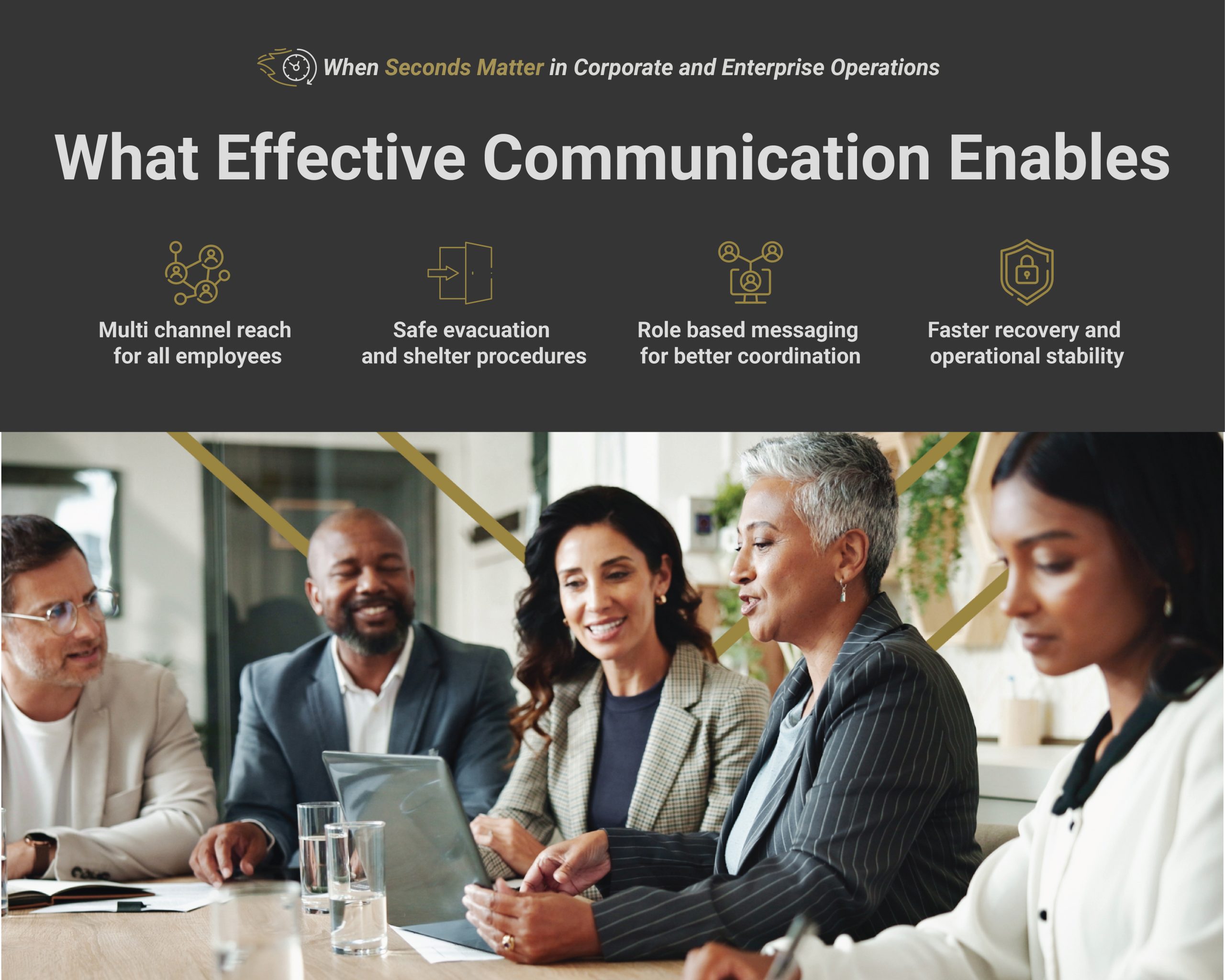
Role Based Alerts Increase Efficiency
Not every emergency requires a facility wide response. Over alerting causes confusion and may push employees to ignore future alerts.
Role based messaging ensures that instructions only reach the people who need them, such as:
- Security
- Facilities
- Leadership
- IT
- Crisis teams
- Fire wardens
- Floor captains
For example:
“Security only: respond to west entrance badge alert.”
“Facilities team: water leak detected in 4th floor utilities room.”
“Leadership: activate business continuity procedures.”
Targeted communication strengthens organizational coordination.
Multi Channel Communication Reaches All Employees
Corporate environments are noisy, spacious, and segmented. Not all employees will hear an overhead page or see a desktop notification. Multi channel corporate emergency communication increases message reliability and reach during critical incidents.
Multi channel redundancy reaches everyone through:
- Mobile alerts
- Desktop pop ups
- Text messages
- Indoor and outdoor speakers
- Digital signage
- Meeting room displays
- Scrolling lobby boards
- Visual strobes
- Mobile apps
- Phone calls for critical events
Using multiple channels ensures the message is delivered, even if one pathway fails.
Communication Supports Business Continuity
Strong corporate emergency communication helps organizations maintain compliance, reduce downtime, and protect critical assets during disruptions. Emergencies impact operations in more ways than safety alone. Rapid communication is critical for:
- Redirecting staff
- Protecting company assets
- Maintaining compliance
- Managing IT incidents
- Activating crisis teams
- Avoiding downtime
- Supporting remote work transitions
- Securing facilities
- Informing leadership of real time conditions
During IT outages or cyber events, clear communication helps minimize disruption and speed recovery.
Guiding Safe Evacuation and Shelter Procedures
Offices have diverse layouts including:
- Stairwells
- Meeting rooms
- Manufacturing areas
- Open office floors
- Cafeterias
- Loading docks
Employees may be unfamiliar with evacuation routes or shelter locations. Communication guides safe movement.
Examples:
“Shelter in the nearest interior room.”
“Evacuate using the south stairwell only.”
“Do not use elevators.”
“Remain inside due to external threat.”
Clear, calm guidance prevents bottlenecks and unsafe decisions.
Supporting Visitors and Non Employees
Corporate buildings often contain:
- Vendors
- Clients
- Delivery drivers
- Contractors
- Interview candidates
- Training groups
These individuals are unfamiliar with emergency procedures. Communication must be simple, visible, and immediate.
Multi channel alerts bridge that knowledge gap.
Coordination With First Responders
When fire, EMS, or law enforcement arrives, streamlined communication helps:
- Secure entrances
- Shut down equipment
- Guide responders to the exact location
- Prevent crowd buildup
- Update staff on next steps
- Share instructions about returning to work
First responders benefit from an informed workforce and a controlled environment.
Post Incident Communication Is Part of Recovery
After an emergency, employees look for clarity and reassurance. Communication supports:
- Return to work guidance
- Remote work activation
- Mental health and wellness messaging
- Building re entry timelines
- Investigation updates
- Leadership communication
- Next step instructions
Clear recovery communication strengthens trust and stability.
Communication Protects People and Operations
Corporate and enterprise environments must respond quickly when emergencies arise. Whether the incident impacts safety, continuity, operations, or employee well being, communication shapes the outcome.
When seconds matter, rapid alerts protect people, guide safe decision making, reduce confusion, and support organizational resilience. Communication is not just a tool — it is the backbone of corporate safety.
Corporate emergency communication plays a critical role in protecting employees and maintaining business continuity when unexpected events occur. In large enterprise environments, fast and clear messaging helps reduce confusion, guide safe actions, and keep operations running during medical incidents, security threats, severe weather, and facility disruptions. When seconds matter, effective communication becomes the foundation of a safe and resilient workplace.
Frequently Asked Questions
What does “When Seconds Matter” mean in corporate environments
It refers to how critical fast, accurate communication is during emergencies. In corporate and enterprise settings, timely alerts help protect employees, guide safe actions, and reduce confusion when incidents occur.
What is corporate emergency communication
Because delays can lead to unsafe evacuations, misinformation, panic, and slower emergency response. Clear and immediate messaging helps people make the right decisions quickly.
What types of emergencies require instant alerts
Common situations include medical incidents, fire or smoke, severe weather, suspicious activity, IT outages, utility disruptions, hazardous spills, workplace violence threats, and evacuation or shelter events.
How do alerts reach hybrid and remote employees
Effective systems deliver messages through multiple channels such as mobile alerts, desktop notifications, email, text messages, apps, and phone calls so both on site and remote staff stay informed.
Why is clear messaging important during emergencies
Employees may not know emergency procedures or building layouts. Simple, direct instructions like “Evacuate to the east lot now” remove guesswork and reduce stress.
What are role based alerts
Role based alerts send specific instructions to the people who need them, such as security, facilities, IT, or leadership. This prevents over alerting and improves coordination.
Why should companies use multiple communication channels
No single method reaches everyone. Using mobile alerts, speakers, digital signage, email, and other tools ensures the message gets through even if one system fails.
How does emergency communication support business continuity
It helps redirect staff, protect assets, manage IT incidents, maintain compliance, and minimize downtime so operations can recover faster.
How do alerts guide safe evacuation or shelter
Messages provide clear directions such as which stairwells to use, where to shelter, and when to avoid elevators. This prevents bottlenecks and unsafe movement.
How are visitors and contractors protected during emergencies
Multi channel alerts and visible messaging help guide people who are unfamiliar with the building or procedures.
How does communication help first responders
It secures entrances, shuts down equipment, guides responders to the correct location, and keeps staff informed during the response.
What happens after an incident
Post incident communication provides return to work guidance, wellness resources, building re entry timelines, and next steps to support recovery and trust.
Is emergency communication only about safety
No. It also supports operational stability, compliance, leadership coordination, and employee confidence during disruptions.
What makes an effective corporate emergency communication system
Speed, clarity, targeted messaging, multi channel delivery, and the ability to reach both on site and remote employees.
How does communication improve employee confidence
When employees receive clear and timely information, they feel safer, more informed, and more supported during critical events.