When Seconds Matter: A General Guide to Emergency Communication and Mass Notification

Emergencies strike without warning and move faster than most organizations can manually respond. Whether the crisis involves a fire, severe weather, a security threat, a medical incident, a hazardous spill, or a facility failure, these events disrupt routine and create instant uncertainty. In these moments, communication becomes the first and most important protective action.
Mass notification systems are designed to deliver rapid, clear, multi channel messages that guide people toward safe decisions. They are the backbone of emergency preparedness and the foundation of effective crisis response. When seconds matter, information is the difference between order and chaos, confusion and clarity, safety and harm.
Why Mass Notification Matters in Every Environment
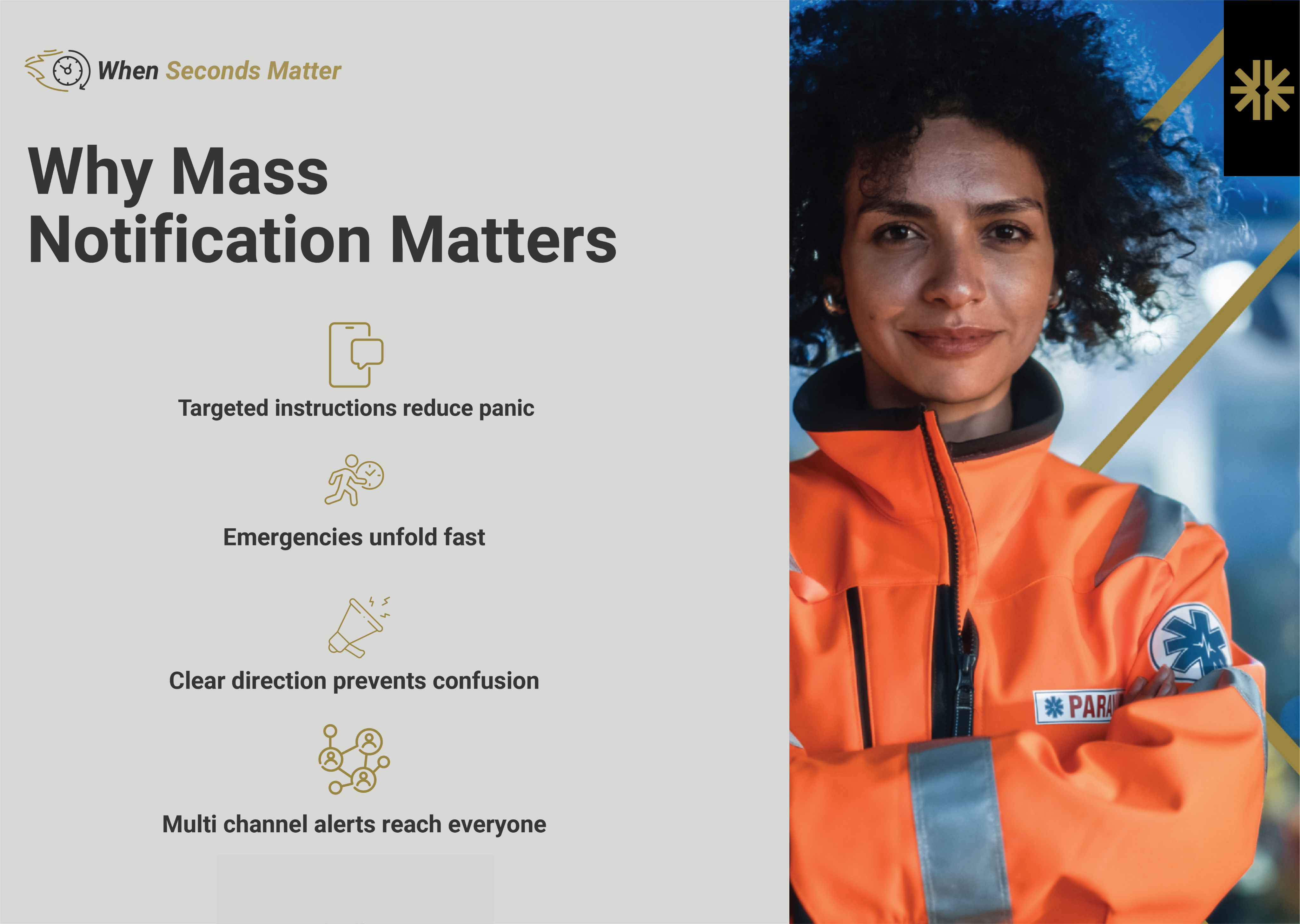
Every organization, regardless of industry or size, faces emergencies. The risks may differ, but the need for fast communication is universal. Without clear direction, people react based on fear, guesswork, or misinformation, which slows down response and increases danger.
Mass notification systems:
- Fill the information gap during the first moments of crisis
- Reduce confusion
- Provide unified and authoritative instructions
- Strengthen organizational coordination
- Support safety, continuity, and recovery
Communication is not an add on. It is the core of emergency response.
Understanding How People React During Emergencies
Human behavior changes under stress. In high pressure moments, people experience:
- Reduced ability to process information
- Higher likelihood of confusion
- Increased reliance on simple cues
- Slower decision making
- Tendency to imitate others rather than think independently
Mass notification systems counter these challenges by delivering:
- Short, simple instructions
- Clear language
- Visible and audible cues
- Messages repeated across multiple channels
By aligning communication with human behavior, organizations improve safety outcomes.
Common Emergencies That Require Mass Notification
Mass notification is essential for a broad range of emergencies including:
- Fire or smoke events
- Severe weather such as tornadoes, lightning, or hurricanes
- Medical emergencies
- Suspicious activity
- Hazmat spills or gas leaks
- Power or utility failures
- Workplace violence
- IT or cybersecurity incidents
- Evacuation scenarios
- Shelter in place events
- Facility disruptions
- Natural disasters
Each incident requires fast, accurate messaging tailored to the threat.
Why Speed Is the Most Critical Factor
During the first moments of an emergency, people need clarity. Delayed alerts create uncertainty, which leads to unsafe decisions. The faster individuals receive information, the faster they can act.
Speed enables organizations to:
- Evacuate before hazards escalate
- Secure areas during security events
- Move people to shelter before severe weather hits
- Begin medical response sooner
- Activate crisis teams instantly
- Protect critical systems
- Reduce operational disruption
When communication is instant, response becomes immediate.
Multi Channel Delivery Ensures Everyone Receives the Alert
No single communication channel reaches everyone in all environments. Facilities are complex and people move constantly.
Effective mass notification uses redundancy across:
- Mobile alerts
- SMS messages
- Desktop pop ups
- Overhead PA systems
- Digital signage
- LED boards
- Visual strobes
- Outdoor speakers
- Email notifications
- Mobile apps
- Radio or dedicated devices
Multi channel systems ensure the message reaches employees, visitors, contractors, and remote staff.
Targeted Messaging Improves Response and Reduces Panic
Not every emergency requires a facility wide alert. Over alerting may cause unnecessary panic or confusion. Targeted messaging delivers instructions only to those who need them.
Examples:
- “Evacuate Level 2 immediately.”
- “Security only to loading dock.”
- “Shelter in place on 5th floor.”
- “Maintenance respond to pump room leak.”
This precision prevents overreaction and directs attention where it matters most.
Automation Strengthens Reliability
Automated alerts remove human delay. In many emergencies, every second counts, and manual activation may be too slow.
Automated mass notification can trigger based on:
- Fire panel activation
- Access control breaches
- Environmental sensors
- Severe weather warnings
- Equipment failures
- Network or IT outages
Automation ensures consistent, timely action.
Clear Instructions Reduce Cognitive Load
During emergencies, people need explicit direction. Short messages reduce processing time and eliminate uncertainty.
Effective instructions include:
“Evacuate immediately.”
“Shelter in place.”
“Lockdown now.”
“Avoid the north wing.”
“Use south exits only.”
Concise communication improves compliance and safety.
Supporting Organizational Coordination
Mass notification strengthens the ability of staff, leadership, and emergency teams to coordinate. It provides:
- Real time updates
- Action steps
- Status alerts
- Closure or reopening instructions
- Information for crisis teams
- Guidance for remote workers
The stronger the communication framework, the stronger the organizational response.
Communication Throughout Recovery
After the emergency ends, communication continues to guide:
- Return to operations
- Cleaning or facility reset
- IT system restoration
- Leadership updates
- Staff notifications
- Instructions for visitors or clients
- Transportation and building access changes
Recovery is smoother when communication is clear.
Mass Notification Is the Heart of Safety
Emergencies are unpredictable, but communication should never be. When seconds matter, the ability to communicate quickly, clearly, and across multiple channels is what protects people and strengthens resilience.
Mass notification systems are not simply tools — they are the first and most important protective action an organization can take. They guide behavior, reduce confusion, strengthen coordination, and save lives.
In every emergency, communication makes the difference.
FAQs: Emergency Communication & Mass Notification
What is a mass notification system?
A mass notification system delivers rapid, multi-channel alerts during emergencies to ensure people receive clear instructions that support safe and timely action. These systems help organizations respond faster, reduce confusion, and coordinate effectively during critical events.
Why is speed so important during an emergency?
The first moments of a crisis are when decisions matter most. Delayed alerts create uncertainty and increase risk. Fast communication enables earlier evacuation, quicker medical response, faster lockdown actions, and stronger protection of people and operations.
What types of emergencies require mass notification?
Mass notification is used for a wide range of events including fires, severe weather, security threats, medical incidents, hazmat spills, utility failures, IT or cyber incidents, evacuation scenarios, shelter-in-place events, and other facility disruptions.
Why does mass notification need multiple communication channels?
No single channel reaches everyone in all locations. Using mobile alerts, PA systems, SMS, desktop pop-ups, signage, strobes, speakers, and email ensures messages are received even if one system is unavailable or a person is away from a specific device.
What is targeted messaging and when is it used?
Targeted messaging sends alerts only to people in affected areas or roles — such as a specific floor, department, or response team. This reduces unnecessary panic, prevents over-alerting, and ensures the right people receive the right instructions.
How does automation improve reliability in emergency communication?
Automation triggers alerts based on events such as fire alarms, access control activity, environmental sensors, or severe weather feeds. This removes human delay, reduces error, and ensures messages are delivered consistently when every second matters.
What makes emergency messages effective?
The most effective alerts are short, direct, and action-oriented (e.g., “Evacuate now,” “Shelter in place,” “Avoid the north wing”). Clear language reduces cognitive load and helps people respond quickly under stress.
Does mass notification play a role after the emergency ends?
Yes. Communication supports recovery activities such as building access updates, system restoration, reopening instructions, staffing coordination, and guidance for visitors and customers — helping organizations return to normal operations more smoothly.