What the New ANSI/SIA DC-09-2026 Standard Means for Modern Alarm Monitoring

As organizations continue to modernize their security infrastructure, the way alarm signals are transmitted is becoming just as important as the systems generating them.
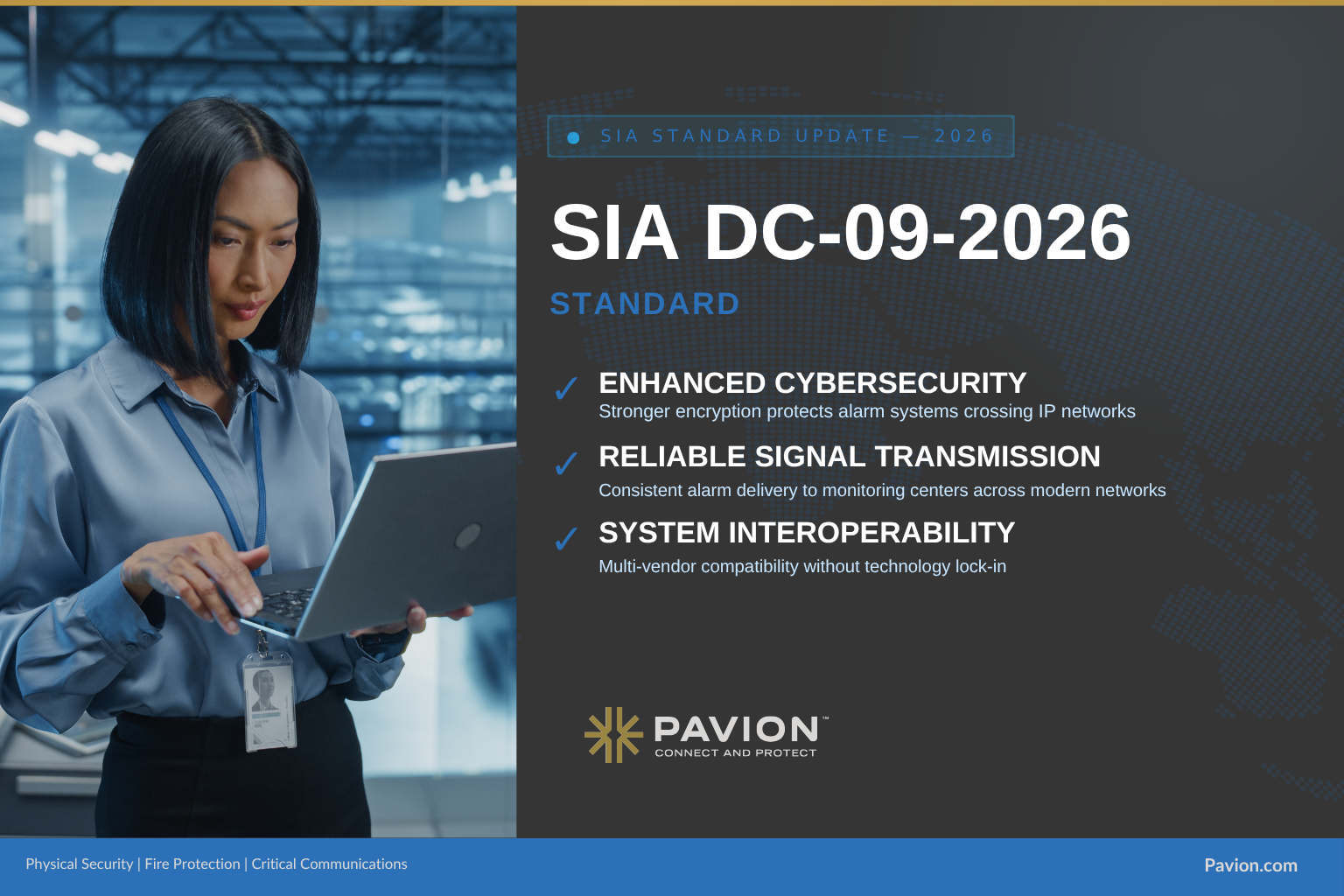
In early 2026, the Security Industry Association released the ANSI/SIA DC-09-2026 standard, an updated protocol designed to improve the security, reliability, and interoperability of alarm communication over IP networks.
For organizations relying on intrusion detection, life safety systems, and centralized monitoring, this update reflects a larger shift happening across the security industry: alarm communication is moving fully into the IP era.
Understanding what this means can help organizations ensure their systems remain secure, compliant, and resilient.
The Shift from Legacy Communication to IP Alarm Transmission
Historically, many alarm systems relied on traditional telephone lines to communicate with monitoring centers. While these systems served their purpose for decades, modern buildings increasingly operate on digital networks.
Today’s security infrastructure often includes:
- IP-connected intrusion detection systems
- Integrated access control and video surveillance platforms
- Cloud-based monitoring and management tools
- Remote service and diagnostics capabilities
As security systems become more connected, alarm communication must meet higher expectations for speed, cybersecurity, and reliability.
The SIA DC-09 standard was created to define how alarm signals are securely transmitted across IP networks between protected premises and monitoring centers.
The 2026 update strengthens that framework.
Key Focus Areas of the 2026 Update
The revised standard reflects the evolving needs of enterprise security environments.
Stronger Cybersecurity Protections
As alarm signals move across IP networks, they must be protected from interception, manipulation, or disruption.
The updated standard emphasizes stronger encryption methods and secure data transmission practices to help ensure alarm messages remain protected while traveling across digital networks.
For organizations managing critical facilities, this added protection is essential.
Improved Interoperability Between Systems
Modern security environments rarely rely on a single manufacturer or platform.
The updated DC-09 standard continues to support interoperability between different systems, helping ensure that alarm panels, communicators, and monitoring centers can exchange information consistently and reliably.
This flexibility allows organizations to build integrated security environments without being locked into a single technology ecosystem.
Increased Reliability for Alarm Transmission
Alarm signals must reach monitoring centers quickly and accurately.
The revised standard strengthens guidelines that help ensure alarm messages are delivered consistently across modern IP networks, supporting faster responses and improved monitoring center performance.
For organizations that depend on real-time alerts, reliability remains critical.
Why This Matters for Organizations
For facility managers, IT teams, and security leaders, updates like the SIA DC-09-2026 standard highlight a larger trend across the industry: security infrastructure is becoming increasingly digital and network-dependent.
As systems evolve, organizations should consider:
- Whether their alarm communication technology supports modern IP protocols
- If their monitoring infrastructure meets current cybersecurity expectations
- How their security systems integrate with broader IT and network environments
Ensuring systems align with current industry standards can help organizations maintain reliability, security, and compliance as technology continues to evolve.
Supporting Secure and Reliable Monitoring
At Pavion, we help organizations design and maintain integrated security solutions that support reliable monitoring and modern network environments.
From intrusion detection and alarm communication to video surveillance and access control, our team works with customers to ensure their security infrastructure supports both current operational needs and future technology advancements.
As standards like ANSI/SIA DC-09-2026 shape the next generation of alarm communication, staying informed and working with experienced integrators can help organizations maintain resilient, secure systems.
FAQs
What is the SIA DC-09-2026 standard?
The SIA DC-09-2026 standard is an updated protocol developed by the Security Industry Association that defines how alarm signals are securely transmitted over IP networks between protected premises and monitoring centers. It improves cybersecurity protections, communication reliability, and interoperability across modern security systems.
Why was the SIA DC-09 standard updated in 2026?
The 2026 update reflects the growing shift from legacy telephone-based alarm communication to IP-based networks. As security systems become more connected, the updated standard strengthens encryption, transmission security, and reliability to better protect alarm signals traveling across digital infrastructure.
How does the SIA DC-09-2026 standard improve cybersecurity?
The updated standard emphasizes stronger encryption methods and secure communication practices to help prevent interception, tampering, or disruption of alarm signals transmitted across IP networks. This helps protect critical security data as it travels between alarm systems and monitoring centers.
What types of systems use the SIA DC-09 protocol?
The SIA DC-09 protocol is commonly used in intrusion detection systems, life safety systems, alarm communicators, and central monitoring platforms. It helps ensure these systems can reliably send alarm signals across modern IP networks.
Why is IP-based alarm communication important for modern security systems?
IP-based alarm communication allows security systems to operate faster, more securely, and more reliably than traditional telephone line connections. It also supports integration with other technologies such as access control systems, video surveillance, and cloud-based monitoring platforms.
Do organizations need to upgrade their alarm systems to meet the new standard?
Not all systems require immediate upgrades, but organizations should evaluate whether their alarm communication technology supports modern IP protocols and current cybersecurity expectations. Working with a qualified security integrator can help determine if updates or improvements are needed.
How can organizations ensure reliable alarm monitoring?
Organizations can improve alarm reliability by implementing modern IP communication protocols, ensuring secure network infrastructure, and partnering with experienced integrators that understand evolving industry standards like SIA DC-09-2026.