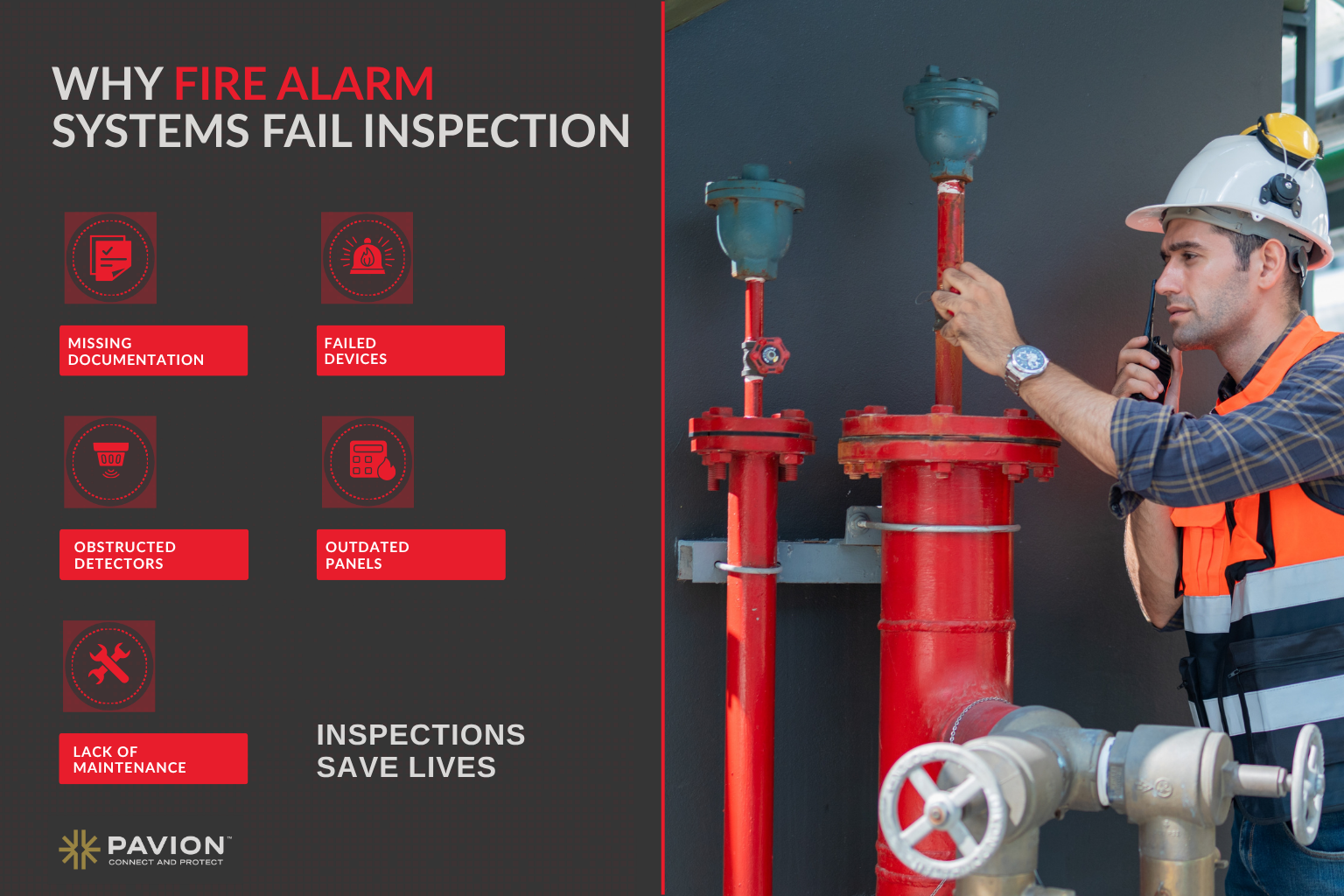
The Most Common Reasons Fire Alarm Systems Fail Inspection

Fire alarm inspections are an essential part of maintaining life safety systems in commercial buildings. These inspections ensure that fire alarm systems function properly and meet applicable fire codes and safety standards.
For many organizations, however, inspection results can reveal unexpected issues. A failed inspection can lead to compliance concerns, required repairs, and additional costs.
Understanding the most common causes of inspection failures can help organizations proactively address risks and maintain a reliable fire protection system.
Why Fire Alarm Inspections Are Critical
Regular inspections verify that a fire alarm system will operate correctly during an emergency. Inspections typically involve testing initiating devices, alarm signals, communication systems, and documentation.
These evaluations help ensure systems meet requirements outlined in standards such as NFPA 72 and local fire codes.
Common Reason 1. Missing or Incomplete Documentation
One of the most common reasons fire alarm systems fail inspection is incomplete documentation.
Inspection reports, testing records, and maintenance logs must be properly maintained and available for review. If these documents are missing or outdated, inspectors may not be able to confirm compliance.
Proper documentation provides proof that systems are inspected and maintained according to required schedules.
Common Reason 2. Devices That Fail Testing
During inspections, individual components such as smoke detectors, heat detectors, pull stations, and notification appliances are tested.
If any device fails to respond properly, the system may receive a deficiency. Common causes include worn devices, damaged wiring, or aging components.
Routine maintenance helps identify and replace failing devices before inspections occur.
Common Reason 3. Obstructed or Damaged Detectors
Smoke detectors and other detection devices must remain unobstructed to function properly. Over time, changes in building layout or equipment placement can block detectors.
Dust accumulation, paint, or physical damage can also affect device performance. Inspectors often identify these issues during testing.
Regular facility reviews help ensure devices remain properly positioned and functional.
Common Reason 4. Outdated Fire Alarm Panels
Older fire alarm panels may struggle to meet modern requirements or support newer detection technologies. Aging systems may also experience communication errors or intermittent faults.
In some cases, inspection failures reveal that a system has reached the end of its useful life. Organizations experiencing repeated inspection issues should evaluate whether modernization is necessary.
Common Reason 5. Lack of Preventative Maintenance
Preventative maintenance plays a critical role in keeping fire alarm systems reliable.
Without routine service, small issues can develop into larger system failures. Preventative maintenance programs help identify problems early, reduce emergency repairs, and improve inspection outcomes.
Preventing Fire Alarm Inspection Failures
Organizations can reduce inspection risks by taking a proactive approach to fire system maintenance. Key strategies include:
• Maintaining organized inspection documentation
• Scheduling routine preventative maintenance
• Addressing deficiencies promptly
• Evaluating aging systems before they fail inspections
These practices help ensure fire alarm systems remain compliant and reliable.
Supporting Fire Alarm Compliance
Fire alarm systems must perform flawlessly during emergencies. Regular inspections, preventative maintenance, and system modernization help ensure facilities remain protected and compliant with safety standards.
Pavion works with organizations to support fire alarm inspections, maintenance programs, and system upgrades that help facilities maintain reliable life safety protection.
FAQs
How often must fire alarm systems be inspected?
Inspection frequency varies based on the type of equipment, but many components require annual testing according to NFPA 72 guidelines.
What happens if a fire alarm system fails inspection?
If a system fails inspection, deficiencies must be corrected within the timeframe required by the authority having jurisdiction.
Can documentation cause a fire inspection failure?
Yes. Missing or incomplete inspection records are a common reason systems fail inspections.
How can businesses reduce inspection failures?
Regular preventative maintenance, accurate documentation, and proactive system upgrades help reduce the risk of inspection failures.