Service Agreements vs Break-Fix: Which Model Actually Saves Money?

When evaluating fire, security, and life safety systems, the question is often framed as cost:
Invest in a service agreement or pay only when something fails?
From a facilities standpoint, this decision impacts financial predictability, risk exposure, and long-term asset performance.
Break-Fix: Unplanned Cost and Risk
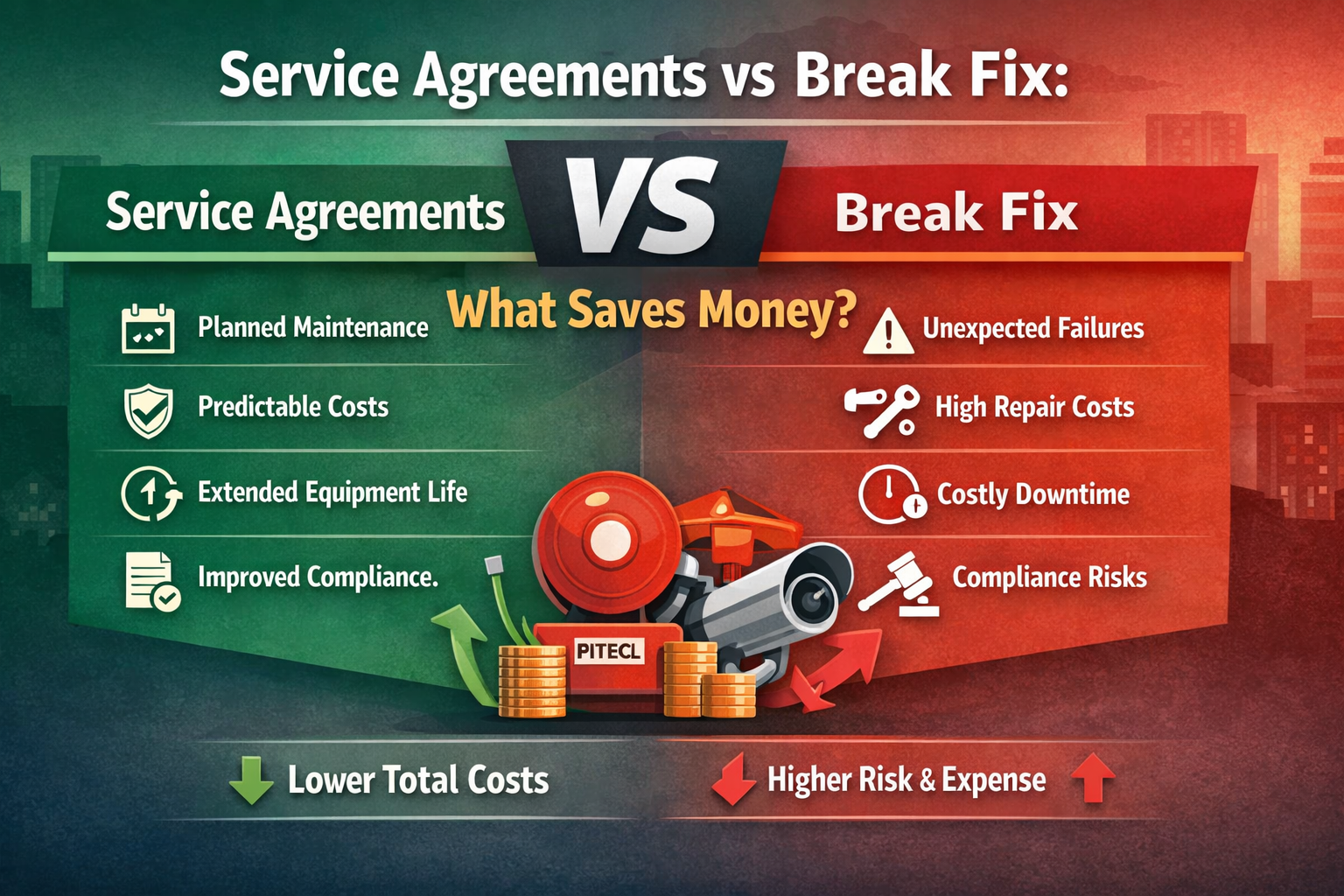
The break-fix model addresses issues only after failure occurs. While it may appear cost-effective initially, it introduces financial variability and operational disruption.
Key business impacts include:
- Unplanned repair expenses that disrupt budgets
- Emergency labor and expedited parts costs
- Operational downtime and internal coordination strain
- Increased compliance exposure
- Shortened equipment lifespan due to lack of preventative oversight
Break-fix shifts maintenance from a controlled operating expense to an unpredictable liability.
Service Agreements: Structured Asset Management
Service agreements provide scheduled inspections, preventative maintenance, and defined response expectations. This creates cost stability and reduces operational surprises.
Business advantages include:
- Predictable, budgeted expenses
- Reduced emergency repair frequency
- Documented compliance support
- Extended asset life and improved capital planning
- Greater operational continuity
This model aligns maintenance with financial discipline and risk management.
Total Cost of Ownership
Evaluating maintenance strategy requires looking beyond repair invoices. Unplanned failures often carry indirect costs: productivity loss, administrative time, compliance deficiencies, and potential liability exposure.
Preventative service reduces both the likelihood and severity of these events, supporting stronger long-term financial outcomes.
The Bottom Line
Break-fix may lower short-term spending but increases volatility and risk. Service agreements provide structured cost control, compliance support, and sustained system performance.
The decision is not simply about maintenance — it is about whether your organization prioritizes reactive expense management or disciplined operational control.