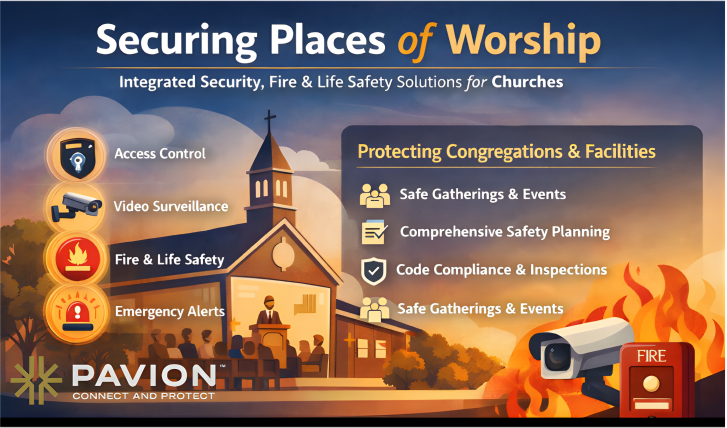
Securing Places of Worship

Fire and life safety are fundamental to stewardship—protecting people, facilities, and the ability to gather in faith and fellowship. When thoughtfully designed and integrated with security systems, these protections become a quiet foundation that allows ministry and community life to flourish.
Organizations like Pavion help churches approach safety holistically—combining security, fire, and life safety into a strategy rooted in care, preparedness, and respect for the church’s mission.
Places of worship are meant to be open, welcoming, and grounded in community. Yet churches today face growing responsibility to protect congregants, staff, and volunteers—not only from security threats, but also from fire and life safety risks that can impact large gatherings and multi-use facilities.
For church leaders, the challenge is balancing openness with preparedness. A thoughtful, integrated approach to security, fire, and life safety allows churches to safeguard their communities without compromising their mission.
Why Church Safety Goes Beyond Security Alone
Church campuses often function as far more than worship spaces. Many include:
- Sanctuaries with high occupant loads
- Schools, daycare centers, and classrooms
- Fellowship halls and kitchens
- Offices and counseling spaces
- Community event venues
These environments introduce unique fire and life safety considerations, including evacuation planning, code compliance, and system reliability during large services or special events. Addressing these risks requires more than standalone systems—it requires integration and planning.
The Importance of Fire and Life Safety in Places of Worship
Fire and life safety systems play a critical role in protecting church communities. A comprehensive strategy includes:
- Fire alarm systems designed for large assemblies and multi-building campuses
- Emergency notification and mass alerting to guide occupants during incidents
- Code-compliant inspection and testing to ensure systems perform when needed
- Clear evacuation pathways and coordination with access control and security systems
When fire and life safety systems are integrated with broader security infrastructure, churches gain faster response times, clearer communication, and greater confidence during emergencies.
Integrating Security, Fire, and Life Safety for Churches
A modern church safety strategy brings multiple disciplines together into a cohesive framework including access control, video surveillance and fire alarm, life safety systems, and monitoring and alerts that enable rapid, coordinated action.
Integration ensures that when an incident occurs—whether a fire alarm activation or a security concern—systems work together to support safe, orderly outcomes.
Church Safety Planning and Access Control Best Practices
Church safety representatives should work closely with a trusted security partner to develop and implement comprehensive church safety plans that address a wide range of potential security and emergency scenarios. Regularly practicing these safety and emergency response plans is essential to ensure that church staff and volunteers are prepared to respond calmly and effectively, reducing confusion and panic during an incident.
One proven best practice for church security and house of worship safety is limiting building access to a single, monitored entry point whenever possible. Controlled access helps churches better manage visitors, identify potential threats, and prevent unauthorized individuals or prohibited items from entering the facility. During non-busy times, keeping doors locked and using an intercom or access control system allows staff to safely verify visitors before granting entry, enhancing overall church safety and security.
How Pavion Supports Church Fire, Life Safety, and Security
Pavion brings decades of experience delivering integrated security and life safety solutions across complex environments, including places of worship. Rather than offering one-size-fits-all solutions, Pavion focuses on:
- Understanding each church’s layout, occupancy, and community use
- Designing and integrating security, fire alarm, and life safety systems
- Supporting compliance through inspection, testing, and ongoing service
- Helping churches plan for emergencies with confidence and clarity
This integrated approach helps churches move from reactive safety measures to proactive, resilient preparedness.
By focusing on integration and usability, churches can adopt modern safety capabilities while preserving the welcoming environment that defines them.