Benefits of AI-Assisted Proactive Video Monitoring for Businesses

When organizations think about improving security, the conversation often turns to staffing, additional guards, or expanding surveillance coverage. But today’s technology is changing that model.
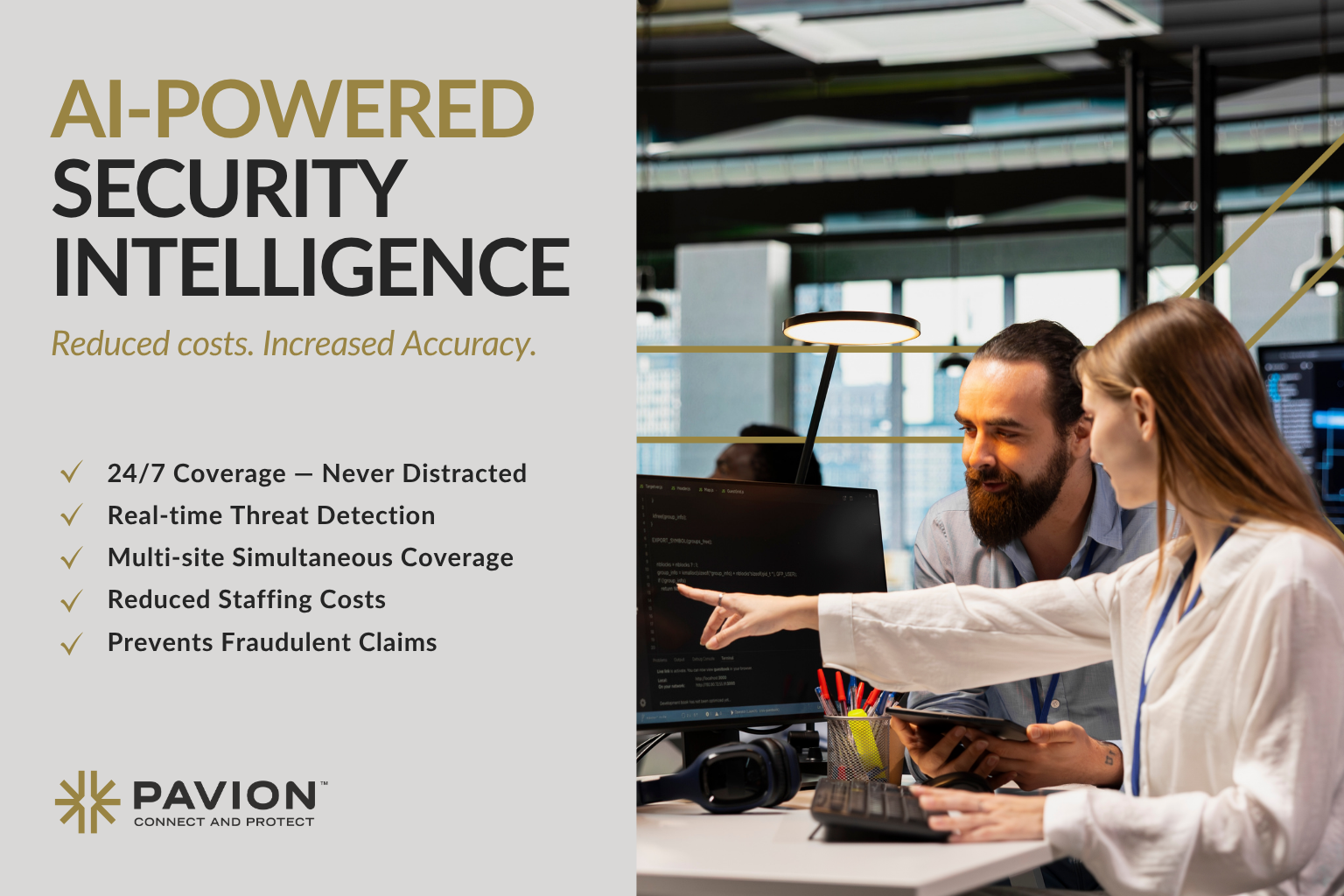
In many ways, AI-powered video monitoring functions like a highly efficient virtual employee. Unlike traditional cameras that simply record footage, AI-enabled systems continuously analyze activity, detect unusual behavior, and alert the right people when something needs attention.
This “virtual employee” never gets distracted, never misses a moment, and can often detect issues faster than a human monitoring cameras. It acts as an extra set of eyes across your facility, helping security teams respond quickly to potential problems before they escalate.
For many organizations, this technology does more than improve security. It can also reduce operational costs while improving protection.
Reducing Security Costs While Improving Protection
When AI-powered monitoring is implemented and configured correctly, it can significantly reduce the cost of maintaining physical security coverage.
Organizations that currently rely on on-site guards often discover they can operate effectively with fewer personnel because AI-assisted monitoring expands visibility and detects incidents automatically.
This creates savings in several ways.
Facilities can reduce the number of guards required for full coverage.
Security teams receive alerts only when activity actually requires attention.
Multiple areas and locations can be monitored simultaneously.
In many cases, the system essentially becomes an additional member of the security team working around the clock.
Beyond staffing efficiencies, proactive monitoring also helps organizations avoid unexpected costs tied to operational risks.
For example, AI video monitoring can detect illegal dumping activity, preventing unnecessary waste removal expenses. It can identify unauthorized vehicles or suspicious foot traffic, helping deter theft and vandalism. It can also capture clear evidence when incidents occur, reducing the risk of fraudulent liability claims such as false slip and fall accusations.
These preventative capabilities allow organizations to reduce losses while maintaining stronger visibility across their operations.
What Is AI-Assisted Proactive Video Monitoring?
AI-assisted proactive monitoring combines intelligent video analytics with live monitoring professionals who verify and respond to events.
Instead of simply recording video, the system continuously analyzes live footage to identify behaviors or conditions that may indicate a potential problem.
Examples include:
• Loitering outside a facility after hours
• Unauthorized entry or perimeter breaches
• Vehicles entering restricted areas
• Suspicious object placement
• Workplace safety hazards
• Property monitoring using AI-powered analytics
When a potential issue is detected, the system alerts a monitoring operator who verifies the event and can take immediate action. This might include issuing a live audio warning, notifying security personnel, or contacting authorities when needed.
This approach combines AI automation with human decision-making, reducing false alarms while ensuring real threats receive immediate attention.
Detecting Incidents Before They Escalate
Traditional surveillance systems help investigators understand what happened after an incident.
Proactive monitoring focuses on preventing the incident in the first place.
AI-powered analytics can identify suspicious patterns or unusual activity before a crime, safety issue, or operational disruption occurs. This early detection allows organizations to intervene quickly, reducing risk and minimizing potential damage.
For businesses operating large facilities, remote properties, or multiple locations, this proactive approach provides an important layer of protection that traditional surveillance alone cannot offer.
Expanding Coverage Without Expanding Staff
Hiring additional security personnel is expensive, and physical coverage is limited by visibility and location.
AI-powered monitoring allows organizations to extend their security coverage across interior and exterior areas without expanding headcount.
Multiple sites can be monitored simultaneously, and security resources are deployed only when they are truly needed.
This creates a more efficient model where human personnel focus on responding to verified incidents rather than constantly watching screens.
Turning Video Into Operational Intelligence
When an incident does occur, AI-driven systems also make investigations faster and more effective.
Organizations can search footage by behavior, object type, or movement patterns, allowing security teams to quickly locate relevant events without manually reviewing hours of video.
This turns surveillance footage into a valuable operational tool that supports investigations, compliance documentation, and risk analysis.
Industries That Benefit Most From Proactive Monitoring
AI-assisted proactive monitoring provides value across many industries, including:
• Retail and logistics facilities
• Healthcare and life sciences organizations
• Corporate campuses and offices
• Manufacturing and industrial environments
• Education and government properties
• Data centers and critical infrastructure
Any organization looking to reduce risk, improve visibility, and operate more efficiently can benefit from proactive monitoring technology.
Moving From Reactive Security to Proactive Protection
Security threats, operational risks, and safety challenges continue to evolve. Organizations need solutions that do more than record incidents after they occur.
AI-powered proactive video monitoring provides the intelligence, automation, and real-time response capabilities required to detect issues early and act quickly.
By functioning as a constant virtual security presence, these systems help businesses protect people, property, and operations while improving efficiency and reducing costs.
Frequently Asked Questions About AI Proactive Video Monitoring
What is AI proactive video monitoring?
AI proactive video monitoring uses artificial intelligence and video analytics to continuously analyze live camera feeds. The system detects unusual behavior, security threats, or safety risks in real time and alerts monitoring teams so they can respond before an incident escalates.
How does AI video monitoring reduce security costs?
AI-assisted monitoring helps reduce costs by allowing organizations to monitor large areas or multiple sites without relying solely on on-site security guards. The system detects events automatically and alerts operators only when attention is needed, improving efficiency while lowering staffing requirements.
Can AI video monitoring replace security guards?
AI video monitoring does not necessarily replace security guards, but it can significantly enhance their effectiveness. Many organizations use proactive monitoring to reduce the number of guards needed while improving visibility and response time across their facilities.
What types of incidents can AI-powered cameras detect?
AI-powered cameras can detect a wide range of events, including loitering, unauthorized access, perimeter breaches, suspicious activity, restricted-area entry, safety hazards, and unusual vehicle or foot traffic patterns.
Is AI video monitoring useful for businesses with multiple locations?
Yes. One of the major advantages of AI-assisted monitoring is the ability to monitor multiple locations simultaneously. This provides centralized visibility and allows organizations to respond quickly to incidents across several sites without needing security personnel at every location.
Which industries benefit most from proactive video monitoring?
Industries that benefit most include retail, logistics, healthcare, manufacturing, education, corporate campuses, and critical infrastructure such as data centers. Any organization that needs real-time security awareness and risk prevention can benefit from proactive monitoring.