

Real-Time Tracking Systems (RTLS)
Real-Time Location System (RTLS) Solutions for Healthcare Facilities
Pavion designs, implements, and supports customized real-time location systems (RTLS) for healthcare facilities – improving patient safety, staff efficiency, and asset visibility across hospitals, clinics, and long-term care settings.

Enhancing Patient Safety
Pavion’s healthcare real time location services help organizations safeguard patients and improve their response times.
Our systems provide continuous monitoring, precise locating, and patient tracking, ensuring patients are safe and allowing staff members to react quickly when needed.
- Prevent patient wandering and unauthorized exits
- Improve location accuracy and response times to emergencies
- Reduce risks in memory care and behavioral health settings
- Ensure regulatory compliance for patient safety
Optimizing Hospital Assets
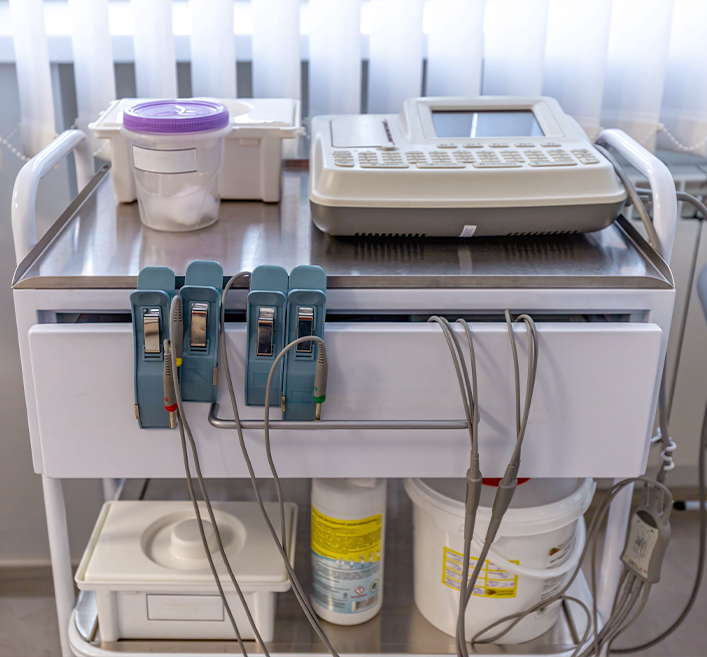
Tracking and managing critical medical equipment improve efficiency and availability and reduce costs. Pavion’s solutions provide precise asset location and status data to streamline access controls.
- Minimize equipment loss and misplacement
- Improve staff efficiency with location data collection and asset tracking
- Reduce unnecessary equipment purchases and rentals
- Enhance patient care by ensuring timely equipment availability

Streamlining Staff Workflow
Pavion’s RTLS software enhance staff coordination and workflow, helping teams focus on patient care while reducing operational inefficiencies.
- Automate staff duress alerts for rapid response
- Monitor staff locations to optimize efficiency
- Reduce time spent searching for equipment or personnel (i.e. IV pumps)
- Improve communication and collaboration across departments
Comprehensive RTLS Tags
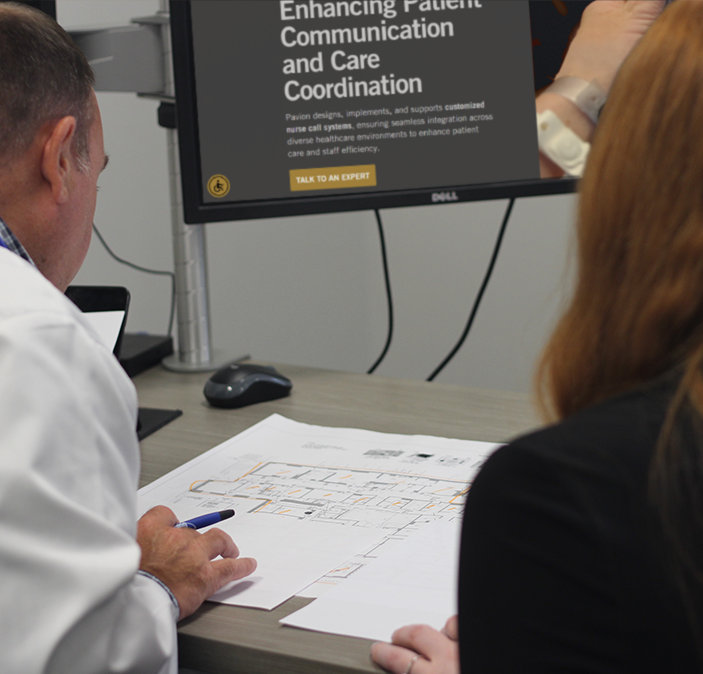
Pavion delivers a full range of real-time tracking solutions tailored for healthcare environments. Our technology integrates seamlessly with existing infrastructure to improve patient flow, safety, efficiency, and compliance.
Our RTLS solutions include:
Seamless Integration
Pavion’s experts ensure smooth implementation with minimal disruption while maintaining full compliance with healthcare regulations and IT infrastructure requirements.
- Industry-leading RTLS technology tailored for healthcare
- Compliance with HIPAA, Joint Commission, and CMS guidelines
- Scalable solutions for hospitals, clinics, and long-term care facilities
- End-to-end support from design to ongoing system maintenance
Trusted Partners in Real-Time Location Tracking Solutions






Smart Security. Predictable Costs. Future-Ready Solutions.
Pavion’s Subscription Services offer advanced technology and support with a fixed monthly fee, reducing capital expenses and ensuring flexibility.
- All-Inclusive: Covers hardware, software, and maintenance.
- Flexible Terms: Options from 36 to 60 months.
- Future-Ready: Adapts with add-ons and flexible end-of-term choices.
Our Locations
Global Reach.
Local Service.
With over 70+ locations in the United States and serving 22 countries, Pavion continues to expand in order to connect and protect more customers around the world.
Ready To Find The Right Real-Time Location tracking Solution
For Your Organization?
RESOURCES
Explore our Innovative Approach to Nurse Call with These Insightful Resources



Delivering on Your Needs
Pavion does more than just nurse call. In fact, we can help you optimize your entire organization
with fire, security and integration systems. Everything you need. All from Pavion.



Connect with Pavion
Pavion can span across fire, security, and integration to simplify the needs of our customers. Ready to learn how we can help?
Frequently Asked Questions
What is a real-time location system (RTLS)?
A real-time location system (RTLS) uses wireless tags and sensors to track the real-time position of people, equipment, or assets within a facility. In healthcare settings, RTLS is used to monitor patient movement, locate staff during emergencies, and track the location of medical equipment.
How does a real-time location system work in a hospital?
An RTLS uses a combination of tags (attached to patients, staff badges, or equipment) and fixed sensors placed throughout a facility. The sensors detect tag signals and relay location data to a central system, which staff can access to see real-time positioning on a facility map.
What’s the difference between RTLS and standard patient wandering alarms?
Standard wandering alarms typically alert staff when a patient crosses a fixed boundary (like a door). RTLS provides continuous, real-time location data across the entire facility, so staff can see exactly where a patient, staff member, or piece of equipment is at any moment — not just when a boundary is crossed.