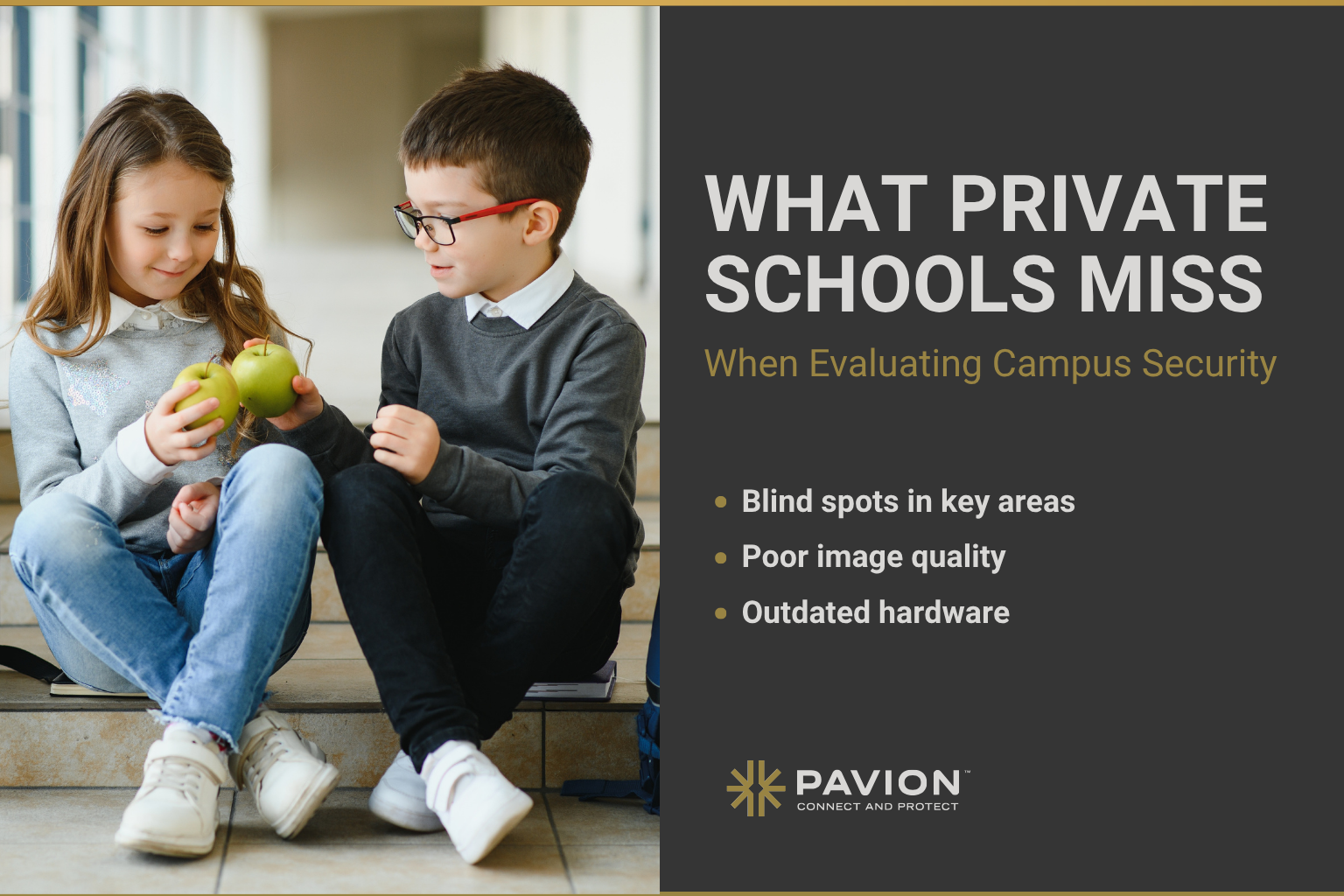
What Private Schools Miss When Evaluating Campus Security

Security Systems Do Not Equal Security
Many private schools believe that having cameras and locked doors means their campus is secure.
But true security is not defined by the presence of technology. It is defined by how effectively those systems work together to protect people and property.
Without a comprehensive evaluation, critical school security gaps often go unnoticed.
The Most Common School Security Gaps
Incomplete Surveillance Coverage
Cameras are a foundational part of school security. However, many systems suffer from:
- Blind spots in key areas
- Poor image quality
- Outdated hardware
These issues limit the ability to monitor activity and respond effectively.
Inconsistent Access Control
Not all entry points are equally secure.
Side entrances, temporary access permissions, and after-hours access often create vulnerabilities that are not properly managed.
A lack of centralized control makes it difficult to maintain consistent security across campus.
Outdated Visitor Management
Manual sign-in processes or basic check-in systems provide limited visibility.
Modern schools need the ability to:
- Verify visitor identities
- Track who is on campus in real time
- Maintain accurate records
Without this, schools may not have full awareness of who is present on campus.
Lack of Detection Technology
Many schools do not have systems in place to detect emerging threats such as:
- Weapons
- Gunshots
- Vaping activity
These technologies provide critical early warnings that traditional systems cannot.
The Bigger Problem: Disconnected Systems
Even when schools have multiple security systems in place, they often operate independently.
This leads to:
- Delayed response times
- Missed alerts
- Limited visibility across systems
A fragmented approach creates unnecessary risk.
Why Identifying School Security Gaps Matters
You cannot improve what you cannot see.
Without a full evaluation, decisions about security upgrades are often based on assumptions rather than data.
Identifying school security gaps allows administrators to:
- Understand their true risk level
- Prioritize improvements
- Allocate resources more effectively
A More Effective Approach to School Security
A comprehensive security risk assessment provides a complete view of your campus, including:
- Existing strengths
- Areas of vulnerability
- Opportunities for improvement
This enables schools to move forward with confidence.
Take the First Step Toward a Safer Campus
Every school has unique challenges, but every school benefits from clarity.
Schedule your complimentary Pavion Security Risk Assessment to uncover hidden gaps and strengthen your campus security strategy.