What Property Managers Often Overlook with their Fire and Security Systems

Property Managers, are your fire and security systems providing true visibility?
Property managers juggle a growing list of responsibilities. Life safety. Security. Tenant experience. Compliance. Budget constraints. Staffing shortages. Technology sprawl.
The biggest visibility gaps rarely come from missing technology — they come from misalignment between systems, service, and responsibility.
Many properties technically meet code today but still operate in a reactive posture. Inspections pass, devices are installed, yet no one has a continuous understanding of system health between inspections. This is where risk quietly builds.
Yet one critical question often goes unasked: “Do your fire and security systems give you true visibility into what is happening across your buildings?”
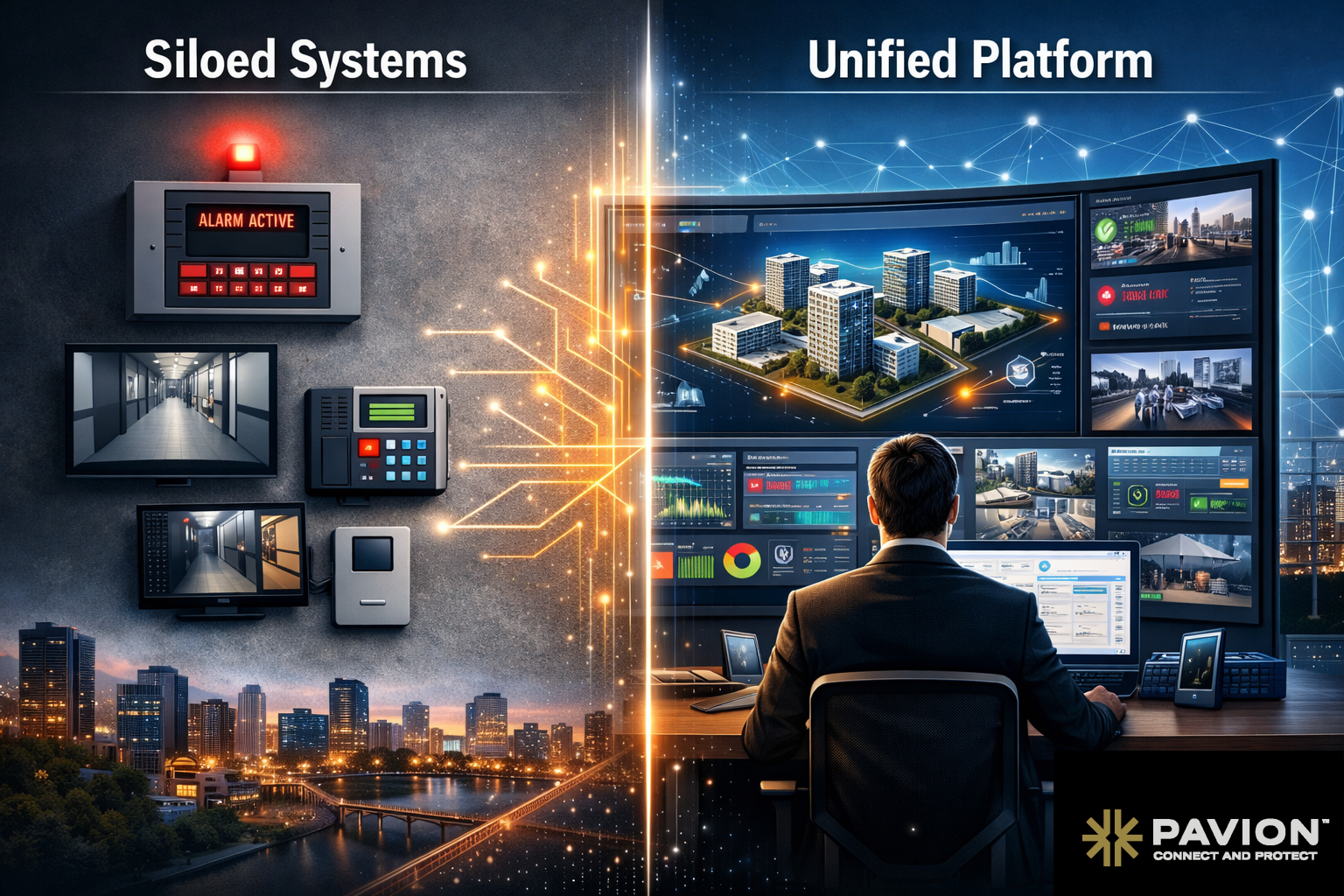
Many properties have invested heavily in fire alarms, access control, video surveillance, intrusion detection, and mass notification. But if these systems operate in silos, visibility is limited. Data is fragmented. Response is slower. Risks increase.
What “True Visibility” Really Means
True visibility goes beyond equipment installed, dashboards, and alerts. True visibility allows property managers to demonstrate continuous compliance, not just periodic compliance.
It means having clear, real-time insight into system health, events, and performance across your entire portfolio. Visibility is a code issue and an operational issue.
Fire and life safety codes are clear about intent: systems must always be operational, not just on inspection day. However, codes do not dictate how visibility is achieved — that responsibility falls on ownership and property management.
Without centralized insight:
- Impairments go undocumented or unnoticed
- Supervisory signals are ignored or misunderstood
- Trouble conditions linger beyond acceptable timeframes
- AHJ conversations become reactive instead of proactive
True visibility allows property managers to demonstrate continuous compliance, not just periodic compliance.
The Most Common Findings Across Properties
When conducting system assessments, fire consultants frequently uncover:
- Fire alarm devices that are technically online but functionally unreliable
- Repeat nuisance alarms that indicate design or environmental issues
- Inspection reports that identify deficiencies but lack resolution tracking
- Impairments communicated verbally but never formally logged
- Multiple vendors servicing different systems with no unified oversight
Each of these represents a visibility failure, not a technology failure.
Why Integration Reduces Liability — Not Just Labor
An integrated approach connects fire alarm, access control, video surveillance, intrusion, and mass notification systems into a unified environment.
From a risk and liability standpoint, integrated visibility creates defensibility.
When incidents occur, the first questions asked are:
- Did the system operate as designed?
- Was management aware of any impairments?
- Were issues identified and addressed in a timely manner?
Centralized monitoring, reporting, and event history provide documented proof of due diligence. This documentation is invaluable during AHJ reviews, insurance inquiries, and post-incident investigations.
Shift From Event-Based Thinking to System Health Thinking
Fire safety should not be managed as a series of isolated events (alarms, inspections, failures). It should be managed as a living system with measurable performance indicators.
Key indicators consultants recommend tracking include:
- Device up time and communication reliability
- Frequency and cause of nuisance alarms
- Time-to-resolution for troubles and impairments
- Inspection deficiency recurrence
- Vendor response consistency across systems
These metrics are only achievable with true visibility.
Summary
Properties that invest in visibility move from minimum compliance to risk-informed management. They experience fewer surprises, stronger relationships with Authorities Having Jurisdiction, and more confidence when emergencies occur.
Fire and security systems are not just installed assets — they are operational responsibilities. Visibility is what transforms them into reliable protection.
The Role of the Right Integration Partner
Technology alone does not deliver visibility. Design, deployment, integration, and ongoing service matter.
A qualified integration partner will:
- Assess existing systems and gaps
- Design an integrated architecture aligned to your operational goals
- Ensure code compliance and best practices
- Provide ongoing monitoring, maintenance, and support
- Serve as a single point of accountability
Pavion partners with property managers to deliver fully integrated fire, security, and building technology solutions that provide true, real-time visibility and long-term reliability.
Moving From Installed Systems to Intelligent Systems
Many properties already own capable technology. The opportunity lies in connecting it, optimizing it, and managing it strategically.
True visibility transforms fire and security from isolated tools into a unified operational platform that protects people, property, and performance.
Ready to Improve Visibility Across Your Properties?
If you are ready to move beyond siloed systems and gain real time insight into your fire and security infrastructure, our team is here to help.
Contact Pavion today to schedule a visibility assessment and discover what true integration can look like for your properties.
Frequently Asked Questions:
What is fire and security system visibility?
Fire and security system visibility refers to having real time insight into the health, status, and activity of all life safety and security systems across a property. This includes alarms, devices, connectivity, events, and system performance within a centralized platform.
Why are integrated fire and security important for property managers?
Integration eliminates silos between systems and enables faster response, improved compliance, proactive maintenance, and better operational decision making. Property managers gain a single view of building safety rather than managing multiple disconnected platforms.
Can existing systems be integrated or do they need to be replaced?
In many cases, existing fire and security systems can be integrated through software platforms, middleware, or interface modules. A professional assessment helps determine what can be connected and where upgrades may provide additional value.
How does visibility improve emergency response?
When systems are integrated, events can trigger automated actions such as camera call ups, door unlocking, and mass notifications. This provides immediate situational awareness and helps teams respond faster and more accurately.
Does better visibility help with compliance and inspections?
Yes. Centralized reporting, device status monitoring, and automated alerts make it easier to track inspections, identify issues, and demonstrate compliance with fire and life safety codes.
What types of properties benefit most from integrated visibility?
Commercial office buildings, multifamily communities, healthcare facilities, education campuses, mixed use developments, and large portfolios all benefit from centralized visibility and system integration.
How do I know if my property has visibility gaps?
Common signs include logging into multiple platforms, relying on manual checks, discovering failures during inspections, or lacking real time alerts. A system assessment can quickly identify gaps.
How can Pavion help improve system visibility?
Pavion designs, integrates, and supports fire and security solutions that provide real time monitoring, centralized management, and long-term reliability. Their team works with property managers to assess current environments and build a roadmap toward true visibility.