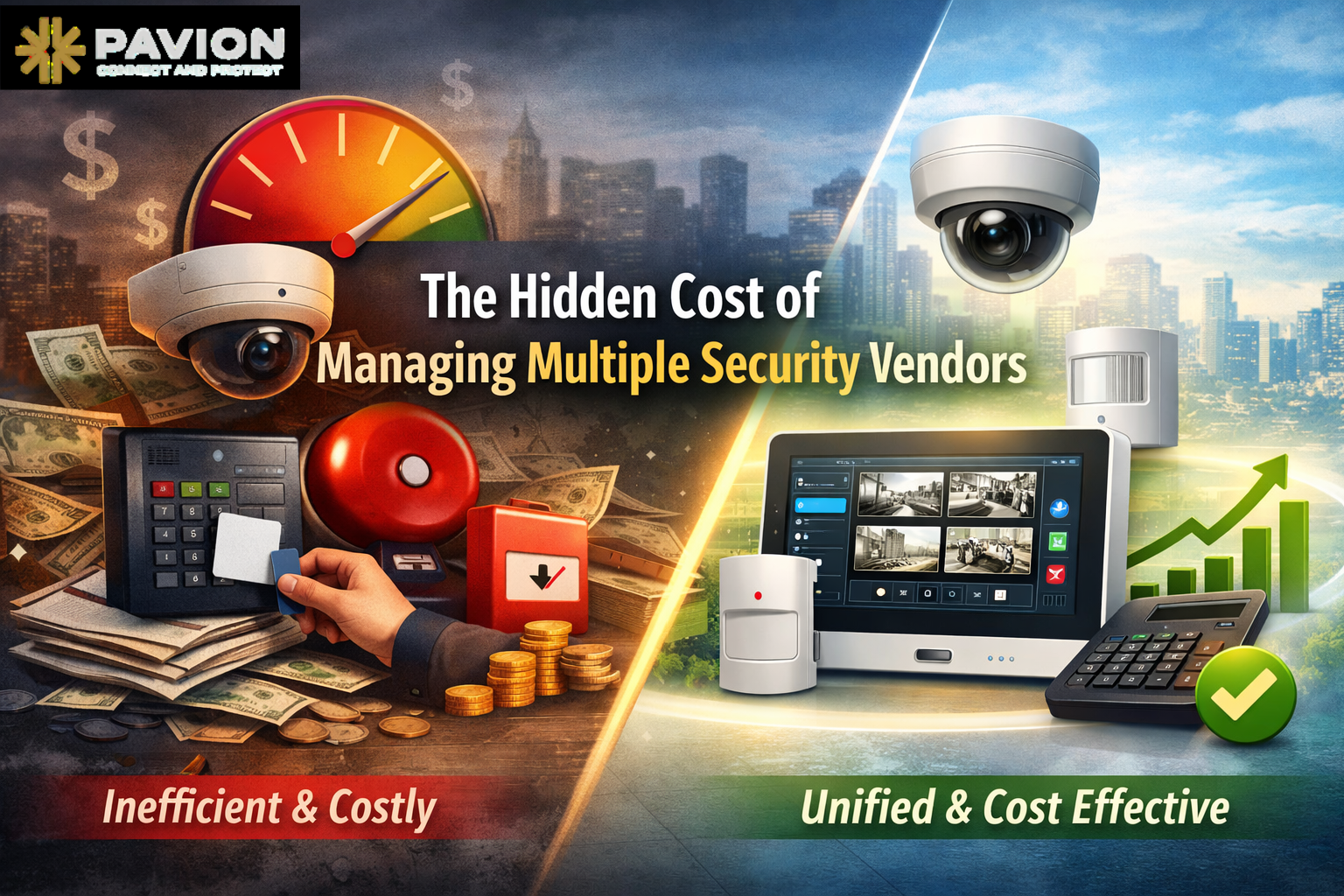
The Hidden Cost of Managing Multiple Security Vendors

Organizations today rely on a growing ecosystem of security technologies. Video surveillance, access control, intrusion detection, fire alarm systems, mass notification, and critical communications all play a role in protecting people, property, and operations.
To meet these needs, many organizations work with multiple vendors across different systems. While this approach may appear flexible or even cost effective on the surface, it often creates hidden costs that extend far beyond individual contracts.
Those costs show up in operational inefficiencies, cybersecurity risk, slower response times, inconsistent performance, and reduced visibility across the enterprise.
Understanding these hidden impacts is the first step toward building a more resilient and cost effective security strategy.
1. Operational Complexity Multiplies Quickly
Every vendor brings its own contracts, support processes, portals, software versions, and training requirements.
Managing these moving parts consumes valuable time for IT, facilities, and security teams. Instead of focusing on improving security posture, teams are often stuck coordinating vendors, troubleshooting integration issues, and resolving finger pointing when something fails.
The result is higher administrative overhead and slower decision making.
2. Fragmented Systems Create Security Blind Spots
When systems operate in silos, data remains isolated.
A door forced open may not automatically trigger video recording.
A fire alarm event may not initiate mass notification.
A cyber incident may not correlate with physical access activity.
Without integration, security teams lack a unified view of what is happening across their environment. This makes it harder to detect threats, investigate incidents, and respond quickly.
Blind spots increase risk. And risk carries cost.
3. Inconsistent Standards and Compliance Challenges
Different vendors often follow different design, documentation, and testing standards.
This inconsistency can lead to gaps in life safety compliance, incomplete system documentation, conflicting configurations, and audit or inspection challenges.
For regulated industries like healthcare, education, government, and critical infrastructure, these issues can result in fines, failed inspections, or forced remediation projects that were not planned or budgeted.
4. Higher Total Cost of Ownership
Many organizations assume that working with multiple vendors creates cost savings by driving competition.
In reality, the opposite is often true.
When organizations partner with a single security integrator, they can typically establish a Master Services Agreement (MSA) that provides standardized pricing, preferred labor rates, and consistent commercial terms across projects. These agreements often unlock better overall pricing than piecemeal purchasing from multiple providers.
Additionally, integrators with strong manufacturer and technology partner relationships are often able to secure enhanced discounts from vendors. Those savings can be passed directly to the end user, further reducing overall project and lifecycle costs.
Beyond contract pricing, hidden expenses in multi vendor environments include:
- Duplicate licensing and support fees
- Multiple truck rolls for related issues
- Extended downtime during troubleshooting
- Additional internal labor
- Costly rip and replace projects when systems cannot integrate
There is also a significant time cost.
Coordinating multiple vendors requires separate meetings, multiple site walks, repeated discovery conversations, and ongoing communication across different teams. That time adds up quickly.
When organizations consolidate to a single, integrated partner, they streamline decision making, accelerate project execution, and free internal teams to focus on higher value initiatives.
Over time, these efficiencies translate into measurable financial savings.
A fragmented environment almost always costs more than a well designed, integrated solution.
5. Slower Incident Response
During an incident, speed matters.
When security teams must log into multiple platforms, contact multiple vendors, or manually correlate data, response times increase. Delays can lead to greater damage, higher liability, and increased safety risk.
An integrated environment enables faster situational awareness and more coordinated response.
6. Limited Scalability and Future Readiness
As organizations grow, add locations, or adopt new technologies, multi vendor environments become harder to scale.
New systems must be custom integrated or operate separately. Both options introduce cost and complexity.
Without a clear integration strategy, future initiatives such as AI powered analytics, cloud migration, or enterprise wide monitoring become difficult to execute.
Learn how Pavion simplifies security with one integrated partner.
Explore Pavion’s Integration Solutions.
The Value of a Single Integrated Security Partner
Working with a single, experienced security integrator changes the equation.
An integrated partner designs, deploys, services, and supports all systems as part of a cohesive ecosystem.
Key benefits include:
- Unified architecture and standards
- Centralized support and accountability
- Seamless system integration
- Consistent documentation and compliance
- Reduced operational overhead
- Lower total cost of ownership
Instead of managing vendors, organizations manage outcomes.
Why Pavion
Pavion delivers end to end fire, security, and critical communications integration through one trusted partner.
From design and engineering to installation, service, and ongoing support, Pavion connects and protects organizations with scalable, future ready solutions built around a unified strategy.
Our approach simplifies operations, strengthens security posture, and eliminates the hidden costs of fragmentation.
Ready to Simplify Your Security Environment?
If your organization is juggling multiple security vendors, it may be time to evaluate a more integrated approach.
Contact Pavion to learn how consolidating to a single security integration partner can reduce complexity, lower cost, and improve protection across your enterprise.
FAQs
What are the risks of using multiple security vendors?
Using multiple vendors can lead to system silos, security blind spots, inconsistent standards, higher costs, and slower incident response.
How does an integrated security solution reduce costs?
Integrated solutions reduce duplicate fees, minimize downtime, streamline support, and lower internal labor requirements, resulting in a lower total cost of ownership.
What systems can be integrated into a unified security platform?
Video surveillance, access control, intrusion detection, fire alarm systems, mass notification, intercom, critical communications, and cybersecurity platforms can all be integrated.
Is vendor consolidation only for large enterprises?
No. Organizations of all sizes benefit from simplified management, improved visibility, and predictable costs.
How do I know if my organization needs vendor consolidation?
If you manage multiple contracts, struggle with system compatibility, experience frequent troubleshooting, or lack a unified view of security operations, consolidation may be beneficial.