When Seconds Matter in Healthcare: Why Rapid Communication Saves Lives
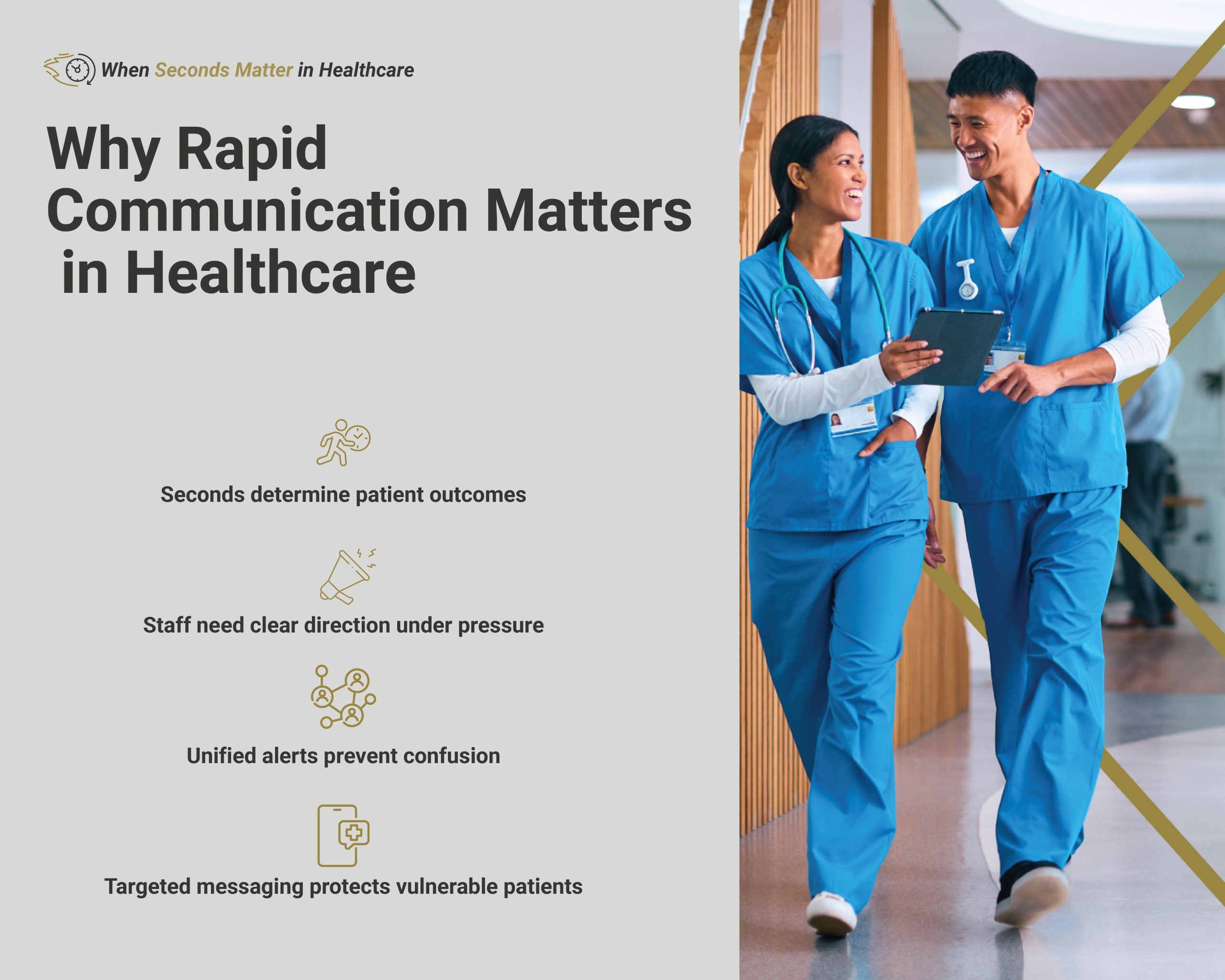
Healthcare environments operate under constant pressure. Hospitals, clinics, long term care facilities, and medical campuses manage unpredictable situations every day. Patients arrive in crisis, conditions shift suddenly, and staff must make fast decisions with limited information. In this high stakes environment, healthcare emergency communication is the single most important tool for protecting lives.
When an emergency occurs inside a healthcare facility, the difference between calm order and dangerous chaos is measured in seconds. Alerts must be immediate. Instructions must be undeniable. Staff must know exactly what to do, where to go, and how to protect the people in their care.
Rapid communication is not a convenience. It is a clinical necessity.
Why Time Sensitivity Defines Healthcare Emergency Communication
In healthcare, time is directly linked to survival. Best outcomes depend on how quickly care teams respond. Whether the emergency involves a clinical event, a security threat, a facility issue, or a weather hazard, communication determines how fast individuals can make safe and effective decisions.
Healthcare relies heavily on timing because:
• A Code Blue response must begin immediately
• Delayed alerts slow the delivery of lifesaving interventions
• Clinical teams require clear coordination
• Patients cannot always self evacuate or self protect
• Certain areas must secure or isolate quickly
• Medical equipment, supplies, and pharmaceuticals require safe handling
Seconds matter. And clear communication shortens those seconds.
The Complexity of Healthcare Emergencies
No two healthcare emergencies look the same. Facilities must prepare for:
• Code Blue cardiac events
• Stroke response
• Infant abductions
• Combative or behavioral incidents
• Fire, smoke, or electrical issues
• Hazardous spills or contamination
• Severe weather events
• Evacuation scenarios
• IT outages affecting care delivery
• Power failures impacting life safety equipment
• Security threats involving patients or visitors
Each scenario demands different instructions and reaches different audiences. Communication must be accurate, targeted, and instant.
Can your facility reach the right team in seconds?
Contact Pavion to assess your hospital’s emergency communication.
The Importance of Unified Coordination
Healthcare is a team environment. Nurses, physicians, patient care technicians, security staff, environmental services, transport, and administrators must be aligned. During emergencies, miscommunication leads to delays that can affect patient survival, safety, and care outcomes.
Unified communication ensures:
• The right people respond
• The wrong people do not crowd critical areas
• Evacuation routes stay clear
• Sensitive areas are secured quickly
• Environmental conditions are managed safely
• Clinical care continues where possible
The tighter the coordination, the stronger the response.
Why Clear Instructions Reduce Cognitive Load
Healthcare staff operate under intense stress. When an emergency happens on top of routine pressure, cognitive load increases quickly. The brain processes less information, and decision fatigue appears almost immediately.
Clear communication reduces this strain.
Examples of effective crisis instructions include:
“Code Blue Room 312.”
“Security to the Emergency Department triage.”
“Evacuate east wing only.”
“Shelter in place. Severe weather approaching.”
“Close Fire Doors 4 through 6.”
These direct messages shorten decision making time and reduce confusion.
Location Based Communication Protects Vulnerable Patients
One size fits all communication does not work in healthcare. Some patients:
• Are immobile
• Are on oxygen or ventilators
• Cannot be moved quickly
• Require specialized evacuation equipment
• Are immunocompromised and must avoid crowds
• Are sedated, unconscious, or recovering from surgery
Location based communication – a core capability of mass notification – ensures the correct units take appropriate action without affecting other areas.
Examples:
• Operating rooms continue procedures unless absolutely necessary
• NICUs receive targeted security alerts
• Behavioral health units receive special response instructions
• Emergency departments activate surge protocols
• Outpatient clinics receive close early messaging
Precision keeps vulnerable populations safe.
Integration with Clinical and Facility Systems Matters
Healthcare communication systems cannot stand alone. They must integrate with:
• Fire alarm systems
• Infant protection systems
• Access control
• Nurse call platforms
• Security cameras
• Building automation
• Generators and power systems
• Medical gas monitoring
• Environmental sensors
When integrated, alerts can initiate instantly based on actual events, without requiring staff to manually trigger anything.
Integration improves:
• Response speed
• Operational awareness
• Staff coordination
• Safety outcomes
• Continuity of care
For a deeper look at how these systems work together, see why healthcare facilities are unifying nurse call and security systems.
See how Pavion connects nurse call, security, and fire systems.
Explore Pavion’s Healthcare Technology Solutions.
Research Insight: Faster Alerts Improve Outcomes
Research indicates that integrated communication systems can significantly reduce emergency notification times. In a multi-hospital study published in Human Factors, researchers at The Ohio State University found that redesigning how emergency alarms reached nurses’ mobile devices cut response times by 15% to 59%. When every second counts, communication technology has been shown to improve care team coordination, allowing healthcare organizations to respond faster and enhance patient care.
Faster alerts mean:
• Quicker clinical response
• Fewer delays in treatment
• Improved situational awareness
• Stronger interdisciplinary coordination
• Better patient outcomes
Technology does not replace clinical expertise. It strengthens it.
Protecting Staff Safety in High Risk Situations
Healthcare workers face more risks than most industries, including:
• Violent or agitated patients
• Emotional or distressed visitors
• Behavioral health incidents
• Weapon related threats
Fast communication keeps staff informed and protected. When a situation escalates, they need instant confirmation and direction.
Evacuation and Shelter Procedures Depend on Communication
Hospitals are challenging to evacuate. Many patients cannot walk or move independently, and others rely on machines for survival. During fires, floods, earthquakes, or weather emergencies, communication guides staff toward the safest possible decisions.
Instructions must clarify:
• Horizontal vs vertical evacuation
• Which wings or floors must move
• Whether elevators can be used
• Which units shelter in place
• Where to relocate patients who depend on equipment
Confusion during evacuation can cost lives. Communication prevents it.
Hospital emergency plans are also shaped by The Joint Commission’s Emergency Management (EM) standards, which require facilities to plan how they will communicate with staff, patients, and outside responders during an emergency.
Support for Recovery and Continuity
Communication after the emergency is just as important as communication during it.
Hospitals must update:
• Clinical departments
• Patients and families
• Facility management
• IT teams
• Administration
• Transport
• Public safety partners
Clear instructions help restart operations, reopen patient areas, and return to normal.
What Regulations Require of Hospital Emergency Communication
In the U.S., the CMS Emergency Preparedness Rule requires hospitals and other participating providers to maintain an emergency communication plan. The plan must include contact information for staff and outside responders, primary and alternate ways to communicate, and a method for sharing information about patients and the facility’s needs (42 CFR 482.15(c)). The Joint Commission’s Emergency Management standards set similar expectations for accredited organizations.
Integrated healthcare emergency communication systems turn those written plans into actions staff can take in seconds.
Keeping Communication Running During IT Outages and Cyberattacks
Ransomware and network failures can take down email, EHR messaging, and VoIP phones at the moment staff need them most. Resilient healthcare emergency communication includes channels that don’t depend on the hospital network, such as overhead paging, two-way radio, and cellular, backed by downtime procedures staff have practiced.
Two-Way Radio and In-Building Coverage
Radio and cell signals often fail in basements, stairwells, imaging suites, and shielded areas. In-building radio coverage (BDA/DAS) keeps staff and first responders connected throughout the facility and is required by fire code in many buildings.
Conclusion: Communication Is the Lifeline of Care
In healthcare, emergencies never wait. They strike suddenly and demand immediate, coordinated action. Rapid communication strengthens the entire continuum of care by ensuring that staff, patients, and operations stay safe, aligned, and prepared.
When seconds matter, communication becomes the difference between chaos and control, uncertainty and confidence, harm and safety. It is the most essential tool in modern healthcare.
Strengthen Emergency Communication Across Your Healthcare Facility
Pavion integrates nurse call, security, fire, and mass notification systems so alerts reach the right clinical and security teams automatically.
Contact Us Today to evaluate your facility’s emergency communication and response workflows.
FAQs
What is healthcare emergency communication?
Rapid communication refers to the immediate delivery of clear, targeted alerts and instructions during critical incidents. It ensures staff can respond quickly and protect patients, facilities, and operations.
Why is communication so important in hospitals during emergencies?
Hospitals rely on fast, coordinated responses. Delayed or unclear communication can slow treatment, increase risk, and impact patient outcomes.
How does technology improve emergency response in healthcare?
Integrated systems connect alarms, security, clinical tools, and building systems so alerts trigger automatically and reach the right people instantly.
What types of emergencies require rapid communication?
Common scenarios include Code Blue events, security threats, fires, evacuations, weather emergencies, IT outages, and hazardous material incidents.
How does location based communication protect patients?
It allows specific units to receive tailored instructions without disrupting other areas, which is critical for immobile, critical care, or immunocompromised patients.
What systems should hospital emergency communication integrate with?
At minimum: fire alarm, nurse call, access control, video surveillance, and mass notification. Many hospitals also connect infant protection, duress alarms, and building automation so alerts trigger automatically from real events.