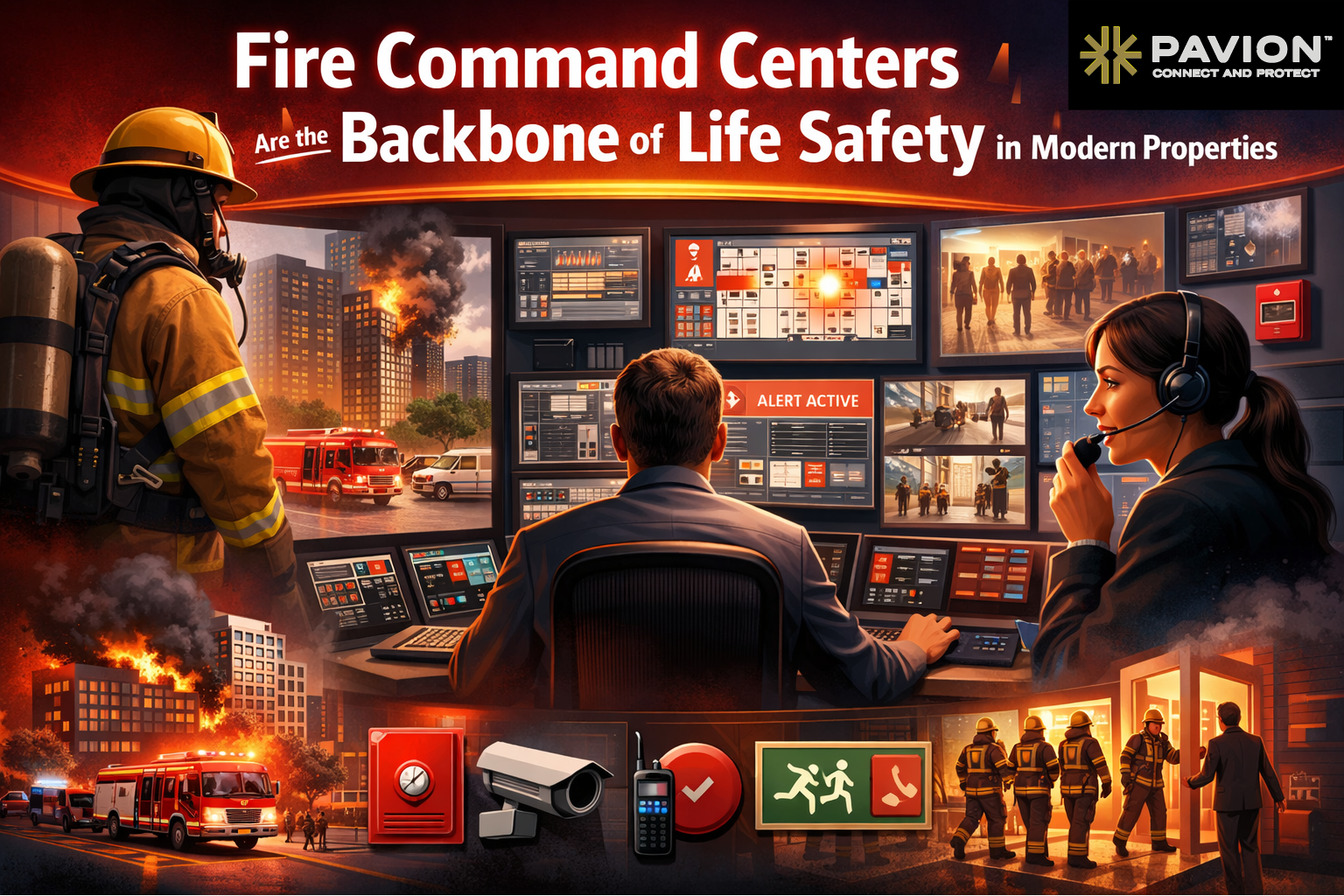
Fire Command Centers Are the Backbone of Life Safety in Modern Properties

Fire protection in today’s commercial and multi-family environments goes far beyond alarms and sprinklers. Property managers are responsible for coordinating complex life safety systems, emergency communications, and real time response during critical incidents. At the center of it all is the Fire Command Center.
A properly designed Fire Command Center serves as the operational hub for emergency response. It gives first responders immediate access to the information they need to protect occupants, property, and critical assets. For property managers, it is a key component of compliance, risk reduction, and tenant safety.
What Is a Fire Command Center?
A Fire Command Center is a dedicated room or area within a building that houses the controls and monitoring systems for life safety and fire protection. It typically includes:
- Fire alarm control panels and annunciators
- Emergency voice and mass notification controls
- Fire department communication system
- Elevator status and location display, plus elevator recall controls
- Smoke control panel and HVAC status
- Sprinkler, standpipe, and fire pump status indicators
- Emergency and standby generator status
- Stairway door unlock control
- Building information card, floor plans, and emergency procedures
This centralized space allows emergency personnel to quickly assess conditions, locate the source of an incident, and coordinate a safe, effective response.
Why Fire Command Centers Matter for Property Management
For property managers, a Fire Command Center is more than a code requirement. It is a strategic investment in safety, operational continuity, and tenant confidence.
- Improved emergency response
First responders can immediately access system data and building layouts, reducing response time and confusion during critical situations. - Enhanced occupant safety
Clear communication, fast system control, and real time visibility help protect residents, employees, and visitors. - Reduced liability and risk
Well designed and maintained Fire Command Centers support compliance with fire codes and safety regulations, helping reduce exposure to legal and financial risk. - Stronger tenant trust
Tenants expect modern properties to prioritize safety. A robust life safety infrastructure shows a commitment to protection and preparedness.
Not sure your Fire Command Center meets current code?
Contact Pavion to review your life safety systems.
When Is a Fire Command Center Required?
In jurisdictions that use the International Building Code, a fire command center is required in high-rise buildings, generally buildings with an occupied floor more than 75 feet above the lowest level of fire department vehicle access, and in other buildings where the code or the fire code official requires one. Many cities, including New York and Chicago, set their own requirements, so confirm with your authority having jurisdiction (AHJ) early in design.
Fire Command Center Requirements and Code Compliance
Fire Command Centers are required in many high rise, commercial, and multi-family buildings based on local and national fire codes.
Fire command center requirements are set in the International Building Code (Section 911) and mirrored in the International Fire Code (Section 508). They cover when a fire command center is required, a location approved by the fire code official, direct access from the building exterior, minimum room size, fire-rated separation, and the panels and controls the room must contain. Local amendments and the authority having jurisdiction (AHJ) determine the final requirements.
Requirements often include:
- Specific location and accessibility standards
- System integrations and redundancy
- Emergency power and communication
- Clear signage and labeling
- Updated floor plans and documentation
Because codes evolve, property managers benefit from working with experienced life safety partners who understand local AHJ requirements and current best practices.
Fire Command Center Room Requirements
Under IBC Section 911, the fire command center room generally must:
- Be at least 200 square feet, with a minimum dimension of 10 feet
- Be separated from the rest of the building by fire barriers of at least 1-hour rating
- Be in a location approved by the fire code official, with direct access from the building exterior
Requirements vary by code edition and local amendment, so verify with your AHJ.
Integrating Technology for Smarter Emergency Response
Modern Fire Command Centers are no longer just panels on a wall. They are integrated platforms that bring together fire, security, communication, and building systems into one operational view.
Common integrations include:
- Fire alarm and suppression systems
- Video surveillance for situational awareness
- Access control for controlled entry
- Mass notification for occupant communication
- Emergency responder communication systems
- Building automation and smoke control
This connected approach supports faster decision making, clearer communication, and more effective incident management.
See how Pavion brings fire, security, and communication systems into one view.
Explore Pavion’s Fire Safety Solutions.
Fire Command Centers and Emergency Preparedness
A Fire Command Center is most effective when it is part of a comprehensive emergency preparedness strategy. Property managers should ensure:
- Staff are trained on emergency procedures
- Response plans are documented and accessible
- System testing and maintenance are performed regularly
- First responders are familiar with the building layout
- Communication protocols are clearly defined
Preparation reduces panic, improves coordination, and helps protect lives.
A Strategic Investment in Safety
Fire Command Centers are not just about compliance. They represent a proactive approach to risk management and occupant protection. As buildings become more complex and expectations for safety rise, property managers must ensure their life safety infrastructure is ready for any scenario.
When seconds matter, having the right systems in the right place can make all the difference.
How Pavion Supports Property Managers
Pavion partners with property managers to design, install, and maintain Fire Command Centers and the fire alarm systems behind them that meet code requirements and support long term safety goals. Our integrated approach brings together fire, security, communication, and building systems into a unified life safety strategy.
Prepare Your Fire Command Center for Every Scenario
From design and installation to inspection and ongoing service, Pavion helps property managers keep Fire Command Centers code-ready and responder-ready.
Contact Us Today to schedule a review of your building’s life safety infrastructure.
Frequently Asked Questions About Fire Command Centers
What is the purpose of a Fire Command Center?
A Fire Command Center serves as the central control point for a building’s life safety systems. It allows first responders and building staff to monitor alarms, control emergency systems, and coordinate response efforts during fire or safety incidents.
Are Fire Command Centers required by code?
Many high rise, commercial, and multi-family buildings are required to have a Fire Command Center based on local and national fire codes. Requirements vary by jurisdiction, building size, and occupancy type, so it is important to consult with a qualified life safety provider.
Where must a fire command center be located?
Under the International Fire Code, the location must be approved by the fire code official and the room must have direct access from the building exterior, typically on the side where fire department apparatus arrives. Local amendments can add requirements, so confirm with your AHJ.
What systems are typically located in a Fire Command Center?
A Fire Command Center often includes fire alarm panels, emergency communication systems, elevator recall controls, smoke control systems, sprinkler monitoring, building floor plans, and communication tools for first responders.
Who is responsible for maintaining a Fire Command Center?
Property owners and managers are responsible for ensuring Fire Command Centers are properly maintained, tested, and compliant with applicable codes. Working with a professional life safety partner helps ensure systems remain reliable and up to date.
How does a Fire Command Center improve emergency response?
By providing real time system visibility, building layouts, and direct control of life safety systems, Fire Command Centers help first responders make faster and more informed decisions during emergencies.
Can Fire Command Centers integrate with security systems?
Yes. Modern Fire Command Centers often integrate with video surveillance, access control, and mass notification systems to provide better situational awareness and coordinated response.
How can Pavion help with Fire Command Center solutions?
Pavion designs, installs, and services Fire Command Centers that support code compliance, system integration, and long term safety goals for property managers and building owners.